
Views: 50
Universities need to show how education helps students prepare for work and further learning. The American Council on Education’s Learner Success Lab places career readiness within a wider institutional strategy that connects curriculum, faculty and staff support, partnerships, and the use of data to improve services.
The EDUCAUSE AI literacy executive summary describes why students, faculty and staff need to understand AI fundamentals and evaluate AI outputs responsibly. In career services, that means teaching students to check suggested edits against their own experience and to consider what personal information they share with a tool.
For career services leaders, the job is no longer just to advise students one by one. The challenge is to deliver career support that is personalized, measurable, and scalable enough to reach the whole student body.
What Does NACE Mean? Understanding NACE Career Competencies for Universities
NACE stands for the National Association of Colleges and Employers. In higher education, NACE matters because it gives universities a shared language for career readiness, employer expectations, and student development.
NACE defines career readiness as a foundation from which students demonstrate core competencies that prepare them for success in the workplace and lifelong career management. That definition shifts the conversation away from vague “job prep” and toward observable skills that universities can build across the student journey.
A career services platform can help students practise these competencies throughout their studies. A first-year student might explore occupations, a student preparing for a placement might revise a CV, and a final-year student might practise explaining their experience in an interview.
What Are the NACE Competencies? The 8 NACE Career Competencies Explained
NACE’s April 2024 framework lists eight career readiness competencies: Career & Self-Development, Communication, Critical Thinking, Equity & Inclusion, Leadership, Professionalism, Teamwork, and Technology. For current materials and competency definitions, consult the NACE career readiness hub.
How Universities Can Help Students Practise the Eight Competencies
A practical way to think about the NACE professional competencies is this:
- Career and Self-Development : helping students reflect, set goals, and build habits of continuous growth.
- Communication : helping them express ideas clearly in writing, speaking, and digital settings.
- Critical Thinking : helping them analyze problems and make sound decisions.
- Equity + Inclusion : helping them work across difference and challenge inequity.
- Leadership : helping them mobilize strengths and influence outcomes.
- Professionalism : helping them operate effectively in work environments.
- Teamwork : helping them collaborate toward shared goals.
- Technology : helping them use digital tools effectively and ethically.
Career Service Management: Connecting Support, Employers and Outcomes
Career centres may use email, spreadsheets, forms and separate tools to coordinate student support. As participation grows across programmes, staff need a consistent way to track activities, follow up and understand which students still need help.
A career services platform can help organise student support, coordinate employer engagement and track participation. Handshake’s career centre materials describe features for job discovery, events, employer connections and reporting. Ask which measures are available to your institution and how they are defined.
What Handshake and Similar Platforms Bring to Career Service Management
Handshake illustrates the role of a platform in connecting students with employers and managing career centre workflows. When comparing suppliers, test the steps a student and an adviser need to complete, including how they find opportunities, arrange support and review progress.
Career services sits within a wider institutional system. Individual advising, student communications, employer relationships and reporting all need to work together. Start with the gaps in your existing service before deciding whether one platform or a combination of tools fits.
Career Path Tools That Help Students Decide, Not Just Search
Students need help deciding which opportunities fit their goals and what to do next. The American Council on Education’s model describes life design as a way for learners to take an active role in shaping their education and career path. A career adviser can help a student turn that idea into a concrete next step.
Career path tools can help students compare options, identify a skill to develop and decide what evidence to gather. For example, a student considering several roles might compare requirements across three postings, then discuss the options with an adviser.
Career Path Tools vs. Job Boards : What’s the Difference?
Good career path tools do at least three things:
- Translate ambition into a concrete plan.
- Show students what their profile communicates to employers.
- Make improvement immediate and understandable.
AI can support this process by comparing a CV with a specific job description and suggesting interview questions or points to clarify. Use the feedback as a first step, with adviser support available when students need help interpreting it or deciding what to do next.
Where AI Career Services Platforms Fit Alongside Handshake
Appointment-based support is valuable. It can be supplemented with resources students can use earlier in their studies and between appointments, especially when deadlines are close or office hours are difficult to attend.
For an AI career services platform, test how students access CV feedback, role matching and interview practice. Check what staff can see and how a student can reach an adviser if the feedback is unclear.
Career leaders also need evidence of who uses the service and what they do next. Define participation and completion before comparing platforms. Check whether outcomes such as placement require data from institutional records or follow-up surveys.
Websites Like Handshake: What to Look for in a Career Platform
When evaluating websites like Handshake, universities should look for:
- Role-specific feedback on CVs, job matches and interview preparation
- Access across programmes, campuses and student groups
- Fit with existing systems and arrangements for access, privacy and accessibility
- Reporting that distinguishes engagement, evidence of competency development and graduate outcomes
The ACE model connects learner success with curriculum, partnerships and institutional practices. Use that perspective to decide where a career tool fits, which teams own the work and what evidence they will review together.
How to Use NACE Materials to Build a Career-Ready Campus
Use the NACE competency materials to create prompts and shared criteria across career services, faculty and student success teams. Link each activity to an observable example, such as explaining a team contribution or showing how a digital tool helped solve a problem.
Using NACE Materials for Assessment and Feedback
Select an assessment method that fits the competency and the activity. A CV rubric could capture whether the student describes a clear action and result. Interview practice could add an adviser’s assessment of whether the example demonstrates the skill and how clearly the student explains it.
What the AI Career Services Platform AIRA Changes for Universities
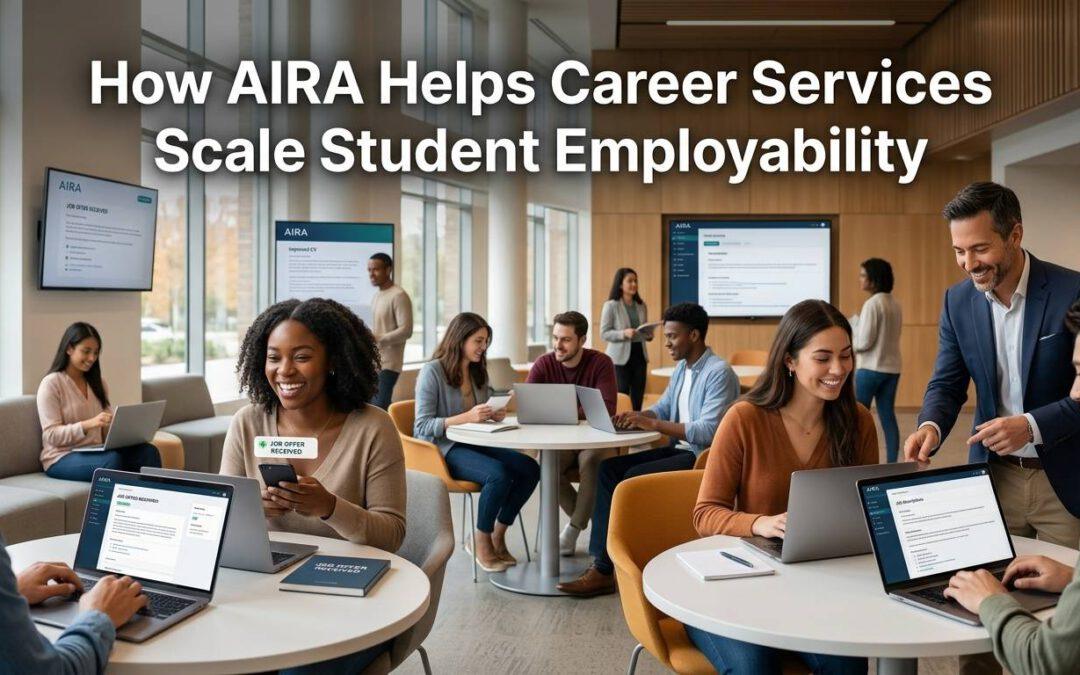
AIRA for Universities offers CV feedback, job matching and interview preparation. In a pilot, confirm student access, staff responsibilities, data handling and any integration work before choosing a rollout plan.
Students can review a CV against a target role, check suggested changes and prepare questions to discuss with an adviser. Career teams can test how well this fits students who use drop-ins, book appointments or have yet to engage with the centre.
A university pilot could evaluate whether AIRA helps the career centre:
- Extend access to preparation across selected programmes and year groups
- Help students make evidence of relevant skills clearer in their CVs
- Give students role-related questions for guided interview practice
- Help students compare their experience with the requirements of a target role
- Establish what engagement information staff can access and which outcomes require separate tracking
Set a baseline and define what success looks like before inviting students. Track participation, review a sample of submitted work and ask students whether the feedback helped them decide what to do next. Treat placement as a separate outcome that usually needs longer follow-up.
Why AI Career Services Matter for NACE Professional Competencies & Skills-Based Hiring
In NACE’s Job Outlook 2026 survey, 70% of participating employers reported using skills-based hiring. Help students prepare examples that show where they used a skill, what they contributed and how they know the result was useful.
EDUCAUSE’s AI literacy guidance applies to this work. Ask students to review generated feedback, correct assumptions and explain their final application in their own words. Clarify when they should talk to an adviser, especially if a suggestion conflicts with a requirement or leaves them unsure what to disclose.
AI Career Services for CV Optimization, Interview Prep, and Job Matching
Use an AI career services platform alongside human guidance. Students can work through first drafts and practise questions independently, then bring specific examples to an adviser for discussion.
A shared set of activities and rubrics can make support more consistent across departments or campuses. Adapt the examples to the programme, target role and stage of study so feedback stays relevant.
Scaling Career Support: The Institutional Advantage of AI Career Services Platforms
Career services leaders can show how their work fits student support and employer engagement by measuring access, participation and the quality of preparation. Agree which measures leadership needs and which data the career centre can collect responsibly.
ACE’s model offers a way to connect this work to curriculum and partnerships. For example, a faculty member might ask students to identify competencies demonstrated in a placement, while a career adviser helps them turn that evidence into a CV bullet or interview example.
The software decision is part of a broader student-success decision. Assign an owner for the pilot, agree who reviews the evidence, and decide how staff will maintain support after launch.
Ask which students currently miss out on support and what would make it easier for them to take the first step. Use the answer to decide where to introduce the service and how to follow up.
Final Takeaway: Build Career Preparation Into the Student Journey
Give students repeated opportunities to develop career competencies, reflect on their experience and present evidence to employers. Workshops, advising and self-service tools can reinforce each other when they use shared criteria.
AIRA gives institutions one way to test CV feedback, job matching and interview practice across a defined group. A pilot can show which students engage, whether their examples become clearer and where they still need adviser support.
Use those findings to decide whether to expand the service, adjust the activities or focus on a different group of students.
Explore AIRA for Universities to discuss how CV feedback, job matching and interview preparation could fit your career services.
References
American Council on Education: Learner Success Lab and Model for Comprehensive Learner Success
EDUCAUSE: AI Literacy in Teaching and Learning