
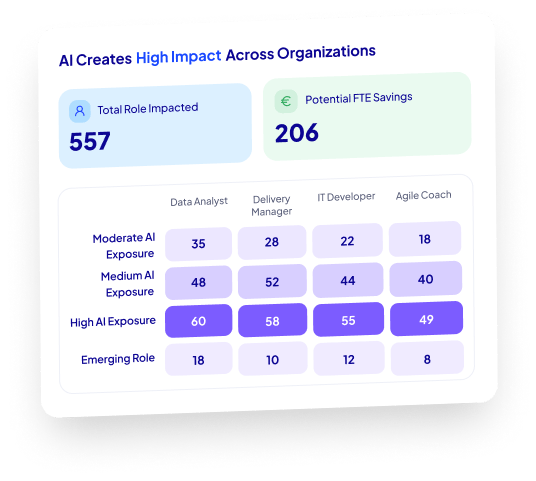
AI Workforce Transformation Platform
The Future of Workforce Transformation Has Arrived
Organizations today face unprecedented workforce challenges. Rapid advances in AI, automation, changing business models, and evolving skill requirements demand a new approach to workforce planning.
EDLIGO’s AI Workforce Planning module enables organizations to move beyond traditional headcount planning by combining workforce architecture, skills intelligence, competency data, and organizational structures into a unified planning platform.
Instead of relying on spreadsheets and manual analysis, HR leaders can rapidly generate workforce insights that support strategic decision-making across the enterprise.
Why Traditional Workforce Planning Falls Short
Conventional workforce planning often focuses on headcount rather than workforce capability.
Modern organizations require visibility into:
- Current workforce capacity
- Critical skill availability
- Future workforce demand
- Internal mobility opportunities
- Project staffing readiness
- Workforce transformation scenarios
EDLIGO helps organizations connect these dimensions using AI-assisted analysis and workforce intelligence.
AI-Powered Workforce Planning
EDLIGO combines organizational data with AI to accelerate workforce planning activities while maintaining full human oversight.
The solution enables organizations to:
- Analyze current workforce structures
- Identify capability gaps
- Forecast future workforce demand
- Match employees to projects based on skills
- Support succession planning
- Improve workforce utilization
- Prepare organizations for AI-driven transformation
Core Capabilities
Workforce Analysis
Gain visibility into workforce composition, organizational structures, and talent distribution across the enterprise.
Skills Intelligence
Map existing skills and competencies to identify organizational strengths and capability gaps.
AI Skills Matching
Identify the most suitable employees for projects, internal vacancies, or strategic initiatives based on skills and competencies.
Workforce Forecasting
Model future workforce requirements based on business growth, technology adoption, and changing organizational priorities.
Project Staffing
Accelerate staffing decisions by matching workforce capabilities with project requirements.
Internal Mobility
Identify employees who can transition into new roles through existing capabilities or targeted upskilling.
Business Benefits
Organizations using AI Workforce Planning can:
- Reduce workforce planning effort from weeks to hours
- Improve workforce visibility
- Support data-driven workforce decisions
- Increase workforce agility
- Strengthen succession planning
- Improve resource allocation
- Support enterprise-wide workforce transformation
- Build skills-based organizations
Supporting AI Workforce Transformation
AI is changing how work is performed across every industry.
Successful organizations require a clear understanding of:
- Which work can be automated
- Which roles will evolve
- Which new skills will be required
- Where workforce gaps will emerge
- How employees can be redeployed
EDLIGO’s Workforce Planning module provides the analytical foundation required to support sustainable AI Workforce Transformation.
Typical Use Cases
Organizations use EDLIGO to support:
- Strategic Workforce Planning
- Organizational Design
- Job Architecture
- Competency Framework Development
- Skills Management
- Succession Planning
- Project Staffing
- Internal Talent Mobility
- Workforce Transformation
- AI Readiness Assessments
Why EDLIGO
EDLIGO combines AI with workforce architecture expertise to help organizations accelerate workforce planning while maintaining governance, transparency, and expert validation.
The platform enables HR, business leaders, and consulting teams to move from fragmented workforce data to actionable workforce intelligence.
About EDLIGO
EDLIGO develops AI-powered workforce solutions that help organizations design workforce architectures, competency frameworks, skills libraries, and workforce transformation strategies.
Its platform supports organizations in accelerating workforce planning, improving workforce intelligence, and preparing employees for the future of work.
FAQ
What is AI Workforce Planning?
AI Workforce Planning combines organizational data with artificial intelligence to help organizations forecast workforce demand, identify skills gaps, and optimize workforce decisions.
How does EDLIGO support workforce planning?
EDLIGO analyzes organizational structures, roles, competencies, and skills to generate workforce insights that support strategic planning and workforce transformation.
Which organizations benefit from AI Workforce Planning?
Organizations undergoing digital transformation, organizational redesign, AI adoption, skills-based workforce initiatives, or strategic workforce planning can benefit from AI-assisted workforce planning.
Can Workforce Planning support AI Transformation?
Yes. Workforce Planning helps organizations understand how AI will impact roles, skills, workforce demand, and future capability requirements, enabling informed transformation decisions.
Book a Meeting
Ready to plan your AI workforce transofrmation plan?
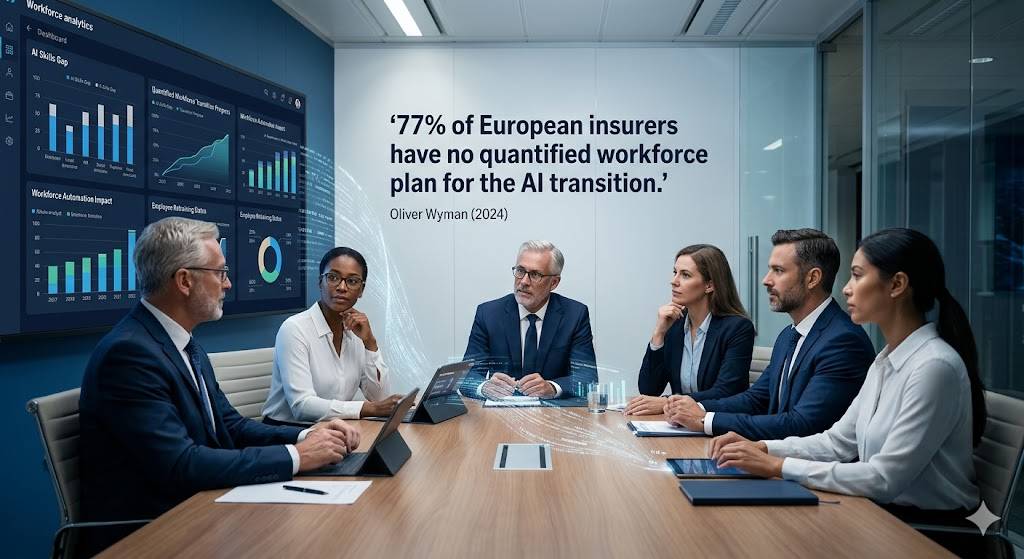
How AI Is Reshaping Insurance Workforces – And Why Most Insurers Aren’t Ready
The efficiency gains are real. The workforce response is missing. Here is what to do about it.
The Gap No One Is Talking About : Why AI Impact on Insurance Operations Isn’t Reducing Costs Yet
Artificial intelligence has arrived in insurance operations. Claims processing platforms now handle first notice of loss at scale. Underwriting decision support tools are live at most major carriers. Fraud detection models are running continuously across policy portfolios.
The technology investment is significant. The productivity signals are promising.
And yet, for most insurers, operating costs have not fallen. The combined ratio has not improved the way the investment in AI promised it would. The board is asking why.
The answer is not the technology. The technology is working. The gap is in the workforce response that never followed.
AI was deployed. The workforce was not restructured to match it. And that gap — between the tools that are live and the operating model that has not changed — is where billions in potential value are sitting unrealised.
The Scale of the Opportunity : Quantified Gains From AI in Insurance and Insurance Workforce Planning
The numbers behind this transformation are not speculative. They are documented, sector-specific, and growing.
Claims Processing : The Largest Target for AI-Led Staff Management Insurance
Claims processing represents 40 to 55 percent of total insurance operating costs — the single largest controllable cost line in an insurance business. According to Oliver Wyman’s 2024 Insurance Workforce in the Age of AI report, AI has the potential to reduce manual claims handling time by 30 to 50 percent. That is not a future projection. It is performance already observed in organisations that have restructured their workforce alongside their technology deployment.
Underwriting and Risk Accuracy : Documented Productivity Gains
Accenture’s Insurance Technology Vision 2025 documents a 35 percent reduction in underwriting processing time and a 22 percent improvement in risk accuracy at AI-adopter insurers. The productivity is there. But the workforce implication — which roles shrink, which evolve, which new capabilities emerge — remains unplanned in most organisations.
The Structural Failure : 77% of Insurers Lack a Quantified Workforce Plan
The most striking data point comes from Oliver Wyman’s research: 77 percent of European insurers have no quantified workforce plan for the AI transition.
That is not a marginal gap. It is a structural failure at industry scale. And the insurers who close it first will have a cost and performance advantage that compounds every year the others wait.
👉 Book a demo to explore how insurers are quantifying AI workforce impact and building defensible transformation models.
Why the Insurance Workforce Plan Is Missing : Methodological Failure, Not Intent
The Precision Gap : From Sector Benchmarks to Actionable Data
Understanding why the plan does not exist is as important as understanding why it should.
The challenge is not awareness. Insurance leaders know AI is changing their operations. The challenge is precision.
When the CFO asks “how many FTEs are impacted in claims?” — the honest answer in most organisations is “we don’t know exactly.” When the board asks for the workforce restructuring roadmap, the CHRO presents a directional narrative rather than a model. When the COO is asked to defend workforce cost projections, the assumptions behind them are borrowed from sector benchmarks rather than built from the organisation’s own data.
Why Traditional Insurance Management Systems and HR Tools Fall Short
This is not a failure of intent. It is a failure of methodology. The tools that most insurance organisations have available — HR information systems, actuarial models, management consulting engagements — were not built to answer the question “which specific tasks within which specific roles in my organisation are automatable, by how much, and what does that mean for my FTE structure and cost base?”
HR systems describe what has happened. They do not model what will change. Consulting engagements are expensive, slow, and produce outputs the organisation does not own. Sector benchmarks are informative but not actionable at the role level.
The result is that workforce transformation decisions in insurance are being made on assumptions. And assumptions, when challenged at board level, do not hold.
The Three Boardroom Conversations Driving AI Impact on Insurance Workforce Planning
The pressure is not abstract. It is arriving in three specific and increasingly urgent forms.
The Cost Conversation : Where Is the Staff Management Insurance Reduction?
“We have deployed AI across claims and underwriting. Where is the cost reduction?” If the answer cannot be built on the organisation’s own workforce data — showing which roles, at what volume, with what financial consequence — the conversation becomes a credibility problem for HR and operations leadership.
The Governance Conversation : Regulatory Expectations for Insurance Management Systems
EIOPA’s 2024 Supervisory Statement on AI and Digital Transformation in Insurance requires insurers to demonstrate transparency in operational changes, traceability of transformation assumptions, and controlled implementation of AI. Solvency II operational risk reporting is evolving to include AI workforce impact. The regulatory expectation is no longer directional — it is documentary. Most insurers cannot produce the required documentation today.
The People Conversation : Workforce Transition and Legal Exposure
Workforce restructuring without a documented transition plan creates legal exposure, union risk, and reputational damage. In European insurance particularly, Works Councils expect structured engagement on material workforce changes. The organisations that manage this well are the ones who built the plan two years before the restructuring, not six months after it became unavoidable.
👉 Book a demo to explore how insurers are quantifying AI workforce impact and building defensible transformation models.
What a Quantified AI Workforce Plan Actually Looks Like : From Insurance Software Systems to Task-Level Analysis
The starting point is not a strategy presentation. It is a task-level analysis.
Decomposing Roles : The Task-Level Foundation for AI Workforce Planning
Effective AI workforce planning in insurance begins by decomposing roles into their underlying task components — not at the function level (“claims operations is impacted”) but at the activity level (“manual FNOL documentation, claim triage, coverage validation, reserve setting, fraud screening, payment processing”). Each task is then assessed against current AI capability: what can be automated, what can be augmented, what requires human judgment.
This task-level precision is what makes the analysis actionable. It is also what makes it defensible. When the CFO challenges the FTE projection, the answer is not a sector benchmark — it is a traceable model built from the organisation’s own role structure, headcount, and salary data.
Five Strategic Outcomes Mapped to Insurance Leadership Requirements
The output of this analysis maps directly to the five strategic outcomes that insurance leadership is required to deliver.
Outcome 1 : Quantified FTE and Cost Impact
Quantified FTE and cost impact across claims, underwriting, and back-office operations. Not a range. A model.
Outcome 2 : Structured Business Case for Redeployment
A structured business case for redeployment or restructuring across 50 to 200 FTEs over a 24-month horizon — built with the phasing and financial rigour that a CFO will approve.
Outcome 3 : Phased Cost-Reduction Roadmap
A phased cost-reduction roadmap tied to the AI tool implementation timeline already underway.
Outcome 4 : Audit-Ready Documentation for EIOPA and Solvency II
Audit-ready documentation designed to support EIOPA supervisory review and Solvency II operational risk reporting requirements.
Outcome 5 : Defensible Workforce Transition Model
A defensible workforce transition model for union dialogue and regulatory scrutiny — not a narrative, a quantified upskilling and redeployment plan.
The Functions Most Exposed : What Insurance Agent Management Systems and Senior Roles Reveal
The task-level analysis consistently surfaces a finding that challenges the assumptions most insurance leaders carry into the room.
Highest AI Exposure : Claims, Policy Admin, and Back-Office
The functions with the highest AI exposure are the expected ones. Claims handling — particularly FNOL, document processing, standard assessment, and payment administration — shows AI applicability across 35 to 45 percent of task volume. Policy administration and back-office processing follows closely. These are the roles where automation is deepest and fastest.
The Strategic Insight : Productivity Gains Also Come From Senior Roles
But the finding that generates the most strategic conversation is this: a significant share of the productivity gains identified come not from junior processing roles, but from senior and managerial functions.
Senior claims managers, chief underwriters, operational directors — these roles carry substantial time on coordination, reporting, documentation, and oversight of processes that AI can streamline. Freeing that time does not reduce these roles. It redirects their capacity toward judgment, exception handling, client relationships, and strategic input. The same people. Significantly higher output.
This reframes the entire workforce transformation narrative. It is not a cost-cutting exercise imposed on the organisation. It is a capability multiplication — with the efficiency gains as a consequence, not the objective.
The 2026–2028 Window : Why Insurance Software Systems and First Movers Will Dominate
The competitive dynamic in insurance workforce transformation is not symmetrical. The organisations that build a quantified AI workforce plan now will have a structural cost advantage by 2027 and 2028 that is very difficult for late movers to close.
Compounding Value : Why Insurance Workforce Planning Is Not a One-Time Gain
This is because the value of AI workforce restructuring is not a one-time gain. It compounds. Each phase of restructuring — from quick wins in claims processing to strategic transformation in underwriting — builds the capability and institutional knowledge that makes the next phase faster and cheaper. The organisations that start in 2026 will be in their third phase by the time their competitors are completing their first.
The Narrowing Window : Regulatory Pressure and First-Mover Advantage
The window is not permanently open. It narrows as AI capability advances, as regulatory requirements tighten, and as the first-mover advantage accrues to those who acted.
👉 Book a demo to explore how insurers are quantifying AI workforce impact and building defensible transformation models.
From Assumptions to a Defensible Model : Integrating AI Workforce Planning Into Your Insurance Management System Software
The shift that insurance leaders need to make is not strategic. It is methodological. The strategy — transform the workforce alongside the technology investment — is already understood. What is missing is the tool to build the model.
Building From Your Own Data, Not Benchmarks
The model needs to be built from the organisation’s own data, not from sector benchmarks. It needs to be traceable, so Finance and the board can challenge the assumptions. It needs to be phased, so the transformation can be sequenced and managed without disruption. And it needs to be owned by the organisation’s own HR and operations leadership — not by an external consultant whose engagement ends when the project closes.
When the Model Exists : A New Conversation for CFO, CHRO, COO, and Board
When that model exists, the conversation changes. The CFO gets a number they can defend. The CHRO gets a roadmap they designed. The COO gets a sequenced implementation plan. The board gets the governance evidence it requires. And the organisation gets a structural cost advantage that its competitors do not have.
The question is not whether AI will change your insurance workforce. It already is. The question is whether you can quantify it — and act on that insight while the window is still open.
Key Takeaways : AI Workforce Planning, AI in Insurance, and Staff Management Insurance at a Glance
-
77% of European insurers have no quantified workforce plan for the AI transition (Oliver Wyman, 2024)
-
Claims processing represents 40–55% of total insurance operating costs — the primary target of AI-driven workforce restructuring (Oliver Wyman, 2024)
-
AI can reduce manual claims handling time by 30–50% — but only when workforce restructuring follows the technology deployment (Oliver Wyman, 2024)
-
EIOPA’s 2024 Supervisory Statement requires documented AI workforce impact assessments — most insurers cannot currently produce them (EIOPA, 2024)
-
The 2026–2028 window is the restructuring moment — first movers will establish a compounding cost advantage
The Solution Exists : Workforce AI – Your Tool for Quantified Workforce Transformation
The diagnosis is clear. The lack of methodology and fit‑for‑purpose tools prevents insurers from turning intentions into results. That is exactly why Edligo built Workforce AI — a platform designed by and for insurance leaders.
Workforce AI Turns Your Internal Data Into a Defensible Action Plan
Where HR systems and sector benchmarks fall short, Workforce AI delivers:
-
Task‑level granularity : decompose every role (claims, underwriting, back‑office) into individual tasks and assess AI automation or augmentation potential.
-
Traceable financial modelling : FTE impact, cost savings, and redeployment scenarios over 24 months — ready for your CFO and board.
-
Supervisor‑ready reporting : documentation aligned with EIOPA and Solvency II expectations to justify workforce restructuring.
-
Secure HR governance : transition plans, upskilling pathways, and data‑backed works council engagement — not just intentions.
Why First Movers Choose Workforce AI
Insurers that start their restructuring in 2026 will lock in a structural cost advantage by 2027‑2028. Workforce AI helps you get there in weeks — without expensive external consulting, and with full ownership of your model.
Book a Meeting
Ready to build your own quantified AI workforce plan?
Sources
Oliver Wyman — Insurance Workforce in the Age of AI, 2024 · oliverwyman.com/our-expertise/industries/insurance
Accenture — Insurance Technology Vision 2025 · accenture.com/us-en/insights/insurance
EIOPA — AI and Digital Transformation in Insurance — Supervisory Statement, 2024 · eiopa.europa.eu
Gartner — CHRO Persona Priorities 2026 · gartner.com/en/human-resources
McKinsey Global Institute — The Economic Potential of Generative AI, 2024 · mckinsey.com/capabilities/mckinsey-digital/our-insights
Deloitte — Global Human Capital Trends 2025 · deloitte.com/global/en/pages/human-capital
World Economic Forum — Future of Jobs Report 2025 · weforum.org/publications/the-future-of-jobs-report-2025

How Universities Can Increase Career Center Engagement: A Step-by-Step Strategy for Improving Student Employability
Why Career Center Engagement Is Low in Universities
Career Services Are Not Embedded in the Student Journey
Most universities still treat career services as:
- optional support
- final-year activity
- external service
👉 Result: low adoption
Students Lack Immediate Incentives
Students think in short-term priorities:
- exams
- internships
- grades
Career planning feels “future-focused” → not urgent.
Traditional Models Do Not Scale Engagement
Career advisors cannot:
- proactively reach all students
- personalize communication
- provide continuous guidance
Step 1 — Make Career Services Visible from Day One
Integrate Career Services Into First-Year Experience
Universities should introduce:
- career planning early
- mandatory onboarding sessions
- digital career tools
Normalize Career Engagement
Career services should feel:
- essential
- not optional
Step 2 — Move from Reactive to Proactive Support
Traditional Model
- student books appointment
- advisor reacts
Modern Model (AI-Driven)
- system detects student needs
- proactive recommendations are sent
👉 This is where AI becomes essential
Step 3 — Use AI Career Guidance to Scale Engagement
AI enables universities to:
Deliver Instant CV Feedback
Students get:
- immediate analysis
- personalized suggestions
Provide Continuous Career Support
Instead of one-time sessions:
- ongoing guidance
- adaptive recommendations
Improve Accessibility
AI tools are:
- 24/7 available
- scalable
- consistent
Step 4 — Align Career Services With Employability Frameworks
Universities must align with structured frameworks such as:
👉 NACE Career Readiness Competencies
These include:
- communication
- professionalism
- critical thinking
- teamwork
Step 5 — Measure What Matters (Not Just Usage)
Beyond Appointments
Universities should track:
- skill development
- employability progress
- student readiness
Data-Driven Career Services
According to
👉 McKinsey & Company
data-driven decision making improves institutional performance.
🔗 Capabilities | McKinsey & Company
Step 6 — Implement AI Career Services Platforms
Why AI Platforms Are the Missing Layer
They allow universities to:
- scale career guidance
- increase engagement
- personalize at population level
Example: AIRA for Universities
AIRA enables:
- AI-powered CV feedback
- continuous engagement
- employability tracking
👉 This directly supports the strategies above
Step 7 — Create a Continuous Engagement Loop
Career services should not be a “one-time visit”.
Instead:
- engage early
- guide continuously
- support throughout studies
Conclusion: Engagement Is a System, Not a Campaign
Increasing career center engagement is not about:
- more workshops
- more emails
- more events
👉 It is about redesigning the system itself.
AI now makes it possible to:
- scale personalization
- embed career guidance
- improve employability outcomes
How to Increase Career Center Engagement
-
How Universities Can Use an AI Career Services Platform to Scale Student Employability
-
Why Students Don’t Use Career Services – And How AI Career Guidance Is Transforming Universities
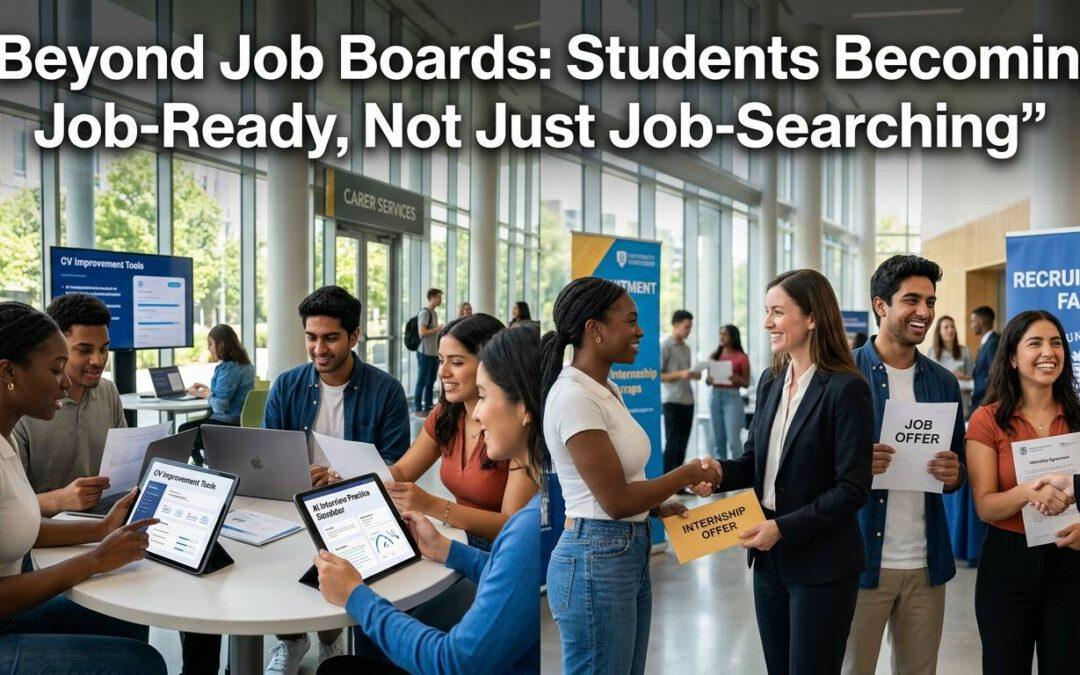
Best Career Services Software for Universities: How to Choose the Right Employability Platform
Universities are increasingly searching for career services software to improve student employability, engagement, and graduate outcomes.
But with the rise of AI-powered career guidance platforms, choosing the right solution has become more complex than ever.
👉 Before exploring solutions, it’s important to understand
why traditional career services models are no longer effective
What Is Career Services Software for Universities?
Definition and Purpose
Career services software is a digital platform designed to help universities:
- support student career development
- improve employability outcomes
- manage career center activities
Key Categories of Career Services Platforms
Traditional Career Center Management Systems
- appointment scheduling
- job boards
- event management
👉 Limitation: administrative focus, not employability impact
Student Employability Platforms
- skill development tools
- career readiness tracking
- personalized guidance
👉 More aligned with modern needs
AI Career Guidance Platforms
- CV feedback automation
- personalized recommendations
- scalable support
👉 This is where the market is evolving
👉 Request a demo and see how AIRA improves student employability
Why Universities Are Investing in Career Services Platforms
Pressure to Improve Graduate Employability
Universities are increasingly evaluated on:
- employment rates
- student outcomes
- rankings
According to the
👉 World Economic Forum
skills are becoming more important than degrees.
🔗 The Future of Jobs Report 2023 | World Economic Forum
The Need to Scale Career Support
Career centers cannot support thousands of students individually.
👉 This is the core limitation explored here:
➡️ Why Students Don’t Use Career Services — And How AI Is Transforming Universities
Increasing Student Expectations
Students expect:
- instant feedback
- digital access
- personalized experiences
👉 Traditional systems fail to deliver this.
Key Features to Look for in Career Services Software
1. AI Resume Feedback and CV Optimization
Students should receive:
- instant analysis
- actionable recommendations
2. Career Readiness Tracking
Platforms should align with frameworks like
👉 NACE Career Readiness Competencies
3. Student Engagement Tools
Look for:
- interactive interfaces
- continuous engagement features
4. Data and Analytics for Universities
Institutions need:
- dashboards
- insights
- measurable outcomes
According to
👉 McKinsey & Company
data-driven strategies improve performance.
🔗 Global management consulting | McKinsey & Company
👉 Request a demo and see how AIRA improves student employability
Traditional vs AI Career Services Platforms
Traditional Career Services Software
- manual processes
- limited scalability
- low engagement
AI-Powered Career Services Platforms
- automated guidance
- scalable support
- personalized experiences
👉 This shift is redefining employability strategies.
How to Choose the Best Career Services Software for Your University
Step 1: Define Your Objectives
- improve employability
- increase engagement
- support all students
Step 2: Evaluate Scalability
Can the platform support:
- thousands of students?
Step 3: Assess AI Capabilities
Does it provide:
- real personalization?
- actionable insights?
Step 4: Measure Impact
Can you track:
- student progress?
- employability outcomes?
👉 Request a demo and see how AIRA improves student employability
AIRA: AI Career Services Platform for Universities
A New Approach to Career Services
AIRA is designed to:
- scale career guidance
- improve engagement
- enhance employability
Why AIRA Stands Out
- AI-powered CV feedback
- continuous student engagement
- alignment with
👉 NACE Career Readiness Competencies
Conclusion: Choosing the Right Career Services Platform
The question is no longer:
👉 “Do we need career services software?”
But:
👉 “How do we deliver employability at scale?”
AI-powered platforms are becoming the standard.
👉 Explore AIRA for Universities
👉 Request a demo and see how AIRA improves student employability
Universities are increasingly turning to career services software to scale their impact.
👉 Explore how to choose the right platform
➡️ Read: Why Students Don’t Use Career Services — And How AI Is Changing It
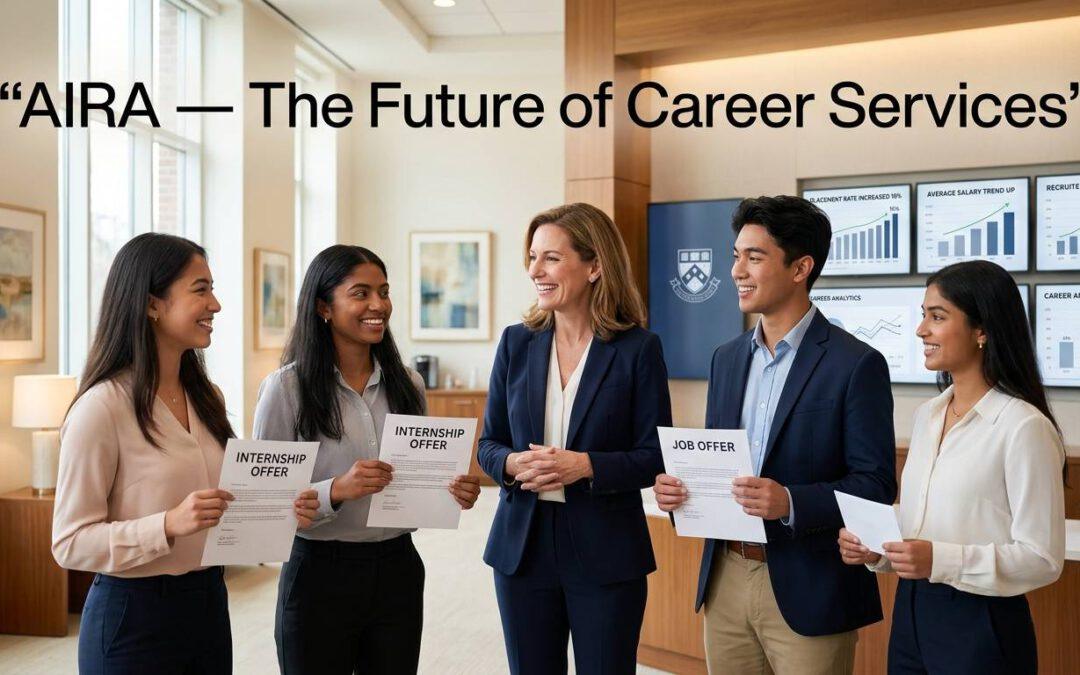
Beyond Handshake: The AI Career Services Platform Built for the Employability Gap Universities Can No Longer Ignore
Why Career Service Management Is at an Inflection Point
University career centers are better funded than ever. According to NACE’s 2024–25 Career Services Benchmarks Report, the median overall career center budget has reached approximately $504,000 — a 21% increase over two years. Staffing levels are growing. Technology adoption is accelerating: 59.3% of career center staff now use AI as an assistive tool.
And yet, the fundamental problem has not moved: most students still graduate without meaningful career preparation support.
This article is for Directors of Career Services, Vice Presidents of Student Affairs, and Employability Deans who are actively evaluating career services platforms — including alternatives to Handshake and legacy career service management tools — and who want to understand what a genuinely modern, AI-powered approach looks like in 2026.
What Does NACE Mean — and Why It Should Drive Every Career Services Platform Decision You Make
Before evaluating any career services platform or career path tool, every career professional needs a clear answer to one foundational question: what does NACE mean, and why does it matter for platform selection?
NACE stands for the National Association of Colleges and Employers — established in 1956, it is the leading source of information on the employment of the college educated, with a mission to empower the community of talent acquisition and higher education professionals focused on the development and employment of college-educated talent by advancing equitable, evidence-based practices. UAEU
NACE is not simply a professional association. It is the primary standards body for career readiness in higher education globally. Its research, benchmarks, and competency frameworks are what institutional rankings, accreditation bodies, and employers use to measure the quality of your graduates — which means they should drive every career services platform evaluation you conduct.
The 8 NACE Competencies — and the Uncomfortable Gap Your Career Services Platform Must Close
What Are the NACE Competencies?
Career Readiness is the attainment and demonstration of requisite competencies that broadly prepare college graduates for a successful transition into the workplace. Employers have identified the following eight competencies as necessary skills for any new college graduate. HigherEdJobs
The 8 NACE competencies are: Career & Self-Development, Communication, Critical Thinking, Equity & Inclusion, Leadership, Professionalism, Teamwork, and Technology. Uaeu
NACE launched its Career Readiness Initiative in 2015 to give students, career centers, and employers a shared vocabulary, and the competencies have been updated through 2024, reflecting what today’s hiring managers actually screen for. UAEU
What Are the NACE Professional Competencies Telling Us About the State of Graduate Readiness?
The answer is sobering. Data from NACE’s 2024 Student Survey and Job Outlook 2025 survey reveal that although both groups are in alignment when it comes to the high importance of communication, critical thinking, teamwork, and professionalism, for other competencies — most notably leadership and career and self-development — there is a sizable gap in the perception of importance between new graduates and employers. LinkedIn
The biggest perception gap is in Leadership: students overestimate their leadership proficiency by approximately 30 percentage points compared to how employers rate them. That is the largest single gap in NACE’s 2024 data. Uaeu For Professionalism and Communication, the gap approaches or exceeds 25–30%.
NACE Materials and What They Mean for Your Career Services Platform
The NACE Career Readiness Competency framework and its assessment tools were developed to help students, higher education professionals, and employers assess and ensure readiness for the workforce. The main goals are twofold: to help students identify skills essential for career success, and to support educators and employers in guiding skill development. Kaust
More than 83% of career service professionals and recruiting organizations are now implementing NACE’s career readiness competencies as part of their programs. Russell Group Yet slightly less than one-quarter of schools (24.4%) have developed an assessment plan for their competency integration. Russell Group
This is the core structural failure: institutions are adopting the NACE career competencies as a framework, but they lack the technology to operationalize and measure them at scale — across every student, every semester, every cohort.
The Career Services Platform Landscape in 2026 — Websites Like Handshake and Their Limitations
Websites Like Handshake — What They Do Well, and Where They Stop
When career professionals search for websites like Handshake or Handshake AI alternatives, they are typically evaluating platforms designed to connect students with employer job postings. Handshake has built a network of over 14 million college students and recent graduates from 1,400 campuses, and helps young talent find everything from paid internships to full-time jobs. RocketReach
Handshake and platforms like it — including Symplicity, RippleMatch, and Highered — perform a specific and valuable function: employer-side recruitment infrastructure. They help employers post jobs, and they help students find postings. Symplicity focuses on student engagement and career outcomes in the higher education sector, offering software solutions that help universities provide services for students. KFUPM
But here is the fundamental limitation of every platform in the websites like Handshake category: they assume the student is already prepared. They are job boards with matching logic. They do not close the NACE competencies gap. They do not tell a student why 75% of their CVs are filtered by ATS screening before a human ever reads them (Harvard Business Review, 2019). They do not provide personalized, role-specific feedback at 2 a.m. before a student submits an application.
The Career Services Platform Gap That AI Now Fills
The limitations of traditional career services platforms are well documented by NACE itself. The 2024-25 Career Services Benchmarks data show that the median career center has a total office FTE of just 7.0. Wikipedia Seven full-time staff members supporting thousands of students. That is not a staffing problem. That is a structural impossibility.
Career path tools that rely on human delivery — workshops, 1:1 coaching, drop-in appointments — hit a ceiling that no additional budget can raise. The problem is not resources. The problem is architecture.
Career Service Management in the Age of AI — A New Standard for Career Services Platforms
What Modern Career Service Management Actually Requires
Effective career service management in 2026 must deliver five outcomes simultaneously:
- Universal reach — not the 31% of students who actively walk through the door, but every enrolled student across every cohort
- Personalisation at scale — feedback that is specific to each student’s CV, target role, and individual skills gaps
- NACE competency alignment — tools that map directly to the 8 NACE career competencies and generate measurable data
- Institutional visibility — real-time dashboards that show engagement, application quality trends, and placement outcomes
- Zero IT dependency — deployment that does not require months of integration with existing LMS or ERP infrastructure
No traditional career services platform delivers all five. That is the gap that AI-powered platforms now exist to fill.
AI Career Path Tools — What Genuine AI Looks Like in Career Services
The term “AI” is used loosely across the career services platform market. Most platforms that describe themselves as websites like Handshake AI or AI-enhanced job boards are applying basic recommendation algorithms to job matching — the same logic Netflix uses to suggest a film.
Genuine AI career path tools operate differently. They:
- Analyse a student’s specific CV against the requirements of a specific job description, identifying precise competency gaps
- Generate role-tailored interview preparation questions based on the employer’s actual screening criteria
- Produce structured, actionable CV improvement recommendations — not generic tips, but specific edits
- Do all of this in seconds, available 24/7, with no human bottleneck
This is the architecture of AIRA, EDLIGO’s AI-powered career readiness platform built specifically for university career centers.
AIRA — The AI Career Services Platform Designed Around NACE Professional Competencies
How AIRA Maps to the 8 NACE Competencies
Unlike employer-facing platforms, AIRA is designed from the ground up around the 8 NACE competencies that employers actually use to evaluate graduates. Here is how each competency maps to AIRA’s capabilities:
Career & Self-Development → AIRA provides each student with a clear, data-driven picture of where they stand relative to their target role, what skills they are missing, and precisely how to close those gaps before application.
Communication → AIRA’s CV analysis identifies structural and linguistic weaknesses in how students present their experience — not as generic feedback, but as specific, evidence-based recommendations aligned with recruiter expectations.
Critical Thinking → The platform trains students to read job descriptions analytically, identify the competencies employers are actually screening for, and strategically align their application language accordingly.
Technology → Technology appears as specific tools with specific outcomes in employer expectations, not just “proficient in Microsoft Office.” Uaeu AIRA familiarises students with the ATS-driven hiring logic that governs 75% of initial CV screening decisions.
Professionalism & Leadership → For leadership and professionalism, the gap between student self-rating and employer rating exceeds 30% — the largest single gaps in NACE’s 2024 data. Uaeu AIRA’s interview preparation module directly addresses this by exposing students to the behavioural and leadership questions employers actually ask.
Teamwork, Equity & Inclusion → AIRA’s job matching logic surfaces roles aligned with students’ demonstrated collaborative and cross-cultural experience, helping them position these competencies effectively.
What AIRA Delivers to Career Service Management Teams
For career service management professionals, AIRA functions as an institutional intelligence layer — not just a student-facing tool:
- Real-time engagement dashboards showing platform usage, CV improvement rates, and application activity across the entire student population
- Cohort-level competency gap analysis identifying which NACE career competencies are most underdeveloped across specific programmes or year groups
- Placement outcome tracking that generates the data needed for accreditation reporting, board presentations, and ministerial employability returns
- Automated reporting exports formatted for institutional benchmarking against NACE material standards
Deployment — No IT Project, No Integration, No Delay
One of the most consistent barriers to adopting new career services platforms is IT complexity. AIRA eliminates this entirely. The platform is:
- Fully standalone SaaS — no integration with Workday, Banner, or any LMS required
- Accessible on mobile and web — meeting students where they actually are
- Live within days of agreement — not months
- Self-service for students, with minimal onboarding required from career center staff
The Evidence Case for AI-Powered Career Services Platforms
The NACE Data Your Board Needs to See
Career center budgets for the 2024-25 academic year have increased across the board since 2022-23. At approximately $504,000, the median overall budget has increased by 21% in the last two years. SI-UK
Budgets are growing. But engagement is not keeping pace. NACE’s own research consistently shows that fewer than a third of students actively use career services. The institutions that will win the next decade of graduate employability competition are not those that spend more on the same model — they are those that deploy career path tools that operate independently of human availability and institutional capacity.
More than 83% of career service professionals and recruiting organisations are now implementing NACE’s career readiness competencies as part of their programs. Russell Group But implementation without measurement is aspiration, not strategy. Slightly less than one-quarter of schools have developed an assessment plan for their competency integration. Russell Group AIRA closes this gap — turning NACE competency frameworks from poster content into operational data.
Skills-Based Hiring Is Accelerating — and Your Graduates Must Be Ready
In 2019, about 73% of employers screened candidates by GPA. By 2026, that figure has dropped to roughly 42%. What replaced it? Demonstrated skills. Seventy percent of employers participating in NACE’s Job Outlook 2026 survey report using skills-based hiring for entry-level hires, up from 65% the year before. Uaeu
Your graduates are competing in a market where their CV is screened by an algorithm before a human ever reads it — and where the criteria are competency-based, not credential-based. Traditional career services platforms were not designed for this world. AIRA was built for it.
Who Should Evaluate AIRA
AIRA is designed for key stakeholders involved in shaping, managing, and improving student employability outcomes within higher education institutions.
These stakeholders typically include, but are not limited to:
Career Services and Employability Leaders responsible for designing and delivering career support strategies, expanding student engagement, and demonstrating measurable ROI on employability initiatives.
Student Affairs and Academic Leadership (including Deans, Vice Presidents, and institutional leaders) who are accountable for graduate outcomes, student success metrics, and the scalability of career support services across the full student population.
Employability, Quality Assurance, and Accreditation Leads who oversee graduate outcomes reporting, competency frameworks (such as NACE or equivalent), institutional rankings, and compliance with external evaluation bodies.
University Digital Transformation and IT Leadership (CIO / Digital Officers) who evaluate and approve platforms that integrate into existing student systems, ensure scalability, and align with institutional digital strategies.
Institutional Research and Analytics Teams who require reliable data on student engagement, employability outcomes, and program effectiveness to support strategic decision-making.
The Pilot Offer — 90 Days, Up to 200 Students
AIRA offers a structured 90-day pilot program designed for a select cohort of universities across key regions — including the UAE and Saudi Arabia, the United Kingdom, Germany, France, the United States, and North Africa.
This pilot is delivered as a paid engagement at preferential rates, allowing institutions to:
- Validate impact on student employability outcomes
- Assess platform adoption and usage patterns
- Generate initial performance insights for internal stakeholders
The pilot is structured to ensure commitment, measurable results, and a clear path to scale, rather than a free trial with limited engagement.
Conclusion: The Future of Career Services Platforms Is Not a Better Job Board
The search for websites like Handshake reflects a real and legitimate need — but it is the wrong frame for the challenge that career center leaders actually face in 2026.
Handshake and platforms like it solve a recruitment pipeline problem. They connect employers to students. That is valuable. But they do not close the NACE competency gaps that determine whether your graduates succeed once they reach that pipeline. They do not reach the 69% of students who never engage with career services. They do not generate the institutional data that makes the case for career center investment at board level.
There is a clear and persistent disconnect between how students and employers perceive students’ development of the competencies they need to be career ready as they enter the workforce. Uaeu That disconnect will not be closed by a better job board. It will be closed by an AI platform that makes personalised, competency-aligned career preparation available to every student, at any time, at institutional scale.
That is AIRA.
→ Request a University Pilot | edligo.net/aira-for-universities
For partnerships and institutional enquiries: visit edligo.net
Read More:
Sources cited in this article:
- National Association of Colleges and Employers (NACE): naceweb.org/career-readiness/competencies
- NACE 2024 Career Readiness Competencies Framework (revised April 2024): naceweb.org
- NACE 2024–25 Career Services Benchmarks Report: naceweb.org
- NACE Quick Poll — Career Readiness Competencies Implementation: naceweb.org
- NACE Gap in Perceptions of New Grads’ Competency Proficiency (January 2025): naceweb.org
- Extern — Career Readiness NACE’s 8 Competencies Explained (2026): extern.com
- Harvard Business Review — ATS Filtering (2019)
- Handshake Platform Overview: joinhandshake.com
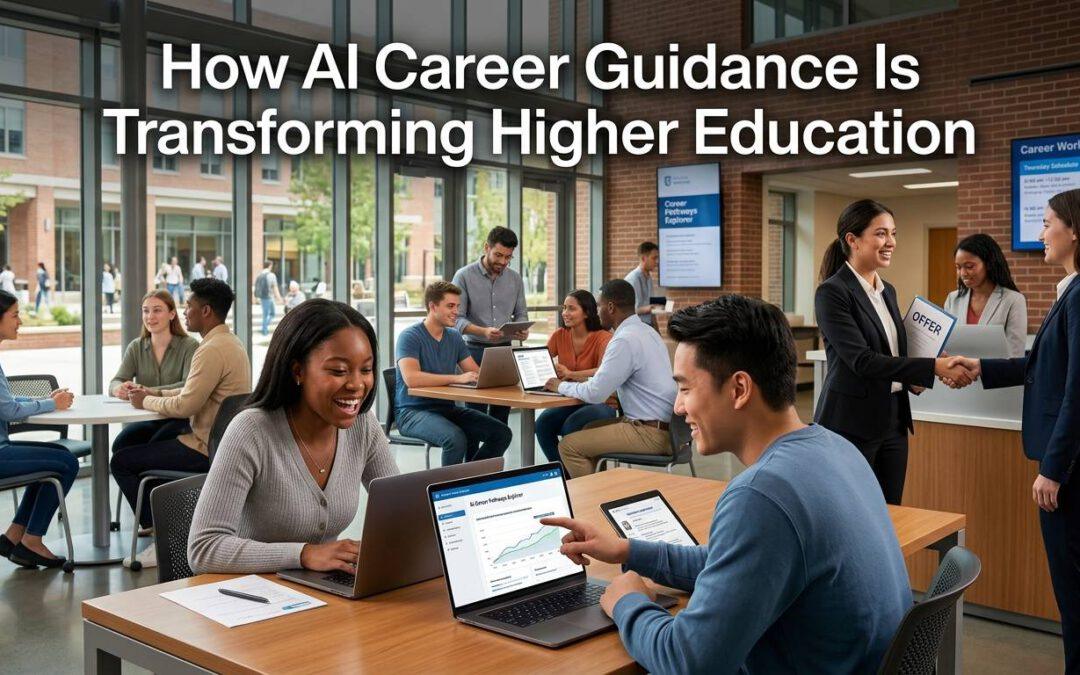
Why Students Don’t Use Career Services – And How AI Career Guidance Is Transforming Universities
Universities around the world invest heavily in career services, yet one uncomfortable truth remains:
👉 Most students never use them.
Despite the presence of dedicated career centers, workshops, and advisors, a large proportion of students:
- never seek CV feedback
- delay career preparation
- enter the job market unprepared
This disconnect is not a failure of effort — it’s a failure of model.
In this article, we explore:
- why students don’t engage with career services
- the structural limitations of traditional approaches
- how AI-powered career guidance platforms are redefining student employability
The Real Problem: Low Student Engagement in Career Services
Students Know Career Services Exist — But Still Don’t Use Them
Awareness is not the issue.
Most universities already promote their career services extensively. Yet engagement remains low.
According to the
👉 National Association of Colleges and Employers
career readiness is a top priority — but student engagement remains inconsistent.
🔗 Source: Career Readiness
Career Services Are Often Seen as “Optional”
Students tend to perceive career services as:
- something to use later
- something for final-year students
- something non-essential
This creates a reactive behavior pattern:
👉 Students only seek help when it’s too late.
The Accessibility Problem
Traditional career services rely on:
- physical appointments
- limited advisor availability
- scheduled workshops
This model does not match student expectations in a digital-first world.
The Career Readiness Gap: A Growing Concern for Universities
Employers Are Not Satisfied with Graduate Readiness
Employers consistently highlight gaps in:
- communication
- problem-solving
- adaptability
These competencies are defined in the
👉 NACE Career Readiness Competencies
The Shift from Degrees to Skills
The World Economic Forum has repeatedly emphasized that the future of work is skills-based, not degree-based.
🔗 Source: The Future of Jobs Report 2023 | World Economic Forum
👉 This puts pressure on universities to demonstrate real employability outcomes.
Universities Are Now Measured on Outcomes
Institutions are increasingly evaluated based on:
- graduate employment rates
- career outcomes
- employability rankings
👉 Career services are no longer “support functions”
👉 They are strategic drivers of institutional success
Why Traditional Career Services Cannot Scale
H3: A Structural Capacity Problem
A typical career center faces:
- thousands of students
- limited advisors
- manual processes
👉 Result:
It is impossible to provide personalized guidance to every student.
One-to-One Support Does Not Scale
Even the best advisors cannot:
- review every CV
- guide every student
- provide continuous feedback
👉 This creates inequality:
- proactive students benefit
- the majority is left behind
Lack of Continuous Engagement
Career services interactions are often:
- one-time
- disconnected
- not integrated into student journeys
👉 This prevents long-term impact.
AI Career Guidance for Students: A New Model for Universities
What Is AI-Powered Career Guidance?
AI career guidance uses artificial intelligence to:
- analyze student profiles
- provide personalized recommendations
- deliver instant feedback
- scale support across the entire student population
How AI Improves Student Engagement
AI solutions are:
- available 24/7
- instant
- personalized
👉 This aligns perfectly with how students behave today.
From Reactive to Proactive Career Support
Traditional model:
- student initiates
AI model:
- system guides continuously
👉 This shift is critical for improving outcomes.
How AI Career Services Platforms Improve Student Employability
Personalized CV Feedback at Scale
Students receive:
- instant CV analysis
- tailored recommendations
- continuous improvement suggestions
👉 No waiting. No appointments.
Continuous Career Readiness Development
AI platforms help students:
- build skills over time
- track progress
- align with employer expectations
Data-Driven Decision Making for Universities
AI enables institutions to:
- track engagement
- measure employability progress
- identify skill gaps
According to
👉 McKinsey & Company
data-driven talent strategies significantly improve organizational outcomes.
🔗 Source: www.mckinsey.com
From Career Centers to Employability Platforms
The Evolution of Career Services
Old model:
- physical office
- limited reach
New model:
- digital platform
- embedded in student journey
Universities Leading the Transformation
Forward-thinking institutions are already:
- adopting AI tools
- digitizing career services
- focusing on scalability
AIRA for Universities: AI-Powered Career Services at Scale
Bridging the Gap Between Students and Career Readiness
AIRA enables universities to:
- increase engagement
- improve employability
- provide personalized support at scale
Designed for Modern Career Services
With AIRA, universities can:
- deliver instant CV feedback
- support all students, not just a few
- align with frameworks like
👉 NACE Career Readiness Competencies
How Universities Can Increase Career Center Engagement
Make Career Services Always Accessible
Students engage more when services are:
- on-demand
- digital
- easy to use
Integrate Career Guidance Early
Start from year 1 — not final year.
Use AI to Scale Support
AI is not replacing advisors —
👉 it is augmenting their impact.
The Future of Career Services in Higher Education
The future is clear:
👉 Career services will become AI-powered, data-driven employability platforms
Universities that adapt will:
- improve rankings
- attract students
- strengthen employer partnerships
Conclusion: Fixing the Engagement Problem with AI
The issue is not that students don’t care.
👉 The issue is that current systems don’t fit how they behave.
AI offers a new model:
- scalable
- personalized
- continuous
And that is exactly what modern universities need.
Frequently Asked Questions About AI Career Guidance for Universities
H3: Why don’t students use career services?
Because services are often:
- not accessible
- not personalized
- introduced too late
How can universities improve student employability?
By combining:
- continuous guidance
- skill development
- AI-powered tools
What is AI career guidance for students?
It is the use of AI to deliver:
- personalized advice
- CV feedback
- career recommendations at scale
🚀 Want to increase student engagement and improve employability outcomes at scale?
👉 Discover how AIRA transforms career services.
Read More:
👉 See how universities use an AI career services platform to scale student employability
👉Discover how to improve student employability at scale
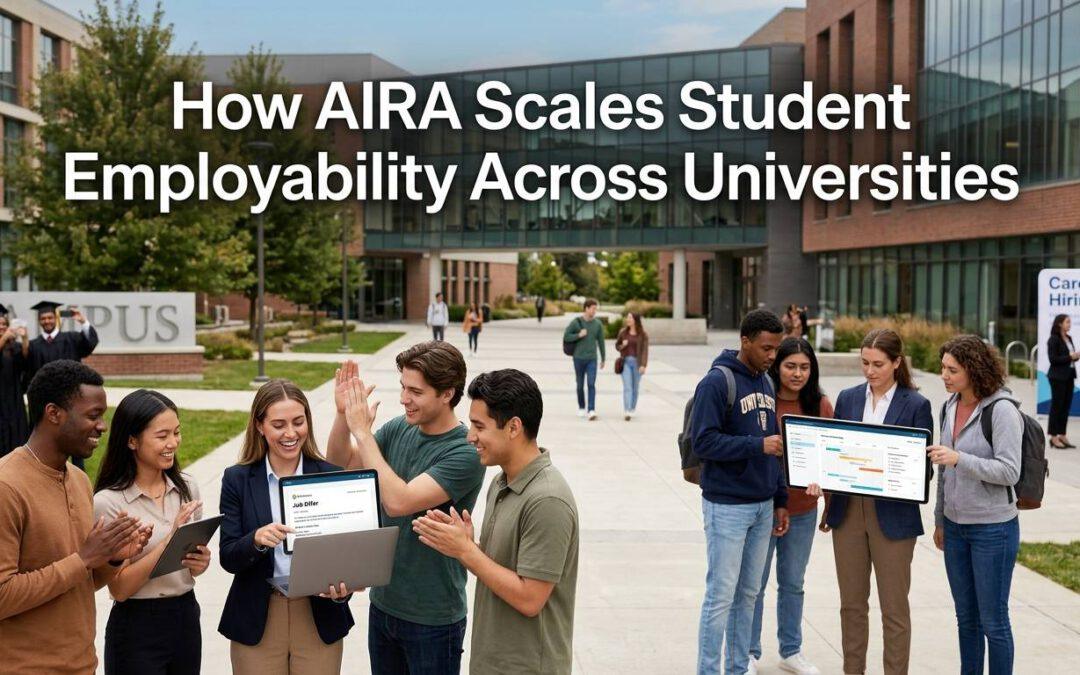
AI Career Services Platform for Universities: How to Improve Student Employability at Scale
Why Traditional Career Services Are Failing to Improve Student Employability
Low Student Engagement in Career Centers
One of the most widely reported challenges in higher education is low student engagement with career services.
According to National Association of Colleges and Employers (NACE), career readiness remains a key concern for both universities and employers.
Students often delay engaging with career services until it’s too late — typically in their final year.
The Career Readiness Gap Between Education and Employers
Employers consistently report that graduates lack key competencies such as:
- communication
- critical thinking
- professionalism
These are defined in the widely recognized
👉 NACE Career Readiness Competencies
👉 Supporting insight:
World Economic Forum highlights the growing importance of skills over degrees.
Limited Scalability of Career Guidance Services
Career advisors are overwhelmed:
- thousands of students
- limited staff
- manual processes
This makes it impossible to provide personalized career guidance at scale.
What Universities Are Searching For: Career Services Software and Employability Platforms
Universities are increasingly looking for:
Career Services Management Systems
- university career services software
- career center platforms
- student career development tools
AI-Powered Career Guidance Solutions
- AI career guidance for students
- AI resume feedback tools
- intelligent career advising systems
Solutions to Improve Graduate Outcomes
- tools to improve student employability
- graduate employability solutions
- career readiness platforms
👉 This shift reflects a broader digital transformation trend in higher education.
AI in Higher Education: A New Era for Career Services
How AI Transforms Career Services in Universities
Artificial Intelligence enables universities to:
- provide instant CV feedback
- guide students step-by-step in their career journey
- personalize recommendations
- scale career support to all students
According to McKinsey & Company, AI is transforming how organizations approach talent development and skills.
People & Organizational Performance | McKinsey & Company
From Reactive Career Centers to Proactive Employability Platforms
Traditional model:
- student must seek help
AI-driven model:
- support is embedded in the student journey
👉 This shift is critical to improving engagement.
AIRA: AI-Powered Career Services Platform for Universities
What Is AIRA for Universities?
AIRA is an AI-powered career services platform designed to help universities:
- improve student employability
- increase engagement with career services
- provide scalable, personalized career guidance
Key Features of AIRA
AI Resume Feedback at Scale
Students receive instant, personalized CV analysis and recommendations.
Career Readiness Development
AIRA helps students build competencies aligned with:
👉 NACE Career Readiness Competencies
Continuous Student Engagement
Instead of one-time interactions, AIRA supports students throughout their journey.
Why Universities Are Adopting AI Career Services Platforms
Universities using AI-driven solutions can:
- increase career center engagement
- improve graduate employment outcomes
- support students at scale without increasing staff
How to Increase Career Center Engagement Using AI
Make Career Support Accessible Anytime
Students engage more when services are:
- instant
- digital
- easy to access
Integrate Career Guidance Into the Student Experience
Career support should not be optional — it should be embedded.
Use Data to Improve Employability Outcomes
AI allows universities to:
- track student progress
- identify gaps
- optimize interventions
The Future of Career Services in Higher Education
The future is clear:
👉 career services will become AI-powered employability platforms
Universities that adopt early will:
- gain a competitive advantage
- improve rankings
- strengthen employer relationships
Conclusion: Bridging the Employability Gap with AI
The challenge is no longer awareness — it’s execution.
Universities need solutions that:
- scale
- engage students
- deliver measurable outcomes
AIRA enables institutions to move from fragmented career services to a fully integrated, AI-powered employability strategy.
🚀 Discover how AIRA can transform your university’s career services and improve student employability outcomes.
👉 Explore AIRA for Universities
Frequently Asked Questions About Career Services Software for Universities
What is a career services platform for universities?
A career services platform is a digital solution that helps universities support students in their career development, including CV building, job readiness, and employability skills.
How can universities improve student employability?
Universities can improve employability by providing:
- continuous career guidance
- practical skill development
- personalized feedback
- access to AI-powered tools
Why are students not using career services?
Many students avoid career centers because:
- services are not easily accessible
- support is not personalized
- engagement happens too late
What is AI career guidance for students?
AI career guidance uses artificial intelligence to provide personalized recommendations, CV feedback, and career support at scale.
Universities are increasingly turning to career services software to scale their impact.
👉 Request a demo and see how AIRA improves student employability
👉 Read how universities can use an AI career services platform to scale student employability
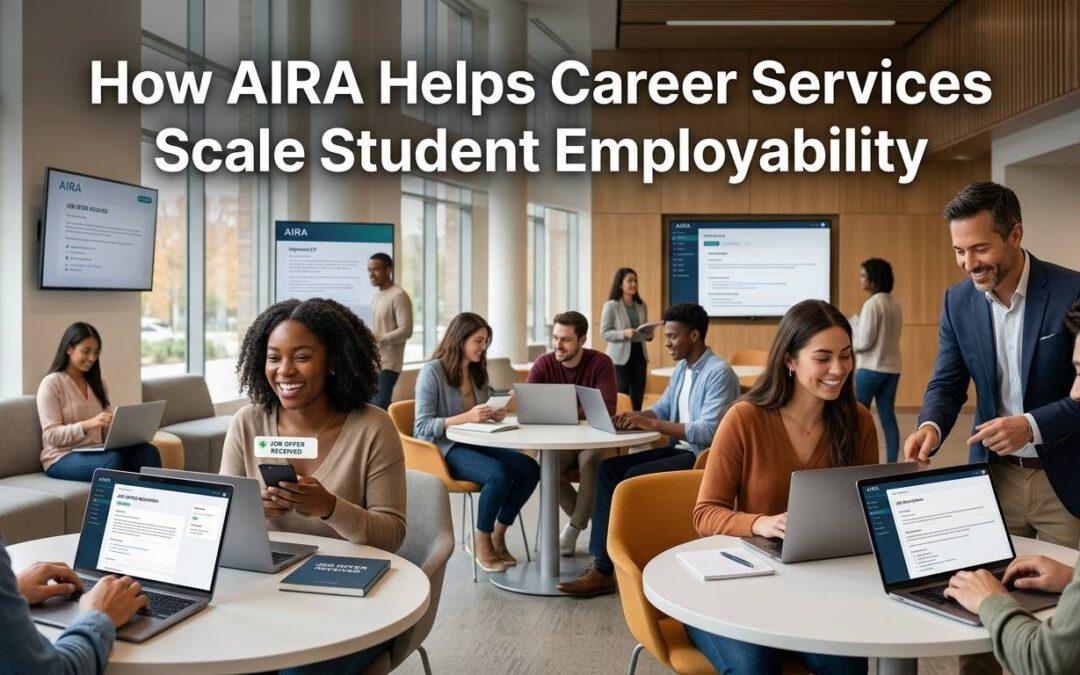
How Universities Can Use an AI Career Services Platform to Scale Student Employability
Universities are under increasing pressure to prove that education leads to outcomes, not only credentials. ACE frames learner success as a coordinated institutional strategy that connects career readiness, curriculum, faculty and staff support, partnerships, and data‑informed decision‑making.
At the same time, AI is becoming part of the student experience and the workplace. EDUCAUSE states that students, faculty, and staff need to understand AI fundamentals to use tools effectively and evaluate outputs responsibly, and it recommends integrating AI literacy into curricula and responsible‑use policies.
For career services leaders, the job is no longer just to advise students one by one. The challenge is to deliver career support that is personalized, measurable, and scalable enough to reach the whole student body.
What Does NACE Mean? Understanding NACE Career Competencies for Universities
NACE stands for the National Association of Colleges and Employers. In higher education, NACE matters because it gives universities a shared language for career readiness, employer expectations, and student development.
NACE defines career readiness as a foundation from which students demonstrate core competencies that prepare them for success in the workplace and lifelong career management. That definition shifts the conversation away from vague “job prep” and toward observable skills that universities can build across the student journey.
This is where modern career services platform thinking becomes important. Universities need a system that helps students develop those competencies continuously, not only during a final‑year workshop.
What Are the NACE Competencies? The 8 NACE Career Competencies Explained
NACE currently lists eight career readiness competencies: Career and Self‑Development, Communication, Critical Thinking, Equity + Inclusion, Leadership, Professionalism, Teamwork, and Technology. The competencies are intentionally flexible and can be used in any combination (NACE notes that Equity + Inclusion is currently under review).
The 8 NACE Competencies Every Student Needs
A practical way to think about the NACE professional competencies is this:
- Career and Self‑Development – helping students reflect, set goals, and build habits of continuous growth.
- Communication – helping them express ideas clearly in writing, speaking, and digital settings.
- Critical Thinking – helping them analyze problems and make sound decisions.
- Equity + Inclusion – helping them work across difference and challenge inequity.
- Leadership – helping them mobilize strengths and influence outcomes.
- Professionalism – helping them operate effectively in work environments.
- Teamwork – helping them collaborate toward shared goals.
- Technology – helping them use digital tools effectively and ethically.
Career Service Management: Why Universities Need a Career Services Platform, Not More Admin
Many universities still manage career service management through a patchwork of emails, spreadsheets, forms, and disconnected tools. That model may work for a small office, but it does not scale when the goal is to support every student across multiple programs with consistent quality.
A modern career services platform should do four things well: organize student support, centralize employer engagement, track participation, and show impact. Handshake presents itself as a career services platform that helps institutions do exactly that, with curated jobs, events, employer connections, and reporting tools for student engagement and outcomes.
What Handshake and Similar Platforms Bring to Career Service Management
Handshake is a partner to over 1,500 educational institutions and emphasizes access to employers, student engagement, and outcome reporting for career centers. That is a strong signal about what the market now expects from university career platforms: not just listings, but infrastructure.
The key lesson for universities is not to copy any one vendor. It is to recognize that career services now sits inside a larger institutional system, where scale, visibility, and consistency matter as much as one‑to‑one advising.
Career Path Tools That Help Students Decide, Not Just Search
Students do not only need access to opportunities. They need help understanding where they fit, what they are missing, and what to do next. ACE’s model describes “life design” as a career‑services approach that gives learners agency over their education, career path, and purpose, while helping them design the next step.
That is the real job of career path tools. They should help students move from uncertainty to action, not just from one job board to another.
Career Path Tools vs. Job Boards – What’s the Difference?
Good career path tools do at least three things:
- Translate ambition into a concrete plan.
- Show students what their profile communicates to employers.
- Make improvement immediate and understandable.
This is where AI becomes especially relevant. If a platform can review a CV, suggest gaps, recommend roles, and prepare interview practice in real time, it does more than automate a task. It creates a decision‑support layer for students who may never book a one‑to‑one appointment.
Why Universities Choose AI Career Services Platforms Like Handshake and Beyond
The old model of career support assumed students would proactively come to the center, book an appointment, and ask for help at the right moment. The new model assumes that support should be available earlier, more often, and in more formats.
A strong AI career services platform now needs to serve students where they already are, while giving staff enough visibility to guide strategy. That means helping students access feedback on CVs, job matches, and interview readiness without waiting for limited office hours.
It also means supporting institutional leadership. Universities increasingly need evidence of student participation, service usage, and readiness outcomes. Handshake’s career‑center messaging highlights student engagement and post‑grad outcomes as part of the platform value proposition.
Websites Like Handshake: What to Look for in a Career Platform
When evaluating websites like Handshake, universities should look for:
- AI‑powered personalization (CV analysis, job matching, interview prep)
- Scalability to reach all students, not just those who visit the career center
- Integration with existing student success systems
- Analytics that measure competency development and outcomes
The broader institutional direction is clear. ACE says institutions should align policies, practices, and resources around learner success, while building partnerships and using data to improve outcomes. Career services is now part of that operating model.
How to Use NACE Materials to Build a Career-Ready Campus
One of the most practical things universities can do is use NACE materials to create a shared language across career services, faculty, and student success teams. NACE provides definitions, supporting materials, and an assessment tool that helps institutions move from theory to practice.
Using NACE Materials for Assessment and Feedback
NACE states that its competency assessment tool can measure proficiency among students, interns, and new hires, while providing actionable feedback and personalized development plans. That matters because universities do not just need to tell students what employers want. They need to help students see where they are today and what to improve next.
What the AI Career Services Platform AIRA Changes for Universities
AIRA gives students direct access to AI‑powered CV optimization, job matching, and interview preparation – without needing to expand the career‑services team or rely on heavy IT integration.
That makes AIRA different from static content libraries or generic advice portals. Students get structured feedback, immediate action steps, and continuous support. Career services leaders get a way to extend support beyond the students who already walk through the door.
In practical terms, AIRA helps universities:
- Scale personalized support across the student population
- Improve CV quality and job readiness
- Support interview preparation with guided practice
- Give students clearer direction on roles and fit
- Increase visibility into engagement and outcomes
That combination connects student experience to institutional strategy. If career services can prove it is improving readiness at scale, it becomes easier to justify investment, governance, and long‑term adoption.
Why AI Career Services Matter for NACE Professional Competencies & Skills‑Based Hiring
Students are graduating into a market where digital screening, skills‑based evaluation, and AI‑enabled hiring workflows are becoming more common. That makes it even more important that universities support students with tools that teach them how to present themselves well, not just how to apply.
EDUCAUSE argues that higher education must prepare students to engage effectively and ethically with AI in academic and professional contexts. In career services, that means helping students understand how to use AI responsibly in job search, preparation, and self‑presentation.
AI Career Services for CV Optimization, Interview Prep, and Job Matching
A good AI career services platform does not replace human guidance. It extends it. It turns the career center into a scalable support system that can reinforce the same messages across hundreds or thousands of students.
That is especially valuable for universities that want a consistent experience across different departments, campuses, or student populations. A well‑designed platform helps standardize support while still allowing for personalization.
Scaling Career Support: The Institutional Advantage of AI Career Services Platforms
The biggest mistake universities make is treating career services as a transactional support function. In reality, it affects reputation, recruitment, retention, student satisfaction, and employer relationships.
When universities make employability visible and actionable, they improve the student experience and strengthen their position in a competitive market. ACE’s model explicitly connects learner success with partnerships, curriculum, and data‑informed decision‑making – exactly the mindset required here.
That is why an AI career services platform is not just a software decision. It is a student‑success decision.
For university leaders, the strategic question is simple: do we want career support to depend on student initiative and staff bandwidth, or do we want it to be available by design?
Final Takeaway: AI Career Services Platforms Are No Longer Optional
The future of university career services is not one more workshop, one more PDF, or one more disconnected portal. It is a system that helps students build the NACE career competencies, act on them, and present them clearly to employers.
That is the opportunity AIRA is designed to capture. By giving students AI‑powered support for CVs, job matching, and interviews, AIRA helps universities make career readiness scalable, measurable, and accessible to every student.
And in a higher education market where employability is part of institutional value, that is no longer optional.
Universities are increasingly turning to career services software to scale their impact.
👉 Explore AIRA For Universities and transform your career services
References
Model-for-Comprehesive-Learner-Success.pdf
AI Literacy in Teaching and Learning: Executive Summary | EDUCAUSE

Workforce AI in Banking: The Missing Layer in AI Transformation
Why Banks Still Cannot Answer the Most Important Question
Artificial Intelligence is no longer experimental in banking.
From compliance automation to customer service and risk analysis, AI is already embedded across core functions. Yet a critical gap remains:
Banks are adopting AI — but they are not planning their workforce for AI.
This raises a fundamental question increasingly asked at board level:
How will AI impact banking jobs in 2026 — in our organization?
Most banks cannot answer.
Not because they lack data.
But because they lack a structured approach to AI workforce planning in banking.
The Scale of AI Impact on Banking Jobs
The transformation is already measurable.
According to McKinsey:
- Up to 60–70% of work activities can be automated
- Banking alone could generate $200–340 billion annually from AI
This directly translates into a massive AI impact on banking jobs.
What This Means in Practice
AI is already affecting:
- Loan processing
- KYC / AML compliance
- Risk reporting
- Customer service
- Back-office operations
In many of these functions:
Up to 42% of tasks are automatable today
This is not a future scenario.
It is the current reality of bank workforce transformation driven by AI.
The Hidden Problem: Banks Are Not Prepared
Despite this massive shift, most institutions face the same issue:
They cannot answer:
- How can banks prepare their workforce for AI transformation?
- What roles will disappear in banking due to AI?
- How should headcount evolve over the next 3–5 years?
Instead, decisions are based on:
- Benchmarks
- Assumptions
- Isolated AI initiatives
Not on a quantified workforce strategy.
Why AI Workforce Planning in Banking Is Failing
The failure is structural.
1. AI is implemented — but not mapped to jobs
Most banks deploy AI at the use-case level:
- Automating a process
- Improving a function
But they do not translate this into:
Role-level workforce impact
2. HR strategy is disconnected from AI strategy
There is still a gap between technology and people strategy.
This disconnect is widely documented by Gartner:
- 54% of CHROs do not know how to prepare their workforce for AI
- 63% feel unprepared for AI-driven skills transformation
3. No tools exist to quantify workforce impact
Banks rely on:
- Excel models
- Consulting studies
- Static reports
But none provide real AI workforce planning tools for banks.
The Result: A Strategic Blind Spot
Without proper AI workforce planning in banking, organizations face:
- Unplanned workforce displacement
- Inefficient hiring decisions
- Missed productivity gains
A recent academic paper highlights this paradox:
- AI adoption can initially reduce performance due to poor integration
Banking Is Entering a Workforce Transformation Phase
We are now entering a new phase:
Phase 1 — AI Adoption
Phase 2 — Workforce Impact
Phase 3 — Workforce Redesign
This is where bank workforce transformation with AI becomes critical.
What Roles Will Disappear in Banking Due to AI?
This is one of the most searched questions:
Roles Most Impacted
- Back-office operations
- Data processing roles
- Tier-1 customer service
Roles That Will Evolve
- Risk analysts
- Relationship managers
Roles That Will Grow
- AI governance
- Data strategy
This aligns with broader findings from World Economic Forum:
- 44% of core skills will be disrupted within 5 years
(https://www.weforum.org/publications/the-future-of-jobs-report-2025)
The Missing Capability: Workforce Intelligence
Banks lack the ability to:
- Map AI impact at role level
- Quantify FTE evolution
- Build financial models
This is the core gap in AI workforce planning banking.
Workforce AI: The Only Viable Solution
A new category is emerging:
Workforce AI
It connects:
AI → Workforce → Financial outcomes
What Workforce AI Enables
-
AI Impact Mapping
Direct answer to:
AI impact on banking jobs
-
Workforce Planning
Core to:
AI workforce planning in banking
-
Financial Business Case
Essential for CFO validation
-
Transformation Roadmap
Answer to:
How to build an AI workforce strategy in banking
Why Existing Approaches Fail
Consulting Firms
Too slow, too expensive
HR Systems
Backward-looking
AI Tools
Task-level only
The Strategic Imperative for CHROs
According to Gartner:
- 87% of CHROs evaluate HR tech
- 44% report purchase regret
This reinforces the need for a new approach.
The Future of Banking Jobs: A Leadership Test
The future of banking jobs with AI will depend on:
- Planning
- Timing
- Execution
Not just technology adoption.
Conclusion: The Window to Act Is Closing
AI is transforming banking.
But competitive advantage will come from:
- Workforce clarity
- Strategic planning
- Execution discipline
Because:
The future of banking jobs is not decided by AI —
but by how banks prepare for it.
If you are leading HR or transformation in banking:
Do you have a quantified AI workforce plan?
👉 Book a Workforce AI Diagnostic
Build your AI workforce strategy, quantify your impact, and prepare your organization — in days, not months.
Why AI Enabled Skills Management is the Strategic Imperative for 2026
The Pain: No Visibility, No Decisions, No Performance
In a post-pandemic world where AI is reshaping work:
- 58% of the workforce will need to reskill by 2030 (World Economic Forum).
- 73% of companies now use skill-based recruitment platforms, up 17 points since 2022.
- Yet very few can answer:
“Which skills do we have, which are missing, and how does it impact our business performance?”
Failing to translate skills into actionable decisions costs time, money, and agility.
AI‑Enabled Skills Management (AIESM): The Solution to the Talent Data Crisis
AI‑Enabled Skills Management (AIESM) isn’t a trend — it’s a strategic necessity.
What is AIESM?
AIESM is a cloud-based, AI-driven platform that:
- MAPS your existing skills — accurate, data-driven inventory
- IDENTIFIES GAPS against role requirements and external benchmarks
- ACTS via personalized development plans, internal mobility, AI-driven recruitment, and project staffing
- MEASURES the impact of talent decisions on business outcomes
It’s not traditional HR management — it’s skills intelligence powered by AI.
Shocking Numbers that Justify AIESM Adoption
📊 Market Growth
The global Talent Management solutions market surpassed $10.6B in 2024, with a CAGR of 12% through 2033. The skills management segment alone is projected to reach $29.5B by 2033 (Grand View Research 2024).
📉 HR Data Challenges
- 97% of HR leaders lack the data needed for informed decision-making (Deloitte 2023)
- Only 15% practice strategic talent planning (Gartner 2025)
- 47% still rely on spreadsheets (Competence & Skills Management Market Report 2024)
What Businesses Gain from AI‑Enabled Skills Management
- Real-Time Skills Visibility
No more guesswork. HR teams can instantly answer:
- Who has the skills we need today?
- Who is ready for critical roles tomorrow?
- Which skills gaps are limiting business performance?
- Strategic Workforce Planning
Proprietary AI algorithms (IRT/Rasch, Deep Learning, NLP, GNN) replace manual processes and standardize skills management globally.
- Measurable Impact
Decisions are driven by data linking skills to outcomes, not intuition.
- Rapid, Secure Deployment
Unlike heavy HCM suites (SAP, Oracle, Workday), AIESM deploys in weeks, not months, with no long IT project required.
Use Cases Across Industries
AIESM isn’t just for tech companies:
- IT & Consulting (e.g., Wipro, Capgemini) → project staffing, career mobility
- Government & National Agencies → national skills alignment, policy compliance
- Education → learning analytics, accreditation outcomes
- Banking & Financial Services → AI-driven workforce planning
Clients like the UAE Ministry of Education and Morocco Supreme Council of Education demonstrate AIESM’s scalability beyond corporate HR.
Why Now? The Future Accelerates
With AI becoming a top HR priority (Gartner 2026) and regulatory pressures (ESG/DEI, EU AI Act), delaying skills management transformation risks:
📌 Loss of workforce agility
📌 Higher HR costs
📌 Misalignment with market needs
Conclusion: AIESM is More Than a Tool — It’s a Transformation
AI‑Enabled Skills Management is a strategic infrastructure for the 21st century.
It allows organizations to:
✔ Understand talent
✔ Act with precision
✔ Measure impact
✔ Build lasting competitive advantage
🚀 Take Action: Build Your AI‑Enabled Skills Strategy Today
If you’re a CHRO, COO, or Transformation Leader:
It’s time to:
✔ Identify critical skills gaps
✔ Align talent decisions with business outcomes
✔ Activate AI-driven workforce strategies
📅 Book a 30-minute strategy session with our experts to receive:
- A skills data assessment
- Gap mapping and insights
- A roadmap to accelerate your workforce strategy in 2026
👉 Book Your Meeting Now and transform HR decision-making with AI‑Enabled Skills Management.