
by
NYC Law 144 & EU AI Act: The Compliance Trap Catching Thousands of Companies
On July 5, 2023, New York City began enforcing Local Law 144, the first U.S. statute to impose operational requirements on automated hiring systems. According to the NYC Department of Consumer and Worker Protection (DCWP), employers and employment agencies that use Automated Employment Decision Tools (AEDTs) must have each tool independently bias-audited within the previous 12 months, post audit results publicly, and give NYC applicants at least 10 business days’ notice before the tool is used. Failure to meet these requirements can trigger civil penalties assessed per violation — ranging from initial fines through penalties up to $1,500 per violation (and effectively rolling daily penalties when a non-compliant tool continues to be used), which rapidly add up into thousands or even millions for employers that process many NYC candidates without required notices. (See DCWP guidance and legal summaries).
What makes this a real compliance trap is scope and execution. The DCWP’s guidance and industry legal briefings underline that Local Law 144 applies where AEDTs are used “in the City” — a definition that can reach remote roles that are based in New York City or otherwise target NYC applicants, and it can therefore capture organizations with distributed or offshore hiring models. Independent compliance reviews and academic audits show that a large share of employers are not yet meeting the public-posting and notice obligations: one empirical study that surveyed employer postings found audit reports and transparency notices to be rare, highlighting a substantial compliance gap. Combine that gap with high candidate volumes and the per-violation penalty structure, and the math becomes simple and stark: a screening workflow that touches 100 NYC applicants in a week without proper notice could generate $1,500 × 100 = $150,000 in weekly penalties — roughly $7.8 million if repeated over a year — not counting parallel litigation exposure that Part 1 of this series warned may total into the billions.
What Is NYC Local Law 144? (And Why You Should Care)
NYC Local Law 144 regulates “Automated Employment Decision Tools” (AEDTs)—any AI system used to screen candidates or employees for hiring or promotion decisions. Understanding what counts as an AEDT is crucial for avoiding costly fines and legal exposure.
What Counts as an AEDT? According to Deloitte’s legal analysis, tools considered AEDTs include:
- ✅ AI resume screening tools
- ✅ Video interview analysis platforms (e.g., HireVue, Spark Hire)
- ✅ Candidate assessment algorithms (e.g., Pymetrics, Criteria)
- ✅ Automated reference checking tools
- ✅ Chatbots that pre-screen candidates
- ✅ Skills matching algorithms
Tools not covered under the law include:
- ❌ Applicant tracking systems that only store or organize data without AI scoring
- ❌ Recruiting outreach tools (used only for sourcing)
- ❌ Background check services
The Gray Zone: Most modern ATS platforms like Workday, Greenhouse, or Lever now include AI features. If your ATS performs automated scoring, ranking, or candidate recommendations, it likely qualifies as an AEDT. Failing to recognize this can put your organization in violation.
For official guidance on NYC AEDTs, see the NYC DCWP overview and the AEDT FAQ (PDF).
The Three Mandatory Requirements of NYC Local Law 144 (Get One Wrong = Violation)
Complying with NYC Local Law 144 means meeting three critical requirements for any Automated Employment Decision Tool (AEDT) you use. Missing even one can result in substantial fines.
Requirement 1: Annual Bias Audit (Publicly Posted)
Your AEDT must undergo an independent bias audit within the past 12 months. The audit must:
Use of AI in HR – NY City Law 144 – Dorf Nelson & Zauderer LLP
Test for Disparate Impact:
- Selection rates by race/ethnicity
- Selection rates by sex
- Impact ratios comparing protected groups to the most-selected group
Be Publicly Available:
- Posted on your company website
- No password protection or access barriers
- Include methodology, data sources, and results
Be Conducted by Independent Auditor:
- Cannot be done by your AI vendor
- Must be third-party, such as Fairly AI, BABL AI, or Holistic AI
Audit Cost: Typically $15,000-$30,000 per tool, per year
The Trap: Dorf Nelson & Zauderer LLP warns that using multiple AI tools (e.g., resume screening + video interviews + skills tests) requires separate audits for each.
Requirement 2: Candidate Notification (10 Days Before Screening)
All NYC resident candidates must receive clear notification at least 10 business days before an AEDT is used. According to Norton Rose Fulbright, the notice must include:
Required Elements:
- That an automated tool will be used
- The job qualifications and characteristics the AEDT will assess
- Instructions for requesting an alternative selection process or accommodation
- Data retention policy for information collected through the AEDT
Sample Compliant Notice:
AUTOMATED HIRING TOOL NOTICE
[Company Name] uses an AI-powered tool to evaluate applications for this role.
WHAT IT DOES:
The tool analyzes resumes for skills, experience, and qualifications, such as Python programming, project management, SQL, or years of experience and degree requirements.
YOUR RIGHTS:
- Request a human review of your application
- Request accommodation if you have a disability
- Contact: hiring@company.com or (555) 123-4567
DATA RETENTION:
Application data retained for 3 years per company policy.
For bias audit results, see [Link to public audit results].
The Trap: Notification must occur before screening, not after rejection. Auto-rejecting a candidate before sending notice violates the law.
Requirement 3: Alternative Evaluation Process
Candidates must have the option to request an alternative to the AI evaluation. According to Fairly AI’s implementation guide, compliant alternatives include:
Acceptable Options:
- ✅ Human recruiter review instead of AI screening
- ✅ Phone screening instead of video AI analysis
- ✅ Portfolio submission in place of automated skills tests
Non-Compliant Practices:
- ❌ “You can’t opt out, but we’ll have a human review the AI’s decision”
- ❌ “We don’t offer alternatives”
Providing a true alternative ensures candidates’ rights while keeping your organization compliant.
The EU AI Act: Global Compliance or Global Liability
While NYC Local Law 144 governs hiring practices in New York City, the EU AI Act—set to take effect in 2025—establishes global compliance obligations for any multinational company using AI in recruitment. Failure to comply can trigger substantial penalties and global operational implications.
Transparency Obligations
The EU AI Act emphasizes full transparency for AI-driven HR systems:
- Candidates must be informed whenever an AI system is used in hiring or promotion decisions.
- Companies must explain how the AI works, ensuring there are no “black box” decisions.
- An audit trail is required for every AI decision, documenting how candidate data influenced outcomes.
These measures ensure applicants can understand and challenge automated decisions, promoting fairness and accountability in hiring.
High-Risk System Classification
AI hiring tools fall under the “high-risk” category according to the EU AI Act. Obligations include:
- Pre-deployment conformity assessments to verify compliance with legal and ethical standards.
- Ongoing monitoring for bias, accuracy, and effectiveness during the AI system’s lifecycle. (according to EY Global).
This classification means even small errors or overlooked bias in HR AI can trigger regulatory scrutiny and reputational risk across all company operations.
Penalties for Non-Compliance
The EU AI Act imposes strict penalties for violations:
- Up to €35 million or 7% of global annual revenue, whichever is higher.
- Penalties are applied globally, not limited to the EU, if your company employs staff or conducts hiring in EU countries.
The Global Trap: Any company with employees or operations in the EU must comply with the EU AI Act across its entire global hiring process—not just for EU-based hires—creating a potential global liability risk for non-compliance.
Real‑World Enforcement: Why AEDT Compliance Matters
Since NYC Local Law 144 came into effect on July 5, 2023, the New York City Department of Consumer and Worker Protection (DCWP) has opened mechanisms for complaints and potential investigations against employers using Automated Employment Decision Tools (AEDTs) without meeting the law’s requirements. These requirements include conducting bias audits, publicly posting results, notifying candidates before AI screening, and providing alternative evaluation options. According to the official AEDT FAQ, failure to comply can trigger civil penalties and enforcement actions, making adherence not just recommended, but mandatory.
Research indicates that compliance gaps are widespread. A 2024 empirical study found that very few employers had posted bias audit summaries or provided transparency notices as required. Only a small fraction of organizations made these disclosures publicly accessible — suggesting that many companies remain non-compliant, whether knowingly or inadvertently (arXiv, 2024). Experts warn that failing to address these gaps leaves organizations exposed to fines, enforcement actions, and reputational risk (arXiv, 2024).
The Compliance Checklist: Are You Violating Right Now?
? High-Risk Violations (Fix Immediately)
☑ Using AI/ATS to screen NYC candidates without a bias audit
☑ No candidate notification sent before AI screening
☑ Bias audit results not publicly posted
☑ No alternative evaluation process offered
☑ Audit is older than 12 months
☑ Using multiple AI tools but only audited one
If any box is checked, you are in violation. Immediate action required. (According to Norton Rose Fulbright, 2025)
⚠️ Medium-Risk Issues (Fix Within 30 Days)
- Notification missing required elements
- Bias audit conducted by AI vendor, not independent
- Audit doesn’t test for both race/ethnicity and sex
- Data retention policy not disclosed
- Alternative process is unclear or burdensome
Dorf Nelson & Zauderer LLP warns that ignoring these medium-risk issues can escalate compliance risk.
✅ Compliant Profile
- Independent bias audit within last 12 months
- Audit results publicly posted without barriers
- Candidates notified 10+ days before AI screening
- Notification includes all required elements
- Alternative evaluation process clearly offered
- Data retention policy disclosed
- Separate audits for each AI tool used
How to Get Compliant: 5-Step Action Plan
Step 1: Audit Your AI Tools (This Week)
- Make a list of all AI tools used in hiring:
- Resume screening (Workday, Greenhouse AI features)
- Video interviews (HireVue, Spark Hire)
- Skills assessments (Codility, HackerRank)
- Personality tests (Pymetrics, Criteria)
- Checklist:
- Does it automatically screen, score, or rank candidates? (AEDT)
- When was the last bias audit? (<12 months)
- Are NYC candidates being screened? (If yes, Law 144 applies)
(BABL AI, 2024 provides guidance on identifying AEDTs.)
Step 2: Conduct Bias Audit (Weeks 2–4)
- Choose Independent Auditor:
- Fairly AI – $15K–25K/tool
- BABL AI – $20K–30K/tool
- Holistic AI – custom pricing
- Timeline: 3–4 weeks
- Deliverables: Selection rate analysis by race/sex, impact ratios, compliance certification, public audit summary
(Fairly AI, 2025 explains audit methodology for NYC compliance.)
Step 3: Update Candidate Notification (Week 3)
- Template: See “Sample Compliant Notice” in Part 2
- Where to Post:
- Job application page (before Submit)
- Email confirmation
- Careers site FAQ
(Littler, 2023 emphasizes that timely notification is legally required.)
Step 4: Publish Audit Results (Week 4)
- Public Page: yourcompany.com/ai-hiring-audit
- No password protection
- Include audit date, methodology, results, auditor name
- Update annually
Sample Page Content:
AI HIRING BIAS AUDIT RESULTS
Last Updated: November 2025
Auditor: Fairly AI (Independent)
TOOLS AUDITED:
- Resume Screening AI
– Selection Rate (White): 18.2%
– Selection Rate (Black): 17.8%
– Impact Ratio: 0.98 (COMPLIANT)
- Video Interview AI
– Selection Rate (Male): 24.1%
– Selection Rate (Female): 23.6%
– Impact Ratio: 0.98 (COMPLIANT)
Full methodology: [Download PDF]
Next audit scheduled: November 2026
Step 5: Establish Alternative Process (Week 4)
- Human Review Option:
- Checkbox: “Request human review instead of AI screening”
- Train HR team (2–3 hours/week capacity)
- Respond within 5 business days
- Cost: $20–30K/year
(Deloitte, 2023 highlights importance of alternative evaluation to comply with Law 144.)
? The Hidden Cost: What Compliance Actually Takes
|
Activity
|
Frequency
|
Cost
|
Annual Total
|
|
Bias Audit
|
Annual
|
$15K–30K/tool
|
$15K–$90K
|
|
Auditor Retainer
|
Ongoing
|
$5K/quarter
|
$20K
|
|
Legal Review
|
Annual
|
$10K–20K
|
$15K
|
|
Alternative Process
|
Ongoing
|
$2K/month
|
$24K
|
|
Candidate Notifications
|
Automated
|
$1K setup
|
$1K
|
|
Staff Training
|
Quarterly
|
$3K
|
$12K
|
|
TOTAL
|
–
|
–
|
$87K–$162K
|
- Non-Compliance Cost:
- NYC Law 144 fines: $1,500/violation; $10,000/week
- Class action exposure: $500K–$5M per lawsuit
- EU AI Act fines: up to €35M or 7% global revenue
ROI: Avoid $1M+ in fines/lawsuits for ~$100K/year investment (According to Norton Rose Fulbright, 2025)
? What’s Coming Next: More Regulations, More States
- State Legislation: 10+ states drafting AI hiring laws modeled on NYC Law 144
- California: stricter version likely 2026
- Illinois: AI hiring transparency bill introduced
- Massachusetts: “lie detector” law covers some AI
- Federal Proposal: “AI Accountability Act”
- Nationwide bias audits
- Private right of action
- Timeline: Federal law expected by 2027–2028
(American Bar Association, 2024 claims early adoption trends indicate rapid expansion of state-level AI hiring regulations)
⚡ The Only Real Solution: Explainable AI
Bias audits show past discrimination but don’t prevent future violations.
Only explainable AI can prove, in real-time, that decisions are based on skills, not demographics.
In Part 3, we will show how explainable AI is the only legal defense.
? Take Action: Start Your Compliance Journey with AIRA
? Read the Full Series
Part 1: The $50 Billion Lawsuit Wave: Why AI Hiring Is the New Asbestos
Part 2: You are here
Part 2: Explainable AI: The Only Legal Defense Against $50 Billion in Discrimination Lawsuits
Who AIRA Helps — At Each Step of the Talent Lifecycle
?? For HR Managers & Talent Leaders
AIRA transforms AI-powered recruitment from a legal risk into a strategic advantage. Our explainable AI platform provides:
- ✔ Explainable scoring with clear decision rationale
- ✔ Full audit trails for compliance with NYC Local Law 144 & EU AI Act
- ✔ Bias reduction through standardized evaluation frameworks
- ✔ Faster, fairer hiring with automated yet transparent screening
Transform your applicant tracking system into a defensible recruitment tool that accelerates hiring while mitigating AI discrimination liability.
? For Outplacement Firms & Career Transition Services
Leverage AIRA’s Career Transition AI to modernize your offering and deliver measurable outcomes:
- ✔ Personalized reskilling recommendations based on skill-gap analysis
- ✔ AI-powered career pathing for displaced workers
- ✔ Accelerated re-employment via intelligent job matching
- ✔ Scalable workforce transition solutions
Provide cutting-edge career transition tools that differentiate your services and improve client success rates.
?? For Job Seekers
Access AIRA’s free AI resume analysis to navigate today’s AI-driven hiring landscape:
✔ Create ATS-friendly CVs that pass automated screening systems
✔ Get personalized role-fit assessments and career insights
✔ Receive actionable feedback to optimize resumes for AI
✔ Explore tailored career paths, especially valuable for career changers or workforce re-entry
Turn AI-powered applicant tracking into an advantage with transparent AI scoring and personalized guidance.
⚡ Get Started Today
by
The Landmark Ruling That Changed Everything
This isn’t just another employment discrimination case. Legal experts are already calling it the opening salvo of a decades-long wave of class action lawsuits involving AI recruitment platforms and AI-powered applicant screening systems, sometimes compared to the ‘new asbestos litigation.
On May 16, 2025, Judge Rita F. Lin of the U.S. District Court for the Northern District of California issued a decision that sent shockwaves through HR and corporate governance: she certified a nationwide collective action in a high-profile AI hiring bias case, allowing millions of applicants aged 40 and over to join the lawsuit. (JDSupra)
This isn’t just another employment discrimination case. Legal experts are already calling it the opening salvo of a decades-long wave of class action lawsuits involving AI recruitment platforms, sometimes compared to the “new asbestos litigation.” (JDSupra)
Why are the stakes so high? Conservative estimates suggest industry-wide exposure could reach tens or even hundreds of billions of dollars over the next several years — and this may be just the beginning.
What Happened: The Case That Broke the Dam
In February 2023, a plaintiff — a Black professional over 40 who also suffers from anxiety and depression — filed a lawsuit claiming he applied to more than 100 positions through an AI-powered applicant tracking system (ATS), only to be rejected every single time without receiving an interview. The alleged reasons were age, race, and disability discrimination embedded in the AI algorithms.
What makes this case groundbreaking? The court ruled that the AI software provider itself — not just the hiring employers — could be held liable as an “agent” under federal anti-discrimination law. Legal analysts note that Judge Lin emphasized:
“The AI’s role in the hiring process is no less significant because it allegedly happens through artificial intelligence rather than a live human being… Drawing an artificial distinction between software decision-makers and human decision-makers would potentially gut anti-discrimination laws in the modern era.” (Quinn Emanuel)
In short: if an AI tool discriminates, both the vendor and the employer could be liable — you can’t hide behind “the software made the decision.”
The $25 Billion Question: How Many Plaintiffs?
The lawsuit now covers applicants aged 40 and over who were denied employment recommendations through AI-powered hiring platforms since September 2020 — potentially millions of people.
Conservative estimates suggest:
- 500,000 affected applicants (likely a significant underestimate)
- $50,000 average damages per plaintiff (based on typical age discrimination settlements)
- Total potential industry exposure: $25 BILLION
And here’s the striking part: this is just one type of AI vendor. Thousands of companies use similar AI screening tools from a variety of providers.
According to ClassAction.org, at least five major AI hiring discrimination lawsuits were filed or certified in 2024–2025 alone — and plaintiff attorneys continue actively recruiting additional claimants.
The Copycat Effect: Three More Lawsuits You Need to Know
According to the American Bar Association, recent cases demonstrate that AI-powered hiring tools can unintentionally reproduce bias against underrepresented or marginalized groups. Legal analysts note that even unintentional bias can lead to significant liability under employment law.
Case 1: Video Interview Platforms (2025)
A complaint filed in Colorado alleged that a video interview AI platform — analyzing facial expressions and speech patterns — discriminated against a candidate with a disability. Research cited in the complaint indicates that automated speech and facial recognition systems often perform worse for individuals who speak English with non-white accents or who have atypical speech or facial expression patterns.
Why this matters: Organizations using such AI tools may face legal and ethical risks if these systems disadvantage certain linguistic, cultural, or disability groups.
Case 2: Employment Screening & Video Assessments (2024)
Another action concerned an AI-powered video assessment tool that evaluated candidates based on facial expressions and assigned personality or employability scores, raising concerns under state employment law.
Lesson learned: Even settlements without formal findings signal that companies may be exposed to liability if their AI tools’ decision-making processes are opaque or biased.
Case 3: Age Bias in Automated Screening (2023)
A settlement was reached where an AI recruitment system allegedly filtered candidates based on age thresholds, impacting over 200 applicants. While this involved intentional programming, most AI bias occurs unintentionally due to biased training data. Courts often treat unintentional bias the same as intentional discrimination under disparate impact theory.
Key takeaway: As highlighted in the ABA report and analyses from sources like Wagner Law Group, AI can introduce or amplify bias in hiring even when companies do not intend to discriminate. Transparency, auditing, and explainability are essential to mitigate legal and ethical risk.
Why This Is Different From Normal Employment Lawsuits
Traditional discrimination lawsuits are often difficult to win: plaintiffs must demonstrate that a human decision‑maker acted with discriminatory intent — which quickly becomes a matter of “he said / she said.”
But when recruitment decisions are made by opaque AI hiring software or automated candidate screening tools, the dynamics change:
- Applicant: “The algorithm rejected me — I want to know why.”
- Company: “We don’t know — the AI decided.”
- Court or Regulator: “You can’t explain your own hiring decisions? That lack of transparency can itself be evidence of systemic bias.”
According to the University of Washington, large‑scale AI screening tools can unintentionally reproduce bias: in a study where identical résumés only differed by the candidate’s name, systems preferred “white‑associated” names 85% of the time and “Black‑associated” names only 9%.
Legal analysts also warn that, as highlighted by the American Bar Association, the “black box” nature of many AI hiring tools makes it extremely challenging for companies to explain decisions — which can create a significant exposure to employment discrimination claims.
The Double Exposure: Layoffs + AI = Lawsuit Magnet
This scenario highlights the critical need for transparent AI recruitment tools and explainable AI in hiring to avoid becoming the next target for AI bias lawsuits.
A recurring pattern is emerging in employment litigation related to AI:
- A company conducts mass layoffs.
- Months later, it starts rehiring.
- Former employees apply via AI-powered applicant tracking systems (ATS).
- Black-box algorithms automatically reject certain applicants.
- Plaintiff attorneys file class actions alleging discrimination based on age, race, or disability.
This scenario is increasingly common in tech and corporate sectors. Research on AI-driven outplacement and rehiring shows that companies using opaque AI for screening are exposed to double legal risk — both for their layoff and rehiring practices. According to Visier Analytics, approximately 5% of laid-off workers are rehired by the same employer, which can create a pool of potential plaintiffs if the AI rejects them unfairly.
The Law Firm Gold Rush: Attorneys Are Building AI Practices
Specialized employment law firms are increasingly developing AI-focused practices, recruiting former employees for class actions. Their argument often highlights:
“If an AI algorithm rejects candidates without transparency or fairness, both the employer and the software provider may face liability.”
Why this approach is effective:
- Sympathetic plaintiffs: Former employees who followed proper procedures yet were rejected make strong witnesses.
- Devastating discovery: Companies often cannot explain AI decision-making.
- Massive class sizes: Hundreds or thousands of applicants can join one lawsuit.
A recent survey indicates that roughly 70% of companies allow AI tools to reject candidates with minimal human oversight, which creates fertile ground for potential litigation (American Bar Association, 2024).
How Much Are These Lawsuits Worth?
While exact settlements vary, academic and industry reports highlight that AI-related discrimination lawsuits can result in significant exposure. Even a moderate class action settlement can dwarf traditional employment cases. The combination of large class sizes and opaque AI decision-making increases potential financial and reputational risk.
Are You Next? The High-Risk Profile
Companies are at higher risk if they:
- Conducted layoffs in recent years (2023–2025).
- Use AI/ATS for candidate screening without transparency.
- Cannot explain how AI makes decisions.
- Operate in high-regulation regions (e.g., NYC, California).
- Rejected former employees who are attempting to return.
Checking three or more of these boxes increases the likelihood of legal scrutiny within 12–18 months.
What Comes Next: The Regulatory Perfect Storm
Three converging regulatory trends make AI hiring lawsuits inevitable for many employers:
- Local transparency laws (e.g., NYC Local Law 144) requiring bias audits and candidate notifications.
- EU AI Act (2025) mandating transparency for AI hiring systems globally.
- EEOC evolving guidance on AI and employment discrimination.
Compliance is no longer optional, and fines can exceed the cost of lawsuits.
The Bottom Line: AIRA as the Solution
The companies best positioned to survive this wave are those that prioritize transparent AI scoring, explainable hiring decisions, and legal defensibility. This is where EDLIGO AIRA’s suite of AI recruitment agents makes a critical difference:
- AI-Resumes Analyzer& AI-Job Matching: Provides transparent scoring with clear reasoning for candidate ranking, ensuring ATS-friendly applications.
• AI-Interview Guide & Job Description Tools: Standardizes evaluations to reduce unconscious bias in hiring.
• Modular AI hiring platform: Businesses pay only for the features they need, achieving faster, fairer hiring with defensible AI decisions.
By democratizing intelligent, unbiased recruitment, AIRA protects companies from AI discrimination liability while improving candidate experience and hiring efficiency.
Take Action Now: Protect Your Hiring from AI Lawsuits
Is your AI hiring system ready to withstand legal scrutiny? The wave of AI employment discrimination cases is real—but companies can act proactively.
Here’s how EDLIGO AIRA helps:
- Free AI Compliance Assessment: Identify risks in your hiring process automation.
• Explainable AI Platform: Get full transparency on candidate scoringand standardized evaluation.
• Bias-Free Recruitment: Ensure fair AI screening that complies with NYC Local Law 144, EU AI Act, and EEOC guidance.
Why EDLIGO AIRA stands out:
- AI-powered applicant trackingwith clear decision rationale
- Career transition toolsfor outplacement services
- ATS resume checkerfor job seekers
- Automated yet transparent hiring workflows
Why act now?
- Avoid multi-million-dollar lawsuits.
- Ensure compliance with emerging AI hiring regulations (NYC Local Law 144, EU AI Act, EEOC guidance).
- Reduce bias and improve fairness, boosting candidate experience and employer brand.
- Demonstrate accountability to stakeholders, investors, and regulators.
? Read the Full Series
- Part 1: You are here
- Part 2: NYC Law 144 & EU AI Act: The Compliance Trap Catching Thousands of Companies
- Part 2: Explainable AI: The Only Legal Defense Against $50 Billion in Discrimination Lawsuits
? Get Started Today
Who AIRA Helps — At Each Step of the Talent Lifecycle
?? For HR Managers & Talent Leaders
AIRA delivers transparent, audit-ready hiring insights that turn AI-powered recruitment from a legal risk into a strategic advantage. Our explainable AI hiring platform provides:
- ✔Explainable scoring with clear decision rationale
- ✔Full audit trails for compliance with NYC Local Law 144 and EU AI Act
- ✔Bias reduction through standardized evaluation frameworks
- ✔Faster, fairer decisions with automated yet transparent screening
Transform your applicant tracking system with AI into a defensible recruitment tool that accelerates hiring while mitigating AI discrimination liability.
? For Outplacement Firms & Career Transition Services
Leverage AIRA’s Career Transition AI to modernize your service offering and deliver measurable outcomes:
- ✔Personalized reskilling recommendations based on skill-gap analysis
- ✔AI-powered career pathing for displaced workers
- ✔Accelerated re-employment through intelligent job matching
- ✔Scalable workforce transition solutions
Provide cutting-edge career transition tools that differentiate your outplacement services and improve client success rates.
?? For Job Seekers
Access AIRA’s free AI resume analysis to navigate today’s AI-driven hiring landscape:
- ✔ Create ATS-friendly CVs that pass automated screening systems
- ✔ Get personalized role fit assessments and career discovery insights
- ✔ Receive actionable feedback to optimize your resume for AI
- ✔ Explore tailored career paths, especially valuable during career change at 40 or workforce re-entry
Turn the challenge of AI-powered applicant tracking into an advantage with transparent AI scoring and personalized guidance.
Learn More & Start for free → https://www.edligo.net/aira/
by
The Hidden Cost of Traditional Outplacement: Why Companies Pay Twice
In 2024 alone, US companies laid off 250,000+ tech workers. According to industry analysis, by mid-2025, 40% of those same companies were desperately hiring for similar roles — often at higher salaries (TechCrunch, CNBC).
The financial toll? $12 billion in severance. Another $8 billion in rehiring costs. Total waste: $20 billion.
As research from Workable confirms, replacing a skilled employee costs six to nine months of their salary once you factor in recruitment, onboarding, and lost productivity. HRStacks (2025) estimates the cost of replacing an employee ranges from 50% to over 200% of their annual salary, depending on seniority and role complexity.
Even more striking: Visier’s analytics reveal that 5.3% of laid-off workers are eventually rehired by the same employer, while 27-29% of external hires come from former employees (“boomerang” hires). This suggests that many layoffs create only temporary cost savings, followed by expensive rehiring cycles.
The paradox is clear: Companies pay to lay off, then pay again to rehire.
Why Traditional Outplacement Services Fail (and Cost More)
Traditional outplacement services often charge $15,000-$50,000 per employee for services that include:
- Resume polishing
- Career coaching
- Job search support
Yet according to LHH’s Outplacement Trends 2025 report, these services have critical gaps:
3 Major Failures of Traditional Outplacement:
- Lack of Skills-Based Matching: Traditional programs focus on job titles, not transferable skills. According to LHH’s President of Career Transition, John Morgan, outplacement must evolve to a “skills-first model” to address modern workforce needs.
- Slow Placement Rates: CityHR’s Outplacement & Career Mobility Trends report shows that many traditional programs take 6-9 months for successful placement, missing critical job market windows.
- No Reskilling Support: As LHH’s “Emerging Trends in Outplacement for 2025” explains, most services fail to help individuals identify transferable skills or reskill for future roles, leaving employees stranded in declining job markets.
Careerminds warns that if participants delay engagement because they don’t understand the service, they miss crucial windows of opportunity in fast-moving job markets.
The result? Only 23% placement success rates with traditional outplacement models — a 77% failure rate.
The AI-Powered Solution: How AI Resume Builder and Job Matching Cut Costs by 60%
A new model is emerging: AI-powered career transition tools that combine artificial intelligence and jobs market analysis with automated candidate screening and employee reskilling software.
How AI for Career Transition Works:
According to LHH’s “Renew” program, modern AI-driven outplacement includes:
- AI Resume Builder & Analysis: Automatically extracts skills, certifications, and experience from CVs
- ATS Resume Checker: Ensures resumes pass Applicant Tracking Systems (critical since 75% of resumes are rejected by ATS before human review)
- AI Job Matching: Scores candidates against open roles with transparent reasoning
- Targeted Micro-Reskilling: Identifies skill gaps and recommends specific training (partnerships with General Assembly, LinkedIn Learning)
- Human Coaching Layer: Combines AI efficiency with empathetic career guidance
The Financial Impact:
Traditional Model:
- Cost per employee: $15,000
- Average placement time: 6-9 months
- Success rate: 23%
AI-Powered Model:
- Cost per employee: $5,000
- Average placement time: 4-6 weeks
- Success rate: 65%+
Savings for 200 employees:
- Traditional: $3,000,000
- AI-powered: $1,000,000
- Net savings: $2,000,000 (67% reduction)
According to ResearchAndMarkets, demand for outplacement services is growing rapidly, driven by organizational restructuring and adoption of digital hiring solutions and AI recruitment tools.
Real-World Example: Tech Company Transforms 200 Layoffs into Strategic Talent Investment
Consider a US technology company that laid off 200 engineers. Instead of traditional outplacement costing $15,000 per employee, they implemented a six-month AI-enhanced transition program at $5,000 per employee.
The Process:
Step 1: AI Resume Analysis
- Platform performed in-depth skill assessments
- Identified transferable capabilities (e.g., backend engineers → cloud architects)
- Mapped employees to internal redeployment opportunities
Step 2: ATS-Friendly CV Optimization
- AI resume builder created ATS-compliant resumes
- Free AI resume analysis showed match scores for target roles
- Employees understood exactly why they matched (or didn’t match) positions
Step 3: Skills Gap Identification
- AI identified micro-skills needed for target roles
- Recommended targeted reskilling (AWS certification, Kubernetes training)
- Connected employees to free/low-cost training resources
Step 4: Job Matching at Scale
- AI job matching scored 500+ external opportunities
- Generated personalized application strategies
- Automated follow-up and application tracking
The Results:
- 78% recontacted by companies within 4 weeks (vs 23% traditional)
- 52% found new roles within 8 weeks (vs 6-9 months traditional)
- Company saved $2.1M in outplacement costs
- 18 employees returned as consultants within 6 months (boomerang talent)
According to LHH’s “The Reinvention Imperative”, AI-driven transitions enable companies to redeploy talent into new or adjacent roles while maintaining relationships with former employees, strengthening career mobility and preserving institutional knowledge.
The Boomerang Effect: Why Smart Companies Invest in Former Employees
Visier’s people analytics research (based on 15 million records) reveals a striking trend: companies that invest in quality outplacement see significant boomerang hiring rates.
Why Boomerang Employees Are Valuable:
According to HRReporter and HRCap:
- Faster Ramp-Up: Already know company culture, systems, processes
- Lower Onboarding Costs: Reduce training time by 40-60%
- Higher Productivity: Reach full productivity 2-3 months faster than external hires
- Preserved Institutional Knowledge: Retain company-specific expertise
Axios analysis of Visier data shows that 5.3% of laid-off workers are eventually rehired — and many negotiate for higher pay or senior titles, indicating companies value their experience.
The Strategic Shift:
Modern workforce planning treats severance not as a cost center but as an investment in future talent pipelines.
As one HR leader summarized: “We don’t ask ‘Should we lay people off?’ We ask: ‘How will we bring back the talent we need, when we need it most?'”
How AIRA Makes AI-Powered Career Transition Accessible to All
While AI-powered outplacement demonstrates clear benefits, practical deployment remains challenging for many companies. AIRA addresses this gap with a plug-and-play AI platform supporting all actors in the talent ecosystem.
AIRA’s 5 AI Agents:
-
AI Resume Analyzer
- Automatically extracts skills, certifications, language proficiency
- Creates structured skill profiles for matching
-
AI Job Matching Agent
- Scores candidate fit for roles (0-100%)
- Provides full transparency on matching reasoning (AI Explainability)
- Shows exact skills present, missing, or transferable
-
AI Interview Guide Generator
- Creates tailored interview questions based on job description + candidate CV
- Provides sample answers and evaluation criteria
- Saves 5-10 hours per hiring manager per role
-
AI Job Description Generator
- Creates optimized job postings aligned with industry benchmarks
- Ensures ATS-friendly formatting
- Reduces time-to-post from 2 days to 10 minutes
-
AI Job Description Analyzer
- Extracts and structures existing job postings
- Identifies skill requirements and experience levels
- Enables rapid comparison across roles
Who Benefits from AIRA:
For Outplacement Companies:
- Reduce cost-per-placement by 60%
- Increase success rates from 23% to 65%+
- Scale services without proportional headcount growth
- Offer data-driven reporting to corporate clients
For HR Leaders & Recruiters:
- Dramatically reduce screening time (save €3,333 for analyzing 1,000 CVs)
- Standardize evaluation processes (reduce bias)
- Make faster, data-driven hiring decisions
- Build boomerang talent pipelines
For Job Seekers:
- Understand exactly why they match (or don’t match) roles
- Get instant ATS resume checker feedback
- Optimize CVs with free AI resume analysis
- Identify transferable skills for career transitions
For CFOs:
- Measure tangible ROI on outplacement investment
- Reduce total cost of workforce transitions by 40-60%
- Track boomerang hiring success rates
- Optimize talent acquisition budgets
Free Resource: Is Your CV ATS-Friendly?
75% of resumes are rejected by Applicant Tracking Systems before a human ever sees them.
Use AIRA’s for free to:
- ✅ Analyze your CV against ATS algorithms
- ✅ Get instant feedback on formatting, keywords, structure
- ✅ Receive a match score for your target roles
- ✅ Download an optimized, ATS-friendly CV template
Try AIRA’s Free CV Analysis Tool →
The Future of Workforce Transitions: AI + Human Expertise
According to LHH’s “AI and Outplacement: Personalized Career Support or Just Another Algorithm?” report, the future lies in a hybrid model where:
- AI handles scalable tasks: Resume analysis, job matching, skill gap identification, application tracking
- Human coaches deliver: Empathy, strategic career guidance, emotional support, negotiation coaching
Pure automation risks overly generic recommendations and misses the nuance that experienced human coaches provide — especially around emotional and identity-based career challenges.
But pure human coaching can’t scale to handle hundreds of employees simultaneously or provide instant, data-driven insights.
The winning model combines both.
Key Takeaways: Transforming Career Transitions with AI
- Traditional outplacement costs 3x more and delivers 1/3 the results of AI-powered models
- AI resume builders and ATS resume checkers solve the #1 barrier to job placement (resume rejection by algorithms)
- Skills-based matching (not job title matching) is the future of career transitions
- Boomerang hiring is a strategic advantage when outplacement is done right
- AI + human coaching is the optimal model for employee reskilling software
The Strategic Question for Leaders:
“Are you spending $15,000 per employee to make them someone else’s great hire — or investing $5,000 to keep them in your talent ecosystem?”
Next Steps: Transform Your Outplacement Strategy
Whether you’re an outplacement company looking to modernize services, an HR leader facing workforce restructuring, or a job seeker navigating career transition, AI-powered tools like AIRA make the process faster, cheaper, and more effective.
For Outplacement Companies:
For HR Leaders & Recruiters:
- Try AIRA free (no credit card required)
- Calculate your ROI with AIRA’s outplacement savings calculator
For Job Seekers:
About AIRA
AIRA is an AI-powered hiring and career transition platform trusted by outplacement companies, HR departments, and thousands of job seekers worldwide. Our explainable AI technology combines automation with transparency, ensuring fair, fast, and effective talent matching.
Learn more at edligo.com/aira

by
1- The Quantified Problem
In 2024 alone, US companies laid off 250,000+ tech workers. By mid-2025, 40% of those same companies were desperately hiring for similar roles — often at higher salaries. The severance bill? $12 billion. The rehiring cost? Another $8 billion. Total waste: $20 billion. Modern AI recruitment tools, AI HR software, and digital hiring solutions can help companies anticipate workforce needs and optimize rehiring costs (TechCrunch, CNBC, Bloomberg).
Companies pay twice: once to lay off, once to rehire.
According to established HR-economics research, many companies assume that mass layoffs reduce operational costs, yet analyses show they often incur double expenses: first through severance and outplacement, and later through costly rehiring cycles (SHRM).
Beyond direct financial outlay, layoffs erode institutional knowledge, hurt team morale, and damage employer brand, increasing long-term productivity and hiring costs. Proper talent management and workforce planning could reduce repeated rehiring costs.
In Workable’s article “The cost of replacing an employee – it’s more than you think”, replacing a skilled employee can cost as much as six to nine months of their salary, once you factor in recruitment, onboarding, and lost productivity. According to Workable, that total includes both hard costs (interviews, training) and soft costs (team disruption, morale decline).
According to HRStacks (2025), the cost of replacing an employee can vary widely, typically ranging from 50% to over 200% of the departing employee’s annual salary, depending on factors such as seniority, recruitment, onboarding, and lost productivity. This estimate highlights that turnover is not just a direct financial burden but also includes hidden costs like loss of institutional knowledge and decreased team morale, which can further impact long-term productivity. Employees considering a career change at 40 may face additional challenges without structured support.
According to a recent Axios analysis of Visier data, about 5.3% of laid‑off workers are eventually rehired by the same employer, hinting at a boomerang‑employee phenomenon that turns some layoffs into only temporary cost savings rather than permanent reductions.
As one HR leader summarized in a public survey: “We paid to let people go — then paid again to bring them back.”
Meanwhile, Visier’s own people‑analytics research (based on a 15‑million‑record database) finds that 27–29% of external hires come from former employees (“boomerangs”), annualized over several years — suggesting that rehiring is becoming a common part of strategic workforce planning.
With the rise of artificial intelligence and jobs, companies must anticipate changing workforce dynamics.
These trends imply that companies may underestimate the hidden costs of cuts: letting go of people isn’t always a final decision — and re-recruiting them later could signal planning oversights, reinforcing the double-cost paradox of layoffs.
2- Why Traditional Outplacement Fails
Industry and practitioner reports suggest that many traditional outplacement services AI, career transition tools, and traditional programs remain overly reliant on résumé support, coaching, and job‑search advisement, without a strong, standardized focus on strategic reskilling or skills‑based matching. For example, some modern providers argue that older outplacement firms still operate with retainer fees and outdated models, failing to integrate modern employee reskilling software or AI for career transition (Careerminds, 2024).
According to CityHR’s Outplacement & Career Mobility Trends report, many organizations are now emphasizing redeployment and reskilling (“right-skilling”) rather than simple exit programs, highlighting gaps in traditional outplacement firms and the need for technology-enabled solutions (CityHR, 2024).
Careerminds also warns that timing can be critical: if participants delay engagement because they don’t fully understand the service, they may miss the crucial windows of opportunity in the job market. (Careerminds, 2023)
According to LHH’s Top 5 Outplacement Trends to Watch in 2025, outplacement has often focused on résumé polishing and emotional support. But LHH argues that the future lies in a hybrid model, where AI-driven tools handle scalable tasks while human coaches deliver the empathy and strategic guidance that career transitions require
LHH’s “Emerging Trends in Outplacement for 2025” explains that many traditional outplacement services lack a tailored approach to skills: they often fall short of helping individuals identify transferable skills or re-skill for future roles.
In its article “AI and Outplacement: Personalized Career Support or Just Another Algorithm”, LHH warns that pure automation can lead to overly generic recommendations. While AI can analyze skills and match candidates to potential roles quickly, it risks missing the nuance that only experienced human coaches can provide — especially around emotional and identity-based challenges.
According to LHH’s President of Career Transition (John Morgan) in “The New Era of Career Transitions: a Skills‑First Approach”, outplacement must evolve from a transactional service to a skills-first model. By emphasizing transferable skills over job titles, LHH helps companies redeploy talent and support meaningful, long-term career reinvention.
LHH’s 2024 global data report likewise shows that many layoffs are now driven by skills gaps rather than just over-hiring. As a result, traditional outplacement’s failure lies in not always addressing those gaps: companies are increasingly recognizing the need to reskill rather than simply sever ties.
3 — The AI‑Powered Transition Model
Faced with the limitations of these traditional models, a new approach is emerging that directly addresses the 'Layoff Paradox': the AI-powered transition model. This model transforms severance from a simple cost of doing business into a strategic investment in a company's talent ecosystem.
Emerging industry evidence suggests that AI for career transition, AI in recruitment, and automated candidate screening programs can convert severance from a simple cost burden into a strategic talent investment lever. According to LHH’s recent global report, many displaced workers are being pushed not just into similar roles, but into entirely new job families — a shift that calls for a new model of career support combining AI-enabled tools, forward‑looking skills development, and personalized coaching.
LHH’s “Renew” program further illustrates how this plays out in practice: they use AI-driven skill‑matching to connect at-risk employees with redeployment opportunities internally, while pairing this with reskilling through partners like General Assembly and LinkedIn Learning, plus human coaching.
From a workforce‑planning standpoint, analytics firm Visier shows that companies are increasingly re‑hiring former employees (“boomerang” talent), indicating that AI-related layoffs are not always permanent. Their data suggests that rehiring rates are high enough that organizations should consider alumni‑networks part of their strategic planning.
Moreover, market reporting confirms that some of these returners come back on their own terms: according to Visier, many boomerang employees negotiate for higher pay or more senior titles, which implies that rehiring them may offer value not just in cost savings, but in re-engaging experienced talent.
Finally, analysts observing this trend argue that modern transition models — combining AI matching, reskilling, and alumni engagement — help companies preserve institutional knowledge and reduce the risk of repeat disruptive layoffs. As one commentator puts it: rehiring former employees might be cheaper and faster than hiring entirely new ones, especially when those employees already know the company.
4 — Practical Case Example
Consider a U.S. technology company that lays off 200 engineers. Instead of relying on a traditional outplacement provider, the company implements a six-month AI resume builder, ATS resume checker, and free AI resume analysis enhanced transition program. The platform performs in-depth skill assessments, identifies transferable capabilities, and maps employees to internal or external roles. It also recommends targeted micro-reskilling aligned with current hiring demand.
According to LHH’s The Reinvention Imperative, AI-driven transitions enable companies to redeploy talent into new or adjacent roles while maintaining relationships with former employees. This approach strengthens career mobility and preserves institutional knowledge.
Financially, switching from a $15,000 traditional outplacement program to a $5,000 AI-enabled model significantly reduces direct costs. In addition, boomerang employees — those rehired after leaving — integrate faster due to prior familiarity with company culture, reducing onboarding time and increasing productivity. HRCap documents that boomerang hires ramp up more quickly and require less training.
Market analyses, such as ResearchAndMarkets, show that the demand for outplacement services is growing rapidly, driven by organizational restructuring and the adoption of digital/AI solutions.
This AI-powered approach not only cuts per-employee costs and accelerates job transitions but also builds an alumni talent pool that companies can tap when hiring needs resurface, protecting institutional knowledge and reducing the reliance on costly external recruitment.
This AI-powered approach is precisely what the AIRA platform delivers at scale. The five specialized AI agents described next are the engine that makes this strategic shift from cost center to talent investment both practical and measurable for any organization.
5 — From Layoffs to Boomerang Talent: Rethinking Severance as Strategic Investment
According to HR thought‑leaders, lay‑offs will remain a common tool in volatile economies shaped by automation, evolving business models, and rapid structural change. However, treating workforce exits strictly as one‑off transactions undermines long‑term competitiveness and talent resilience.
Research highlights the value of returnees: an analytics review by Visier shows that laid off employees who come back often already know the organization, ramp up faster and restore productivity more quickly than external hires. Companies investing in AI HR software, AI recruitment tools, and career transition tools can optimize the rehiring process and retain institutional knowledge.
Similarly, according to HRReporter and the wider HR press, companies that welcome boomerang employees benefit from reduced onboarding time, lower re‑hire cost, and preserved institutional knowledge.
Therefore, reframing severance spend as an investment in future talent—leveraging AI‑enabled matching, targeted micro‑reskilling and active alumni rehire strategies—enables companies to cut rehiring cost, accelerate time‑to‑productivity and strengthen employer brand.
Ultimately, the strategic question for leaders shifts from “Should we lay people off?” to “How will we bring back the talent we need, when we need it most?”
Enter AIRA, the AI-powered solution integrating AI resume builder, ATS resume checker, AI job matching, AI interview guide, and AI job description analyzer, designed to operationalize these principles for both job seekers and HR professionals. By leveraging AI across all stages of talent acquisition and transition, AIRA makes the theoretical benefits of AI-driven outplacement and boomerang rehiring actionable for companies of all sizes.
6 — AIRA: AI-Powered Hiring and Transition Solution
While AI-powered outplacement and boomerang rehiring strategies demonstrate the potential to optimize workforce transitions, practical deployment remains a challenge for many companies. AIRA addresses this gap by providing a plug-and-play AI platform that supports all actors in the talent ecosystem — job seekers, recruiters, HR leaders, CFOs, and even ATS vendors.
AIRA consists of five specialized AI agents:
- AI Resume Analyzer: Automatically extracts skills, certifications, and language proficiency from CVs.
- AI Job Matching: Scores candidates’ fit for roles with full transparency on the reasoning behind the match.
- AI Interview Guide: Generates tailored interview guides, including sample questions and model answers.
- AI Job Description Generator: Creates optimized job postings aligned with industry benchmarks.
- AI Job Description Analyzer: Extracts and structures the essence of existing job postings for analysis and improvement.
By leveraging AIRA, companies can dramatically reduce screening time (e.g., saving €3,333 for 1,000 CVs), increase fairness and transparency, and make faster, data-driven hiring decisions. HR teams can standardize evaluation processes, recruiters can place candidates more quickly, and CFOs can measure tangible cost savings in both recruitment and outplacement.
The platform also empowers outplacement providers and ATS vendors: AIRA offers objective feedback and AI-powered automation to accelerate redeployment while maintaining fairness, thus bridging the gap between traditional services and future-ready workforce strategies.
In short, AIRA transforms AI-driven hiring and career transition into a scalable, modular, and measurable solution, helping organizations retain institutional knowledge, optimize talent pipelines, and enhance return on severance investmen

by
As governments and organizations across the UAE and Saudi Arabia prioritize workforce localization, AI-powered solutions are helping HR leaders, recruiters, and business owners align hiring with national priorities while boosting operational efficiency.
Key Insights from the Feature:
Shift to Skills-Based Hiring:
Transparent and Explainable Recruitment:
-
AI platforms provide clear reasoning for candidate rankings and selections, improving fairness, auditability, and candidate experience.
Smarter Talent Discovery:
Continuous Skills Mapping:
Responsible AI Deployment:
Why This Matters for Companies in the Gulf ?
AI-powered talent intelligence allows organizations to hire faster, make data-driven decisions, reduce mis-hires, and future-proof recruitment processes. Companies that embrace AI strategically can transform localization programs from compliance exercises into competitive advantages.
These insights position Edligo as a trusted expert in AI-driven talent intelligence solutions, helping businesses in the Gulf region attract, evaluate, and retain top local talent.
Learn More and See AI in Action !
Discover how Edligo’s AIRA platform can accelerate your recruitment process, improve candidate experience, and streamline talent acquisition: Try AIRA today →
Read the full article on Entrepreneur Middle East here: Beyond Quotas: How AI Is Turning Gulf Talent Localization Into Strategic Capability Building
by
Introduction: The Soft Skills Paradox
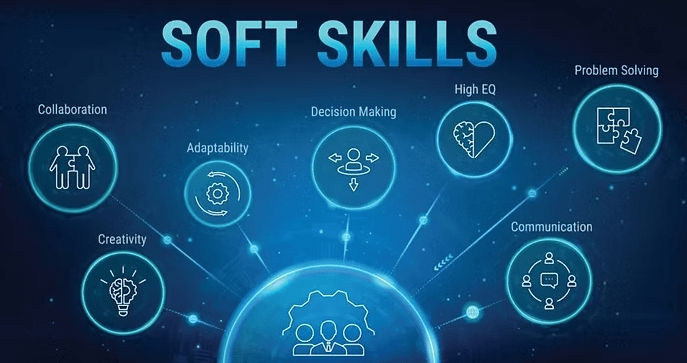
While automated recruitment systems focus on technical abilities, a Deloitte study reveals that 93% of executives consider soft skills essential for performance. Discover how to make these “invisible” skills visible to both robots and recruiters.
You master Python, analyze complex data, and create detailed reports. Yet your job applications go unanswered. The reason? Behavioral competencies – those human qualities like resilience, adaptability, or emotional intelligence – have become the new hunting ground in modern AI recruitment.
According to the World Economic Forum’s “The Future of Jobs Report 2025”, behavioral skills now represent 50% of the most in-demand workplace aptitudes. Yet, less than 17% of traditional Applicant Tracking Systems (ATS) can detect them effectively, according to Deloitte Global Human Capital Trends.
The paradox is stark: what makes you uniquely valuable is often what gets missed by automated screening systems. But the game is changing with the emergence of next-generation AI recruitment tools.
Why Soft Skills Have Become the New Currency
A revealing LinkedIn study found that 89% of “bad hires” fail not due to insufficient technical skills, but because of deficient soft skills.
The numbers speak for themselves:
- 72% of HR managers believe soft skills are more important than hard skills for long-term success (SHRM)
- Companies that specifically train for soft skills see productivity increase by 12% (Harvard Business Review)
- 94% of recruitment professionals believe an employee with excellent soft skills is more likely to be promoted than a technical expert without these qualities (Forbes)
Michael Hansen, CEO of Cengage Group, summarizes this shift: “We’re witnessing a historic shift: employers are now seeking skills before degrees. And among these skills, human qualities have become the ultimate differentiator.”
The Problem: How to Measure the Immeasurable?
The challenge is significant. How do you quantify your ability to manage team conflict or your agility in facing the unexpected? Traditional applicant tracking systems struggle with this question.
Research conducted by the U.S. Chamber of Commerce confirms this limitation: “Standard ATS function through technical keyword recognition. They excel at identifying a ‘Java Developer’ but fail to spot a ‘natural leader’.”
Worse: A Harvard Business School study on “hidden workers” showed that 88% of employers acknowledge that their automated candidate screening systems unintentionally eliminate qualified candidates, particularly those whose soft skills aren’t explicitly formulated according to expected norms.
The Revolution Underway: AI That Understands Humanity
The good news? AI recruitment tools are rapidly evolving to bridge this gap. Platforms like AIRA now use Natural Language Processing (NLP) to detect behavioral competencies behind your CV’s wording.
How does it work in practice?
- AIRA’s AI Résumé Analyzer Agent scans your experience for evidence of soft skills
- “Trained 3 new team members” becomes proof of mentoring and leadership
- “Adapted our sales strategy following regulatory changes” translates to adaptability and problem-solving
- “Reduced tensions within my team during high-pressure periods” demonstrates emotional intelligence
Transparency is key: Unlike traditional ATS systems, platforms like AIRA provide explicit AI Reasoning that explains how each behavioral competency was identified and evaluated.
5 Strategies to Make Your Soft Skills Visible to AI
- The CAR Method (Context-Action-Result)
Instead of “good communication,” describe: “Context: Misalignment between technical and marketing teams. Action: I established weekly synchronization meetings with shared minutes. Result: 30% reduction in delivery delays within 3 months.”
- The Power of Contextual Keywords
Incorporate action verbs that imply soft skills: “negotiated,” “mediated,” “facilitated,” “mentored,” “influenced,” “calmed.” SHRM’s analysis of job descriptions shows these terms are 3 times more present in senior position listings.
- Proof Through Numbers
“Team management” becomes: “Supervision of a 5-person team with 95% retention over 2 years and 25% increase in internal satisfaction scores.”
- The Art of Technical Reformulation
“Empathy” can become: “Implementation of new customer feedback processes that improved satisfaction scores by 40%.”
- The Truth Test
Use AI resume analysis tools like AIRA to identify which soft skills are actually detected in your CV and get precise improvement suggestions.
The Future is Already Here: When AI Becomes Your Ally
LinkedIn’s latest study on the future of recruitment predicts that by 2026, 65% of soft skills assessments will be AI-assisted. But far from replacing humans, this technology becomes a potential amplifier.
Platforms like AIRA embody this transition by offering:
- Transparent analysis of your profile with detailed score explanations
- Personalized guidance to improve the visibility of your unique competencies
- Interview preparation that highlights your behavioral strengths
The result? You’re not cheating the system – you’re learning to speak its language to reveal your full value.
Conclusion: From Invisible to Strategic
In tomorrow’s talent economy, your most human skills become your most strategic asset. Employers actively seek them, and AI tools are becoming sophisticated enough to recognize them.
The question is no longer “do you have soft skills?” but “do you know how to make them visible?”
As noted in the World Economic Forum’s 2025 Report: “The competitive advantage of organizations and individuals will lie in their ability to articulate and demonstrate the behavioral competencies that complement automation.”
Don’t leave your human qualities in the shadows anymore. Test your CV with advanced AI analysis tools, learn the language that makes the invisible visible, and transform what makes you human into your most powerful career asset.