EDLIGO AIRA — The AI Recruiter Agent. Hire smarter. Get hired faster.

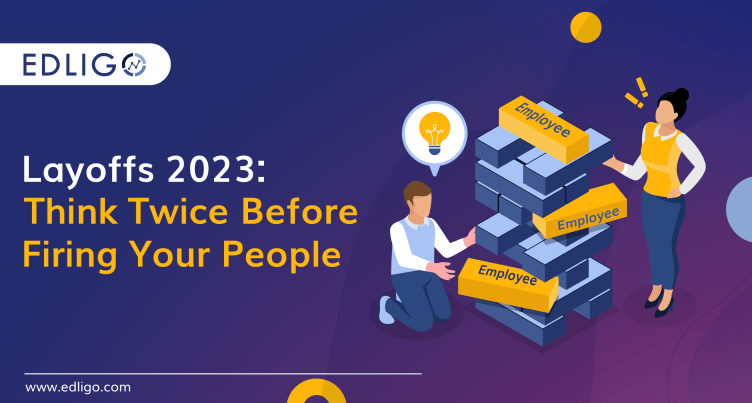
Layoffs 2023: Think Twice Before Firing Your People

Layoffs 2023: Think Twice Before Firing Your People

The Economist featured this week the illustration by Bernard Hage, a German Artist of Lebanese origin. The illustration sheds light on the impact of the economic downturn on the technology industry and the employees who have been affected by it, such as 2023 layoffs at some of the largest companies. 

Layoffs 2023 by Bernard Hage

Layoffs have become a common reality in today’s global economy, especially with the rise of automation and globalization. The pressure of the stock market and concerns about a potential recession add to the uncertainty, as companies try to cut costs and remain profitable in a challenging business environment. This can lead to job loss for many employees and can have a significant impact on their lives and the broader economy. It’s important for both individuals and organizations to be prepared for these changes and to have contingency plans in place.

Thousands of employees have been severely impacted by the widespread job losses, which have caused them to feel insecure financially and experience stress and anxiety. While layoffs may seem like a necessary step in the short term, they come with significant long-term consequences.

By taking a closer look at the costs and benefits of layoffs, this article provides a comprehensive understanding of why companies should consider alternative solutions to layoffs in the future.

Massive Layoffs Aren’t Over

Since the end of last year until today, major technology organizations have announced layoffs.

With Twitter laying off 7500 employees and Google following suit with 12000 employees, the trend is set to continue through 2023. Table 1 highlights the companies that have announced job cuts and the number of employees impacted. This information was gathered from publicly available data sources.
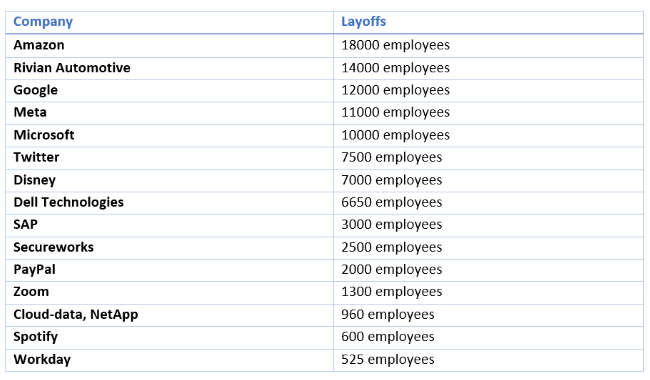
Table 1. 2023 Layoffs. Source: Forbes, LinkedIn News

Employee Layoffs May Create More Problems Than They Solve

Layoffs may result in immediate savings, but they can have catastrophic long-term effects on an organization.

The article by Harvard Business Review collected various studies published by scholars all around the world and concluded that the majority of organizations that decided to conduct layoffs do not see improved profitability, return on assets, return on equity, or return on sales. Layoffs are also negatively influencing performance of companies, which highly rely on R&D.

Good Reasons for Not Laying Off Employees:


  • Hiring an Excellent Team Takes a Lot of Effort

Recruiting and retaining talented employees is one of an organization’s most challenging responsibilities.

One of the worst mistakes is letting go of the right people once companies find them. Although downsizing may initially result in some financial savings for large corporations, what if those same enterprises end up losing the skills necessary for long-term success?

The extreme option is to fire employees. But there are always better options to consider. Instead of letting go of a fantastic team, companies could consider cutting back on part-time workers and consultant hours, as well as other expenses such as unused tools, technology, or benefits.

  • The Severance Pays and The Costs of New Hires Are High

Severance paying for laid-off employees can also add to the costs for companies. Notice of termination compensation is common in many countries to provide financial support to employees who have lost their job. It is meant to help them transition to a new job and provide some financial stability during the transition period. The length of the notice period and the amount of pay can vary depending on the country, the type of job, and the length of service of the employee. Indeed, some employees may not be as productive during the notice period, especially if they are actively seeking new employment.

When laying off employees, one error that many organizations make is eliminating positions that they cannot afford to lose.

Costs of hiring, recruiting, and training can be significant for companies. Recruiting and hiring new employees require resources such as advertising and job search sites, as well as time spent by HR staff reviewing resumes, interviewing candidates, and conducting background checks. According to the U.S. Department of Labor, the price of a bad hire is at least 30 % of the employee’s first-year earnings. Bringing in new employees requires costs that include both direct costs and costs associated with the time and effort spent during the process.

Check more about recruiting costs here: Why Losing the Best Talent is so Costly.

  • It’s Challenging to Find Employees

Today’s companies, especially small and medium-sized ones, have a difficult time finding and retaining talent.

The commitment and productivity of the company’s employees might be disrupted by downsizing, which can have an impact on revenues and bottom-line earnings. Downsizing results in the loss of experienced talent and disrupts the social networks necessary to foster creativity and adaptability within the organizational culture. If management doesn’t respond right away by rethinking tasks and introducing new technologies to make up for the loss of talent, this could have a significant negative impact on the company’s success.

The HR department assumes a key leadership and management role when it comes to avoiding layoffs. The extent of their investments in physical and human capital is being reevaluated by several technological organizations. Companies intend to restructure their workforce, but they are having trouble doing so because of a lack of data and advanced tools.

Avoiding Layoffs During Challenging Times

Layoffs are frequently one of the first fears that come to the thoughts of professionals during challenging economic times. Many companies resorted to employee layoffs during severe economic downturns or impending recessions. Layoffs do not, however, must be the sole option. The strategies organizations can use to prevent firing people during lean times are discussed here, along with reasons why they would be a better long-term option.

  • Reduced Hours and Temporary Pay Cuts

Employees could be asked to work fewer hours or accept a temporary wage cut to help the company get through these trying times rather than being let go. The organization must be fair and equal in any reductions that are implemented, as well as clearly and honestly communicate the situation to employees. To aid team members in the transition, it is also beneficial to provide support services like counseling or financial planning tools. This could assist in keeping jobs and boosting morale.

In general, when facing difficult circumstances, it’s critical for companies to be proactive and weigh all their options. According to Gartner, 77% of employees say Senior Executives should be willing to take a significant pay cut before they reduce headcount or make changes to employee compensation.

As an example, Intel made several changes to its 2023 employee compensation and rewards programs as it continues to manage macroeconomic challenges and try to cut expenses throughout the organization. CEO of Intel Pat Gelsinger will receive a 25% cut of a baseline salary, with the rest of the executive team receiving a 15% cut and mid-level managers – a 5% cut. These changes are intended to support workforce expansion and the investments required to speed up the transition while achieving the long-term vision.

  • Remote Work

When times are tough, avoiding layoffs is possible by embracing remote working. By eliminating the need for office space and all its associated expenses, including rent, utilities, and equipment, a remote workforce enables organizations to reduce costs. The resulting cost savings could help managing layoffs and keeping employees on board during challenging times. Ultimately, embracing remote working is a great way to increase productivity while reducing costs. A poll by Business Insider shows that 39% of employees would consider quitting their job if not provided the opportunity to work from home. 

  • Training Programs

Investing in a strong training program is one of the best strategies to keep employees from being let go. Companies can move team members around if they are adaptable and capable of performing different responsibilities when one department or position becomes stagnant. Executives in all industries who want to guarantee optimal productivity and job security must have a team with a variety of skill sets and competencies.

The HR department plays a crucial role in managing and executing layoffs, as they are often responsible for communicating the changes to employees, handling benefits and severance packages, and ensuring compliance with labor laws and regulations. As companies reassess their investments in both physical and human capital, the HR department must navigate these changes with sensitivity and fairness.

The lack of data and advanced tools can make it challenging for companies to restructure their workforce effectively and efficiently. Without access to reliable data, companies may struggle to make informed decisions about which employees to retain, which positions to eliminate, and how to manage the transition process. This can lead to delays and difficulties in implementing the changes, as well as a negative impact on employee morale and company reputation.

Companies need to invest in the tools and resources needed to make informed decisions about their workforce. By leveraging data and technology, HR departments can develop effective workforce management strategies that minimize the negative effects of layoffs and support the long-term success of the company.

EDLIGO Talent Analytics assists organizations in establishing a clear, objective, and data-driven baseline for their employees. The EDLIGO platform helps organizations identify top performers and future leaders, discover great skills within their organization, develop employees for the future, increase retention rates, and maximize employee engagement.
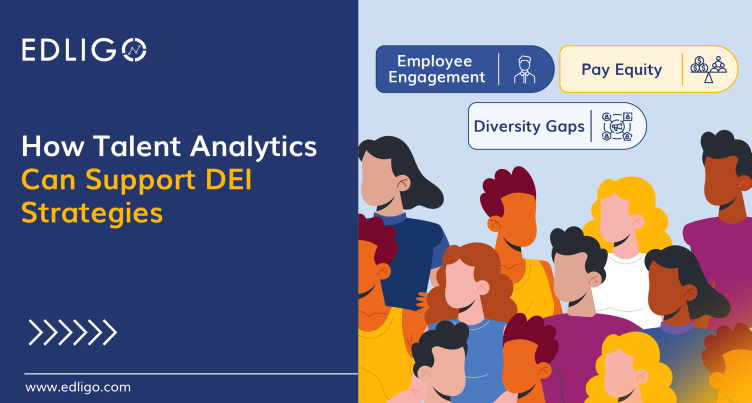
How Talent Analytics Can Support DEI Strategies

How Talent Analytics Can Support DEI Strategies

Over the past few years, there has been a growing emphasis on the significance of diversity, equity, and inclusion (DEI) in organizations’ efforts to foster a work environment that promotes equal opportunity and respects differences. According to Forbes, companies that raised the proportion of women in top-level positions by 10% experienced a corresponding 10% rise in their revenue.

Several organizations are embracing Talent Analytics to advance DEI initiatives, which employ data to assess and enhance workforce effectiveness and welfare. We will explore how Talent Analytics, also known as People Analytics, can support the development of DEI strategies and identify metrics to evaluate progress.

Leveraging People Analytics for Diversity, Equity, and Inclusion

Organizations are recognizing the importance of creating a diverse and inclusive work environment that is equitable for all employees, regardless of their race, gender, age, religion, or sexual orientation. However, creating such an environment requires more than just good intentions. Companies must be intentional about identifying and addressing any disparities that may exist in their workplace.

Identifying Diversity Gaps

Identifying diversity gaps is the first step towards creating a more diverse and inclusive workplace. To do this, companies need to collect and analyze data on various diversity metrics to understand the current state of their workforce.

For example, Dell Technologies recognizes the importance of closing the diversity gap to meet future talent demands and reflect the global customer base’s diverse perspectives. They consider diversity and inclusion as critical business imperatives that will enable them to empower their future workforce and contribute to solving societal issues. To achieve this, Dell has set a “moonshot” goal to have 50% of its global workforce and 40% of global leaders identifying as women and 25% of its US workforce and 15% of US leaders identifying as Black/African American and Hispanic/Latino minorities by 2030.

Microsoft recently reported progress in closing the diversity gap in their 2022 Diversity & Inclusion Report. Microsoft has achieved a significant milestone as women now make up more than 30% of their core workforce worldwide, with a representation of women increasing by at least 1.0 percentage points annually since 2018. Such progress is encouraging and highlights the importance of continuing to prioritize diversity and inclusion efforts in the workplace.

Identifying diversity gaps is a crucial step in developing a comprehensive DEI strategy, and People Analytics can play a vital role in this process. By analyzing employee demographics data, HR professionals can pinpoint where diversity is lacking across various areas of the organization and develop targeted strategies to address it.

For example, let’s say an organization wants to increase the representation of women in leadership positions. People Analytics can be used to analyze the gender distribution across different levels of the organization and identify areas where women are underrepresented. Based on this analysis, the organization can develop targeted strategies to increase the representation of women in leadership roles, such as implementing leadership development programs for women or reviewing and adjusting the organization’s promotion process to remove any barriers that may be hindering women’s advancement.

Similarly, People Analytics can be used to identify diversity gaps in the hiring process. By analyzing data related the gender, ethnicity, or age of job candidates and new hires, HR professionals can detect any disparities in the hiring process that may be contributing to a lack of diversity within the organization. This analysis can help the organization develop targeted strategies to attract a more diverse pool of candidates, such as sourcing from diverse talent pools or revamping the organization’s job descriptions to be more inclusive.

Measuring Pay Equity

Companies should analyze the pay of different demographic groups to identify any disparities. If certain groups are consistently paid less than others for similar work, it may indicate a lack of equity in the company’s compensation practices.

A recent Pew Research Center survey revealed that most workers quit their jobs in 2021 due to low pay (63%), no opportunities for advancement (63%), and feeling disrespected at work (57%).

According to Payscale, on average, women earn only 82 cents for every dollar earned by men. Even when men and women have similar employment characteristics and do similar jobs, women still earn 98 cents for every dollar earned by an equivalent man. This wage disparity amounts to a loss of $80,000 over a 40-year career for women.

Recently, the EU has agreed to implement new pay transparency regulations that will require companies with at least 250 employees to publish data on their employees’ pay, broken down by gender, on an annual basis. This move is aimed at closing the gender pay gap that still exists in many EU member states. According to a report by Eurostat, in 2020, the gender pay gap in the EU was 14.1%.

The new regulations will include sanctions for non-compliance and the creation of national contact points to help employees understand and use the data. Member states have two years to transpose the directive into national law. The EU has also been working on other initiatives to promote equal pay, such as policies to reconcile work and family life and to increase women’s participation in the labor market.

The new pay transparency regulations are expected to be a game-changer in promoting pay equity in the EU. By requiring companies to publish data on their employees’ pay, broken down by gender, on an annual basis, these regulations will help identify and close the pay gap that still exists in many industries. This move is expected to not only benefit women but also contribute to a fairer and more inclusive society. As a result, organizations will need to rely more heavily on People Analytics to measure and address pay equity in the workplace.

Using People Analytics to measure pay equity can help organizations identify any disparities in compensation and take steps to address them. For example, by analyzing data on employee salaries, job titles, and performance ratings, HR professionals can identify any instances where employees performing similar jobs are being paid differently based on their gender, race, or ethnicity. This can help the organization develop a plan to adjust compensation and ensure that all employees are paid fairly.

Analyzing Employee Engagement

One important way that People Analytics can support diversity, equity, and inclusion (DEI) strategies is by analyzing employee engagement. By measuring employee satisfaction, motivation, and well-being, organizations can identify areas where they can improve to create a more inclusive and supportive work environment for all employees.

Johnson & Johnson is an example of how People Analytics can empower HR teams to uncover valuable employee retention insights. The company initially hypothesized that employees with more experience were more likely to stay longer. However, after conducting research, they discovered that recent college graduates remained with the company much longer than their more experienced colleagues.

As a result of its focus on employee retention, Johnson & Johnson has achieved a high level of success in retaining quality employees, ranking in the top 15% of similarly sized companies. A significant portion of employees, 47%, reported that they would not leave the company even if offered a higher-paying job elsewhere, while 77% reported feeling excited to go to work each day. Overall, 70% of Johnson & Johnson’s employees feel that the company is doing what it should to retain them, while 30% may be considering new employment.

Given the difficulty in finding quality employees, the ability to retain them is critical for companies like Johnson & Johnson. Using People Analytics, the company has gained valuable insights into what drives employee retention and has developed strategies to support its DEI efforts.

People Analytics can be a valuable tool for organizations seeking to build more inclusive and diverse workforces. By identifying diversity metrics, measuring pay equity, and analyzing employee engagement organizations can create more equitable and diverse work environments.

EDLIGO Talent Analytics supports organizations in creating a more inclusive and diverse workforce. By utilizing the platform’s advanced analytics capabilities, organizations can gain valuable insights into their workforce and take action to improve diversity and equity.

EDLIGO helps organizations achieve their DEI goals by providing data-driven, unbiased insights into workforce diversity, employee career aspirations, and mobility opportunities and supporting the development of individual career paths and training recommendations.

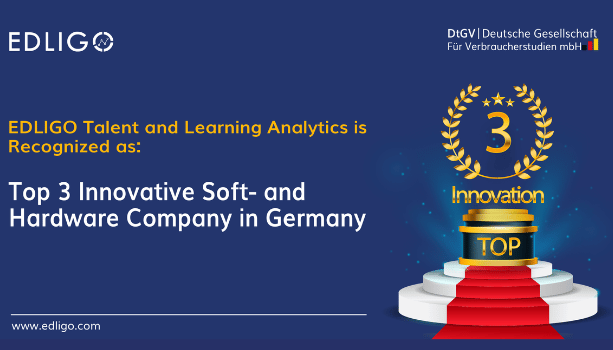
EDLIGO Talent and Learning Analytics is Recognized as One of Germany’s 3 Most Innovative Medium-sized Companies in Software and Hardware

EDLIGO Talent and Learning Analytics is Recognized as One of Germany’s 3 Most Innovative Medium-sized Companies in Software and Hardware

Berlin, Germany: The German Association for Consumer Studies (DtGV) has recognized EDLIGO GmbH as one of Germany’s 3 most innovative medium-sized companies in Software and Hardware. The recognition results from a study conducted to identify the most innovative medium-sized companies in Germany across 30 industry sectors.

The study evaluated the patent performance of German companies with revenues not exceeding one billion EURO between October 1, 2021, and September 30, 2022. It adopted an innovative approach to calculating an innovation score that reflected the companies’ patent activity and economic relevance. The study identified EDLIGO as one of the top-performing ones and included it in the list of 500 most innovative companies.

EDLIGO is a leading software company that provides innovative solutions to customers across a range of industries, including AI-based Talent Analytics and Learning Analytics. Founded in 2014, the company has a proven track record of delivering cutting-edge products and services that meet the needs of its customers.

EDLIGO’s recognition is proof of the organization’s steadfast commitment to innovation and research, and to delivering advanced products and services to its customers.

We are delighted to be named one of the top 3 most innovative software and hardware companies in Germany. This recognition reflects our team’s dedication and hard work in pushing the boundaries of technology and providing innovative solutions to our clients, said Dr. Lassaad Essafi, the Chief Executive Officer at EDLIGO.


The full publication can be found under the links:

Most innovative Software and hardware companies: https://www.stern.de/siegel/das-sind-die-innovativsten-mittelstaendler-deutschlands–33248248.html

Top 500 innovative companies across all sectors: https://www.stern.de/siegel/exklusiv–das-sind-die-innovativsten-mittelstaendler-deutschlands-33309362.html

About EDLIGO 

EDLIGO GmbH is a leading company specializing in AI-powered Talent and Learning Analytics. Founded in Erlangen and incubated at the Friedrich-Alexander Universität, Germany’s most innovative university, EDLIGO aspires to be at the forefront of technology and innovation.

EDLIGO has a strong track record, with customers successfully using our platform in more than ten countries. EDLIGO has a team of experienced, innovative, and highly committed people that elevate talent management to the next level.

EDLIGO is top 3 most Innovative company in Germany

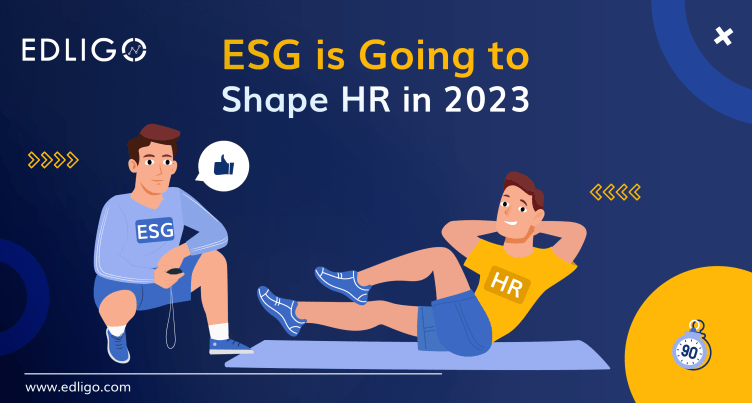
ESG is Going to Shape HR in 2023

ESG is Going to Shape HR in 2023

Why ESG is important now and why does it matter to HR?

Environmental, social, and governance (ESG) issues are becoming more important for companies in today’s business environment. As consumers, investors and regulators become more aware of the social and environmental impacts of business, companies are under pressure to demonstrate their commitment to sustainability and social responsibility.

The emphasis on ESG factors is driven by the need for organizations to be more socially responsible and sustainable and has gained popularity in recent years as environmental and sustainability issues have received more attention on a global scale.

It takes excellent and flexible leadership to meet the current local and global ESG challenges. ESG considerations are becoming increasingly important. The European Commission has proposed the “Corporate Sustainability Due Diligence Directive” for companies to respect human rights and the environment in their global value chains.

The proposed regulations, known as the “due diligence” framework, would require companies to identify, prevent, and address human rights and environmental risks in their global value chains.

The proposed legislation would require companies to:

  • Conduct human rights and environmental due diligence in their global value chains.
  • Identify and assess the risks of human rights and environmental abuses in their value chains.
  • Implement measures to prevent or mitigate those risks.
  • Report publicly on their due diligence activities and progress.

The proposed regulations would also establish a monitoring and enforcement mechanism to ensure compliance with the framework. Companies that do not comply with the requirements could face fines and other penalties.

The role of HR in ESG

A key role is played by HR. Will professionals be prepared to provide quantifiable evidence when the CEO comes knocking on HR’s door asking about ESG-related employee issues like diversity, equality, and inclusion (DE&I), gender pay equity, upskilling and employee development, and workplace culture?

HR plays a critical role in ensuring that a company’s ESG efforts are integrated into its culture and operations and that employees are aware of and engaged in these efforts.

According to Forbes, ethnically diverse companies are 35% more likely to outperform, while companies that are gender diverse are 15% more likely to outperform.

ESG is expected to continue to shape HR in 2023 and beyond as more companies prioritize sustainability and social responsibility in their operations and decision-making. This will likely lead to changes in HR policies and practices such as:

  • Identifying areas where the company can improve its diversity, equity, and inclusion efforts, which can be used to guide recruitment and hiring strategies.
  • Measuring the engagement and motivation of employees, which can be used to support retention and development strategies.
  • Assessing the environmental impact of the company’s operations and identifying opportunities for reduction, which can be used to shape employee development and mobility strategies.
  •  Identifying the company’s reputation and attractiveness to job candidates, which can be used to improve recruitment and branding strategies.

Starting Points for HR Leaders

The development and implementation of an organization’s ESG initiatives can and should be a key responsibility of HR leaders and their teams. To accomplish this, a strong, inclusive culture that fosters a sense of belonging among all employees is needed.

What should be the starting point for the organizations’ HR departments to begin the ESG journey?

  • Work with the executive leadership, risk, and investor relations teams to understand what ESG standards and criteria the organization is following and how professionals can support those efforts.
  • Analyze workforce data to provide a report on the organization’s efforts to hire and manage a diverse, skilled workforce from around the world. Utilize this data to monitor and assess human resources-related performance indicators for the company.
  • Publish an inventory of the efforts to build a diverse and engaged workforce for the benefit of all parties.

According to Forbes, 47% of investors considered the “S” aspect of ESG the most important when making decisions, overtaking “E” at 35%.

Putting the “S” in ESG, HR contributes to the development of an environment where current and potential employees want to work, collaborate, and advance the company.

Including ESG in the longer-term strategy

According to Gartner, 83% of business leaders say their sustainability program activities directly created both short- and long-term value for their organization.

ESG plays a significant role in fostering and sustaining a strong sense of fulfillment and providing purposeful work. A real competitive advantage over rivals who might be prone to greenwashing their public-facing information or ignoring ESG entirely can be gained by adopting and implementing ESG goals in a transparent way.

Incorporating ESG considerations into a company’s long-term strategy can help to ensure that the company is sustainable and responsible in its operations and growth. By considering the impact of their activities on the environment, society, and corporate governance, companies can mitigate risks and create growth opportunities, while also addressing the concerns and expectations of stakeholders. This can include implementing sustainable practices and policies, promoting diversity and inclusion, and being transparent about the company’s actions and impact.

ESG is an important consideration for companies now more than ever, and HR plays a critical role in supporting these efforts and creating a sustainable and responsible workforce. Companies can better understand how their ESG efforts impact their workforce and use this information to inform their talent strategy and workforce planning. This helps companies to attract and retain top talent, and to create a more responsible and sustainable company culture.

EDLIGO Talent Analytics can support HR departments with a constant flow of data to predict and measure the impact of key strategic decisions and determine the future readiness of the organization, supporting HR departments in their strategic role as a foundation for sustainability.  EDLIGO helps organizations achieve their sustainability goals by providing data-driven, unbiased insights into workforce diversity, employee career aspirations, and mobility opportunities, and supporting the development of individual career paths and training opportunities.

Schedule a Demo to know more.

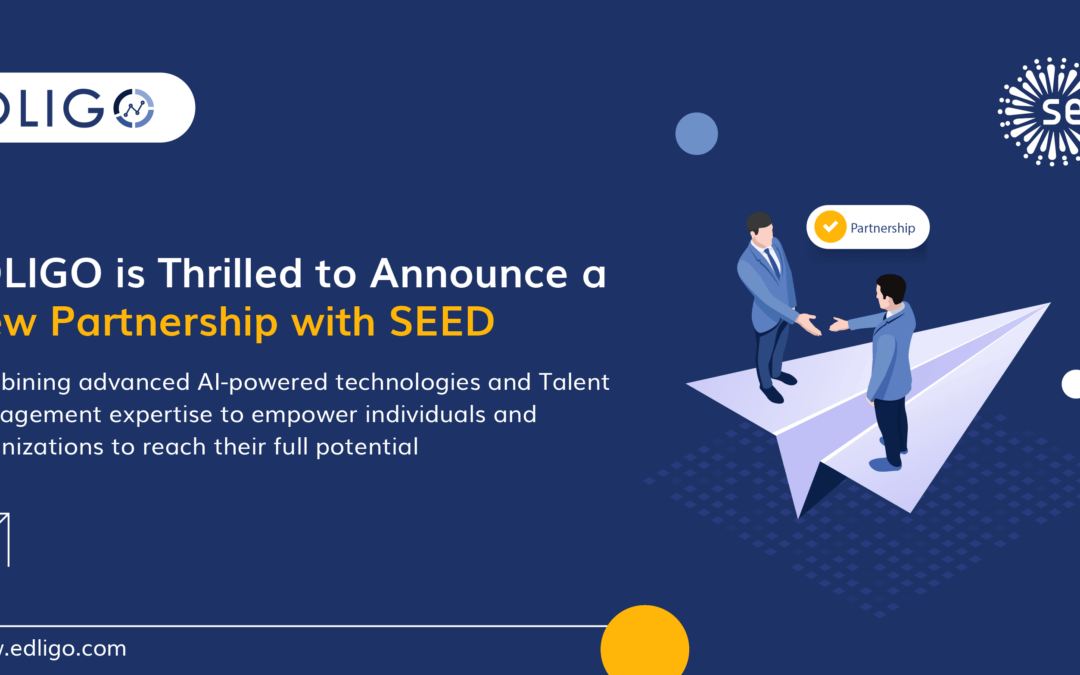
EDLIGO and SEED Partner to Revolutionize HR in Latin America

EDLIGO and SEED Partner to Revolutionize HR in Latin America

EDLIGO, a provider of cutting-edge AI-powered Talent Analytics Solution, and SEED, an HR consulting organization, a leader of transformation of business processes, organization’s culture, Talent Management and People Analytics topics in Mexico, today announced a strategic partnership that will bring the best of HR technology and Talent Analytics to organizations in Latin America.

We are delighted to join forces with SEED,” said Gert Koolma, Director Sales & Account Management at EDLIGO. “Their reputation as a leading innovator in the HR consulting space in Latin America is unparalleled, and their commitment to excellence aligns perfectly with our own. By combining our innovative Talent Analytics solution and the Talent Management expertise of SEED, we are ready to shape and revolutionize the HR landscape in Latin America.

Stefan Scharnagl, CEO at SEED added, “The growing need in businesses to make decisions based on data promotes the implementation of cutting-edge technologies in Human Resources that facilitate information management and simplify decision-making. For this reason, our alliance with EDLIGO will allow us to provide our clients with broader solutions that will help them make better decisions in the field of talent, especially in Latin America where we are getting started to dive deeper into People Analytics.”

With this partnership, EDLIGO and SEED aim to provide a comprehensive suite of HR solutions that will help organizations optimize their HR operations and drive improved employee engagement and business performance.

Together EDLIGO and SEED can facilitate the transformation of business processes and culture with current trends in Talent Management and People Analytics and contribute to the constant growth of workforce and businesses. Combining advanced Talent and Learning Analytics solutions and expertise and experience in HR operations, this collaboration can help organizations transform Workforce Management processes with data-driven decision making and create and deliver talent development programs focused on people and their growth.

SEED becomes an official representative of EDLIGO Talent and Learning Analytics solutions in Latin America.


About EDLIGO

EDLIGO is a provider of cutting-edge AI-Powered Talent Analytics solution for data-driven Talent and Skills Management. EDLIGO solutions help organizations to better understand their workforce and optimize their HR operations, leading to improved employee engagement and business performance.

Website: https://www.edligo.com

LinkedIn: https://www.linkedin.com/company/edligo-learning-and-talent-analytics/


About SEED

SEED is a leading provider of innovative HR solutions, helping organizations to streamline their HR operations and enhance the employee experience. With a focus on technology and a commitment to excellence, SEED has established itself as a leading player in the HR space.

Website: https://www.seedconsulting.mx/

LinkedIn: https://www.linkedin.com/company/seed-consulting-mexico/ 

WordPress Cookie Plugin by Real Cookie Banner