EDLIGO AIRA — The AI Recruiter Agent. Hire smarter. Get hired faster.

Present and Future Role of AI in HR

Present and Future Role of AI in HR

Artificial intelligence is an emerging technology transforming the way we live and work. With AI going mainstream, the world economy is expected to be impacted in multiple ways. While PwC’s Global Artificial Intelligence Study estimated that AI will lead to a 26% increase in global GDP, McKinsey Global Institute is foreseeing that 45 million Americans, which is about one-quarter of the working class, would lose their work to automation by 2030. AI guru Kai-Fu Lee, the author of AI Superpowers: China, Silicon Valley, and the New World Order and CEO of Sinovation Ventures, predicts that 50% of all jobs will be automated by AI within the next 15 years.

So how will AI impact the workforce, and how what role will it play in HR?

AI Will Create More Jobs Than It Eliminates

According to the World Economic Forum, 97 million new jobs will be created by 2025 thanks to AI. So, AI will replace some jobs, but new jobs will be introduced to support the maintenance and use of artificial intelligence. And already in 2019, creating new jobs as artificial intelligence became more widespread inside companies has become a huge priority for C-suite leaders.

Based on PwC report, around 20% of executives in the USA companies have AI initiatives that will roll out across their businesses, and they expect to invest more in both automatizations of the current tasks with a help of AI and creating and filling the new roles which are associated with AI operations.

Many of the anticipated new jobs have already come to life, such as for example Financial Wellness Managers, or Memory Curator and Augmented Reality Journey Builder, Chief Ethical and Humane Use Officer among all.

However, while opportunities are created, some challenges will arise. Most of the automation will be concentrated in the starter positions, making it increasingly hard for fresh graduates to find a job. Organizations will mostly rely on freelancers and contractors to get the rest of the tasks done. Full-time employment might be reduced drastically, and governments will struggle to guarantee a basic income for everyone.

Human Skills Will Grow in Importance

The question of whether AI will replace humans arises from the assumption that AI and people have the same abilities and qualities, but actually, they don’t. AI-powered machines are more accurate, faster, and very rational, but they are definitely not emotional, or culturally sensitive. AI is extremely useful in improving the speed of data analyzing and decreasing the reporting time. Moreover, AI is able to analyze huge volumes of data and draw comprehensive reports.

Human abilities are more expansive than machines’ abilities, which are only responsive to the data available. People are able to use imagination, they can feel and evaluate changing situations, which help them to move from short-term to long-term issues. These people’s abilities are and do not require a constant supply of data.

The demand for human skills will only grow. Human skills (also known as “soft skills”) show our ability to relate to one another and refer to aspects such as empathy, compassion, and authenticity. People with well-developed human skills can create deeper connections with other employees and customers.

AI in HR

For many industries, the focus for the next year is on deciding how to use AI to help employees do their jobs faster and better. For HR leaders this is already happening. Oracle conducted research with 600 HR leaders who are using AI at work, to learn where AI was being used in the workplace to re-evaluate and transform the employee experience. Most HR professionals welcome the integration of AI into their HR operations. In fact, 64% of them reported that they would trust a robot over their manager for advice.

Moreover, about 50% of HR department employees are already using some form of AI at work (compared to 32% in 2018). The report also says that 65% of workers are optimistic, excited, and grateful about having AI as a helping hand.

AI is increasingly being used to automate many HR processes, and it appears that automation is going to pay off big time. Take Hilton as an example, with AI-based screens and interviewing candidates, the organization managed to increase the speed to hire by 85%. Moreover, AI also helped increase the diversity of their talent pool and enable our recruiters to identify a high-performing candidate faster. Here it is important to mention that artificial intelligence can be used only as a recruiter’s tool to assist them in the hiring process, but not in making the final decision to hire.

Since running an HR department requires a very personalized and empathetic approach to each of the employees, AI is unlikely to replace HR managers in the future, and a successful HR ecosystem will comprise the right mix of People Analytics, AI, and human intervention. Data-driven insights will help make multidimensional decisions but will not make these decisions by themselves alone.

Where is AI Being Used in HR?

1)    Learning and Development

Continuous learning is important for both employees and their organizations. However, the challenge that we face today in a rapidly moving business and technological environment is that skills have a shorter lifecycle than they were 10 and more years ago.

And it is where AI in upskilling and reskilling can truly add value. Some of the key L&D-related areas include personalized learning pathways, adjusted to the needs of each person, learning analytics, evaluation of corporates’ skills needs, and development of cost-effective training strategy.

If you would like to know more about how AI and Analytics can help to create a cost-effective L&D strategy, schedule a call with EDLIGO experts.

2)    Map of people and their skills

Knowing your people and their competencies is important for any organization to align their goals with the current human resources they have and think of upskilling strategies. Companies and their employees must adapt to the changing environment fast, and to make the change smooth, HR leaders should know what skills and competencies gaps the company’s staff possess. Based on this information, they can organize training, courses and acquire new people for the company.

AI can help assess the employees fast and precisely, as well as align it to corporate goals and evaluate what skills are missing. Check here for more information about creating a map of people and their skills.

3)    Talent Mobility

It is not easy to just move good employees to other departments. Through structured and data-driven talent mobility, HR leaders can fill open positions in a cost-effective way. Moreover, this way they can satisfy the career progression aspiration of their employees, and AI can help optimize this process.

AI-based Analytics help to solve the mobility challenges such as finding better skill matches, improving employee visibility to career opportunities, enhancing the employee experience, and creating pools of internal talent. It can release the power of the people an organization already has.

4)    Identifying future leaders and top talent

Identifying top employees requires measuring their abilities and skills across different metrics. A person can have extraordinary abilities in one field but fail to adapt to changing circumstances. The more complex the combination of variables gets, the more difficult the search becomes. AI and Analytics tools can perform data analysis to help managers understand the performance of their workforce over multiple metrics, building a more comprehensive picture of the talent’s potential.

5)    Data-based talent management

Talent management involves the processes of retaining high-quality employees, developing their skills, and continuously motivating those employees to stay in the organization.

AI can predict the likelihood of an employee leaving, by evaluating employee data that includes rewards, time in role, performance, and measuring these metrics against attrition levels. Thus, Talent Analytics and AI support HR in people management to have an awareness of any potential problems before they arise and allow for interventions to occur before matters become more serious.

To learn more about AI use in the Human Resources field EDLIGO team has interviewed HR Leaders about their experiences and opinions about the role of AI in Talent management.

Here are some great insights:

David Swanagon

Head Of People Analytics North America, Ericsson, The USA

Official Member, Forbes Human Resources Council

  1. What is the current role of AI in HR?

The Future of Work = People + Machines. Currently, AI plays a large role in candidate sourcing and critical skills identification. This includes driving D&I objectives by ensuring that offer packages are equitable across race and gender. For the most part, large companies have used AI to help facilitate HR Service Centers. Front-line tasks such as compensation and total rewards are better handled using Bots and automation tools. As part of this, training departments have adopted AI to help manage learning pathways. These recommender programs assist employees in identifying career paths and growing skills in their chosen domain.

2. How can AI transform HR in the future?

In the coming decade, it’s possible that machines will outnumber people in terms of workforce. This means that a new leadership model will have to be created to handle Ethical AI and automation. The concept of “Leading Machines” will become increasingly important as C-level executives grapple with the integration between AI and people operations. This includes how human skills are deployed, alongside the mix between build, buy, and borrow staffing levels. At a transactional level, AI will help automate most HR shared services. However, it will also help with strategy formulation by identifying opportunities for employees to partner on projects and leverage shared expertise.

3. How can AI improve decision-making for better business outcomes?

It’s important for CHROs to understand that data privacy is part of the employee experience. A key aspect of Ethical AI is ensuring that data is effectively managed across organizations. This includes establishing a chain of custody for sensitive information, alongside a policy framework for how data will be used to make talent decisions. Companies that excel at this process will enjoy stronger engagement. Separately, AI helps provide an objective opinion to executives before they make a decision. Whether it’s a capital investment or talent decision, many leaders are challenged by competing viewpoints. The objectivity that AI provides allows executives to filter both positive and negative elements. This helps minimize downside risk, while identifying new opportunities for reinvestment. If implemented correctly, AI can help reduce organizational bias. However, the same tools can do the opposite if utilized poorly.

Prianty Rojo

Talent Acquisition US Manager – PepsiCo, Latin America

1.     What is the current role of AI in HR?

HR roles are more and more connected to business strategy. AI helps to be more efficient and measure our processes so we can play an active role with the organization and be more focused on our pilar: People.

2.     How can AI transform HR in the future?

AI it’s an enabler to create business acumen cross-function. In the future will help to talk “the same language” with the rest of the organization and create more accurate strategies from a holistic perspective.

3.     How can AI improve decision-making for better business outcomes?

For HR has been challenging to set down conversations, strategies, and results into KPI’s, SLA’S, etc. Transform qualitative into quantitative, is a big advantage so we can talk, think, and plan with clear data. Be people and results-driven.

Lucas Velmer

Human Resources Business Analyst, United States Department of the Army, The USA

1)    What is the current role of AI in HR?

The current role of AI in HR is largely dependent on the organization. An organization dictates priorities and both AI progression and HR progression need to be priorities for there to be a role in HR. Otherwise, HR will continue to progress as societal norms continue to evolve, but still, be largely dependent on human-to-human interaction with some degree of automation in support. That said, AI helps HR professionals save time while providing quantifiable metrics for both people management and strategic business decisions.

2)    How can AI transform HR in the future?

AI can assist HR professionals through automation of mathematics, statistics, and information management, saving countless people-hours. A computer can calculate advanced formulas and parse statistical data in a fraction of a second whereas it can take human several hours to draw the same calculated conclusion. This allows the analyst more time to understand the metrics and their impacts, identify potential bias, and solidify information for knowledge sharing.

3)    How can AI improve decision-making for better business outcomes?

Bottom line: humans are more important than hardware. AI can and should always play a role in decision-making, provided the inputs are correct, inclusive, and bias-free. AI can run calculations, algorithms, and provide statistical information in an instant which then allows someone to analyze the information and potentially use AI to run predictive algorithms to analyze potential outcomes. This, coupled with experienced HR professional analysis, helps executives understand the impacts of their decisions on their current and future employees. On a final note, AI should never be the priority over humans. AI cannot and should not quantify human sentiment, feelings, or anything else that is subjective and truly unquantifiable. These things should always be left to humans.

Alfredo López Luján

 People Analytics Manager in Middle Americas AB-InBev, Latin America

1.     What is the current role of AI in HR?

Artificial intelligence has become a hot topic as it has transformed many businesses. The current role of Human Resources and becoming another user of this methodology is to focus people to interact with technology. Many people are afraid of this transformation. Every day we read that a robot is going to replace us. What is necessary is to show people how to interact with the new tools. We have to help people grow and evolve. As humans, we can transform our behaviors and our habits. The important thing is to show how to learn to “get along” with technology.

2.     How can AI transform HR in the future?

Basically, it will be in charge of providing a lot of information for decision-making. Processes such as Recruitment and Selection, commitment to the company, staff retention, and performance measurement have changed today thanks to more data and deeper analysis. Not only will it speed up and facilitate your work, but it will also allow you to see “details” or “situations” that would never have been detected. With this, you will be able to observe and understand interactions. We are currently looking at issues of leadership, team building, and communication between staff. Behavioral analysis shows you that we have a large number of personalities, which also change with situations. But analyzing this, each time will bring us closer to the study and understanding of humans.

3.     How can AI improve decision-making for better business outcomes?

In the case of Human Resources, it will allow us to know the employees with the highest performance, to recruit and retain more effectively, to make financial decisions about the construction of projects where people are involved. How could you select the right employee for a position from the hundreds of applications that come to us? How to know if induction is adequate for the requirements of the personnel, not only at present but in the future when they are required? How will you communicate and how will you be prepared for the next crisis or disruptive event? How are your employees going to interact with customers by knowing their preferences? We will solve all this with AI.

 Kirsi Elina Kallio

Learning and Development Specialist, CEO and Founder of Kasvun Katalyytti Oy, Finland

1)    What is the current role of AI in HR?

One of the most unutilized resources in modern organizations is AI. Already, organizations collect a lot of data related to their personnel, stakeholders, and customers. Data as such, however, does not yet provide support to evidence-based decision-making. AI-based solutions are needed to refine big data masses to relevant knowledge.

2)    How can AI transform HR in the future?

HR is still under presented in the management teams of large corporates, although a human resource is the most valuable resource of the companies.

Today, data is power. By offering relevant data-based knowledge to support business decisions, it is possible to raise HR’s profile.

Traditional operational HR processes are easy to automate This releases more time to HR professionals to do more strategic planning and developments based on data.

3)    How can AI improve decision-making for better business outcomes?

The problem in big organizations is, that the higher-level managers are not able to see what is happening on the front line. With more efficient AI solutions, HR is able to generate vital data about performance and learning at the customer interface. This helps to better predict e.g. future competence needs.

At the moment, the decision-making process is largely based only on feeling. AI-based analytics has been criticized for producing distorting data to support decision-making. However, it must be remembered that it is always a human being who decides where and how data is collected and for what information obtained is used.

Marcin Gabryel

Recruiter / Senior HR Specialist, Arla Foods, Poland

1)    What is the current role of AI in HR?

Artificial Intelligence has more influence to HR then ever before. The number of processes that can be taken care of by AI is still increasing. These are low-value and low-risk tasks like tracking systems, document verifications. In my role, more focused in recruitment area AI is also more involved in pre-selection processes, but also helps with repetitive tasks, like scheduling of meetings.

2)    How can AI transform HR in the future?

I believe that automation processes that are ongoing in many different fields will be slowly taking over more and more tasks. In my area for example – the initial stages of recruitment processes like phone screens (1st interview) are already handled using AI in some companies. Even selection (or pre-selection) processes can be assisted by AI (algorithms). This allows us to focus more on different tasks and saves time.

3)    How can AI improve decision-making for better business outcomes?

AI has the ability to analyze huge amounts of data in a very short time and this is definitely crucial. Providing valuable insight (or even predictions) based on analyzed data can be helpful in many areas such as finance, marketing, HR.

 Ella Kiselyuk

Executive Director of Human Resources, City University of New York-Baruch College, The USA

1)    What is the current role of AI in HR?

During these unprecedented times and impact of COVI19 on HR overall operations, an immediate need to shift to AI is inevitable. The current role of AI in HR is relatively new as many organizations are still the midst of modifying their policies and procedures to incorporate hybrid and/or fully functioning business operations. For example. a response time to employees’ daily inquiries regarding their benefits, time and leave, retirement, etc. has tremendously changed. HR professionals spent more time on checking multiple databases/software before a complete and accurate data is released to the employee. There is an increased demand to automate some of the transactions in order to improve HR operations.

2)    How can AI transform HR in the future?

AI will transform HR operations by allowing HR professionals to become more strategic and engaged. A lot of transactional operations that are currently performed by HR personnel, will shift to AI. This will resulted in streamlining some of the transactional processes as well as it will reduce a “human” error factor, especially when it comes to data entries. Moreover, a presence of both, human and technology in HR daily operations will create an inclusive and non-biased environment during recruitment and on-boarding activities. A pre-selection process will be significantly reduced and the most accurate, valid and comprehensive data will be shared with senior leadership and stakeholders. HR will be able to define and produce various metrics on a regular basis relying solely on AI findings.

3)    How can AI improve decision-making for better business outcomes?

The leadership has to take into account how employees will embrace and respond to AI. While some may think AI will replace a human factor during HR interactions, the current business environment and its innovative trends demonstrate the need to automate more HR transactions. Once an accurate, data-driven information is shared with the leadership, it will help to focus on many factors including cost, retention, savings,etc. AI will assist in determining whether the company’s resources are properly allocated and positioned in a competitive environment. It will also help improving business operations by branding the company’s innovative and diverse approach and its impact on well-being of the employees. A reduction in hours spent on compiling data will also have a significant impact on employees’ morale and performance.

In summary, AI is already utilized by HR Leaders in different countries and across different industries, and it has more potential to develop even more use cases to make the working process even easier and more efficient.

If you would like to know more about how AI and Talent Analytics can help your organization to succeed, please contact EDLIGO team or schedule the demo.
How to Maximize Learning with AI

How to Maximize Learning with AI

Artificial Intelligence in Education

Artificial intelligence, robotics, and “deep learning” are game-changing technologies transforming how people think, learn, live, and work. Now is the time for educators to think about how emerging technologies and AI-based Learning Analytics will affect teaching, learning, and the environment that students will inherit in the coming years.

AI has changed every industry, and education is no exception. Artificial intelligence is now being used in schools and colleges to improve teaching methods and increase student engagement. According to Prescient and Strategic Intelligence, artificial intelligence in the education market is expected to reach 25.7 billion USD by 2030. Therefore, to keep up to date, it’s important to gain a better understanding of this subject.

AI-based Learning Analytics

Learning analytics is an emerging field in which sophisticated and advanced analytics tools are used to improve learning and education. Many applications of learning analytics and AI would be impossible to achieve without the use of rich, continuous real-time data.

While there are many definitions of learning analytics, UW-Madison’s Learning Analytics Roadmap Committee (LARC) has contextually defined it as the undertaking of activities designed to improve student outcomes by informing structure, content, delivery, or support of the learning environment. Learning Analytics refers to the collection and analysis of data about learners and their environments for understanding and improving learning outcomes. Governments, universities, and massive open online course providers are collecting data about learners and how they learn for offering personalized recommendations and improving learning outcomes.

Learning analytics has the potential to change the way we assess impact and results in learning settings, allowing providers to create new strategies to achieve excellence in teaching and learning while also presenting students with new information to help them make the best educational decisions.  

During one of our interviews, Iouri Kotorov, a senior Lecturer in International Business, educator, and a strategic business consultant, stated that “learning analytics, helps HEIs to utilize data effectively in decision making. Learning analytics helps HEIs facilitate the evaluation of the effectiveness of teaching and helps to monitor students’ learning. It can also provide instructors and students with data about their teaching and learning performance, which can make their teaching and learning experiences more personal and engaging.

Analytics solutions offer a convenient way to leverage data. Institutions use analytics to explore and examine their data and then transform their findings into insights that ultimately help them make better and more informed decisions.

Descriptive analytics uses static data from a variety of sources, including course evaluations, student departure surveys, student information systems, LMS activities, and e-Portfolio interactions. This strategy evaluates the student’s past and attempts to uncover patterns in their learning development by analyzing the data. Descriptive analytics outlines what has occurred and the present situation, allowing you to make strategic judgments about the optimal teaching method for each individual student.

For example, you can use descriptive analytics to find out how much your class has learned about the lesson. After analyzing the data, you might find that implementing scaffolding strategies or differentiated learning processes into your lessons may be an effective way to reach more students. Some universities and districts have descriptive analytics tools built right into or integrated with the instructor’s management system.

Predictive analytics may extend data from the same sources but focus on trying to measure actual learning. The data may come from intelligent agents, task-specific games, log files, simulations designed to capture the learning process, and direct observation. This approach not only provides instructors with data you can then use to make actionable decisions, but it provides alternative suggestions to make teaching more effective. Based on the student data collected, the analytics tool generates suggestions on different educational resources and tools to utilize to make a greater impact on students. Prescriptive analytics gives schools and instructors insights into student knowledge as well as adaptable educational strategies based on student performance.

During one of our interviews,  Gabriele Riedmann de Trinidad, founder and managing director of Platform 3L GmbH, stated that “learning analytics allows hyper-individualized support for each person, it is the most powerful and economic way for an organization to reach expected learning levels while taking care of each individual. Taking into consideration the huge individual gaps students have due to COVID-related school closures, learning analytics is most probably the only way to give individual support to close the gaps. With a continuous shortage of teachers, learning analytics could be the “digital partner” for high quality individualized learning.”

The use of big data is beneficial for education and includes various aspects from learning analytics that closely examine the educational process to improve learning. Through careful analysis of big data, you can determine useful information that can benefit educational institutions, students, and instructors. These stakeholder benefits include targeted course offerings, curriculum development, student learning outcomes and behavior, personalized learning, improved instructor performance, and post-educational employment opportunities.

Key Benefits of AI-based Learning Analytics

1.   Benefits to Students

Learning analytics have the potential to provide students with more detailed information about their performance. For instance, learning analytics can help students see and reflect on their behavior in constructive ways to help them manage their progress toward their learning goals.

Boosting Student Retention

Student data analytics can be used to predict which students will not be able to continue to the following academic year.

According to the National Student Clearinghouse Research Center, in average 30% of students who entered college in the fall do not return in the second year.

The impact of analytics on retention has been beneficial. Once an at-risk student has been identified, specific interventions such as guidance or tutoring can be utilized to encourage them to stay in school and complete their education.

Student learning outcomes, behavior, and process

Another key benefit of big data and text mining focuses on the ability of schools and instructors to determine student learning outcomes in the educational process and determine how to improve student performance.

Learner interactions with technological tools such as e-learning and mobile learning can help educators understand the student learning experience through data analysis.

By assessing the implications on learner outcomes, the use of data offers approaches to improve student learning and performance in academic education. As a result, learning analytics allows educators to evaluate various forms of knowledge and alter instructional content as needed.

Enabling students to take control of their learning

Another key application of learning analytics is to provide students with more information about how they are progressing and what they need to do to achieve their educational goals. Learning analytics can enable students to take charge of their education by giving them a better understanding of their current performance in real-time and assisting them in making decisions about what to study.

Personalized learning

Faculty can utilize learning analytics to look at the frequency of student logins using data collected by the learning management system. Instructors can see how students interact in class and their overall engagement, pace, and grades. These elements can help predict whether a student will succeed. Learning analytics enables students to receive relevant data in real-time, examine and incorporate it, and receive real-time feedback.

2.   Benefits to Instructors

According to McKinsey, technology can help teachers reallocate 30% of their time toward activities that support student learning.

By gathering more information about the students’ experiences, an institution may be able to identify and fix issues that students are concerned about. Lecturers and tutors can utilize analytics to track their students’ progress during a module and compare the results across several modules, allowing them to adjust their instructions if, for example, they notice that some students are failing.

Improved instructors’ performance

Learning analytics can be used to assess the performance of instructors. The use of data allows instructors to improve their training so that instructors are better prepared to work with students in a technological learning environment.

Analysts can evaluate online activities by acquiring data generated from instructor usage of technology and research tools in online libraries. As a result, using this data can assist instructors in identifying areas where they can improve to allow improved instructor-student interactions in the classroom.

An instructor can use Learning Analytics data to measure, monitor, and respond to a student’s comprehension of the content in real-time. Before the final mark is given, educators can use analytics and data for changing their teaching techniques and addressing student needs. This is a big advancement for instructors since it can assist them in overcoming any implicit biases they may have about their students’ engagement or performance.

Improved quality of teaching

Learning analytics provides teaching professionals with more information about the quality of the educational content, assignments, and tasks given to students and various activities they deliver during teaching processes, as well as their teaching and assessment methods, allowing them to improve over time.

Curriculum improvement

Big data allows instructors to make changes and modifications to improve curriculum development in the educational system, such as through data curricular mapping. Educators can use massive data analysis to identify gaps in student learning and comprehension and assess whether curriculum changes are required. Instructors can participate in educational strategic planning to guarantee that the learning curriculum is adapted to the needs of students to optimize their learning potential.

3.   Benefits to Institutions

Learning analytics allows program directors, or other administrators, to more easily see how well their program is performing. In addition to the potential need to drill down into specific faculty, students, and course-level data, learning analytics can allow for meaningful comparisons across courses.

Identifying target courses

An initial benefit that evolves from using big data analysis in education is the ability of educational institutions to identify targeted courses that more closely align with student needs and preferences for their program of study. By examining trends in student enrollment and interests in various disciplines, institutions can focus educational and teaching resources in programs that maximize student enrollment in the most needed areas of study. Schools can better predict graduate numbers for long-term planning of enrollment.

Post-educational employment

Using big data and AI allows educational institutions to identify post-education employment opportunities for graduates and help target education that more closely aligns with employment market needs. It can also predict graduate employment, unemployment, or undetermined situations about job opportunities.

Big data can aid education institutions in better understanding students’ career possibilities and assessing student learning programs for professional compatibility. In a global learning environment, this type of information not only can facilitate better educational and post-education vocational planning, but also may prove useful to organizations as they make hiring and budgeting decisions for college graduates in different disciplines.

Learning analytics research community

The research community also benefits from the use of analytics in education. Researchers can share information and collaborate more easily. They can identify gaps between industry and academia so that research can determine how to overcome problems. Also, useful data analysis represents an important component of the ability of scholars to generate knowledge as well as continue to progress in research disciplines.

To discover more about AI-based Learning Analytics, EDLIGO team has interviewed thought leaders in the field about their experiences and opinions.

Here are some great insights:

Dr. Juan Alejo Arenas Ruiz

Vice President for Digital Channels and Business at Universidad Tecmilenio

1.   To what extent is Learning Analytics improving the performance of learners and learning institutions?

In the last 10 years, we have seen an increase in applications and solutions that have been emerging and it is a clear representation of the success that learning analytics is having. There is an increase in the development of this type of application as well as the investment of resources for its development, from the public perspective as well as from the private initiative.

2.   How can the education sector benefit from Learning Analytics in the short term?

According to experts on this subject, the advantage of learning analytics is that it can develop personalized education. In recent decades, the traditional model has been difficult to change. The traditional model is the classroom that is not inverted and that tries to teach many students in one classroom, especially now with the pandemic, in a virtual classroom. What learning analytics does is precisely focus on each student, looking for personalized learning.

Personalized education is one of the results of the use of artificial intelligence (AI). From there follows the learning mining, which is data mining applied to this problem. Data mining is an area of computer science that works with statistical algorithms and AI: machine learning. Most of the algorithms that are applied to this type of solution analyze the numbers of the students, their browsing patterns, how much time they spend on homework, on social networks; With all that information, the data mining algorithms are able to make inferences and they can know what the level of knowledge of the student is and that’s when personalized education can be achieved.

3. How do you see AI-based Learning Analytics transforming the education sector?

AI algorithms continue to improve and will continue to advance their development and also their own self-learning. There are controversial issues about the benefits of AI due to the different positions that this issue generates. The bias that often shows up in AI algorithms is because algorithms are trained and learn by what they are fed. If you are given information that is biased, then the result will be biased. It doesn’t infer like a human.

Experts on the subject note that AI continues to evolve because it now does hybrid combinations. Until now the approach that AI has is known as a collector, there are already hybrid models where it combines the collector approach with the symbolic one and that is going to translate into even better algorithms that are closer to reality.

Kirsi Elina Kallio

Learning and Development Specialist, CEO and Founder of Kasvun Katalyytti Oy, Finland, Future-oriented University Instructor at HELBUS Helsinki School of Business

1.    To what extent is Learning Analytics improving the performance of learners and learning institutions?

Assessing learning outcomes is somehow “the Holy Grail” for all the professionals and institutions operating in the educational sector. Learning is a complex process, which cannot be simplified as numbers or statistics. However, learning analytics can be used to understand some elements of this complex phenomenon. Instant statistics help you improve learning performance while it’s going on and then improve the learning results.

2.   How can the education sector benefit from Learning Analytics in the short term?

 More evidence-based decisions could be made concerning the design of learning activities.

3.   How do you see AI-based Learning Analytics transforming the education sector?

Not analytics as such. More critical are which are the issues you are assessing. For this, educators need a more systemic understanding of all the elements affecting educational activities and learning experiences. These kinds of elements could be, for instance, the rules and division of labor in educational institutions directing learning activities.

Ángela Erazo Múñoz, Professor at the Universidade Federal da Paraíba en João Pessoa, Latin America

1.   To what extent is Learning Analytics improving the performance of learners and learning institutions?

It is a necessary and complex issue. I am not a specialist in the subject, so I could not give a quantifiable or justified answer in this regard. However, as a spectator, I believe that the different evaluation and measurement tools that learning analytics has developed and is developing would effectively allow us to evaluate and improve as teachers, as well as provide solutions to learners with the aim of improving their acquisition processes and knowledge production. On the other hand, in the institution where I work, it is up to each professor to make an individual and group evaluation of each one of the subjects, focusing on the field of each one. Regarding the field of language teaching in general, much progress has been made in terms of learning materials and the type of format, material and proposals have been diversified.

2.   How can the education sector benefit from Learning Analytics in the short term?

The education sector will benefit from short-term learning analytics through:

–     Doing research

–     Developing measurement and monitoring systems that are easy to apply, understand and use for both students and teachers

–     Training teachers and students for the best analysis and search for solutions that improve learning and teaching.

–     Making experiences from different levels of training

–     Disseminating and sharing information and research on the matter

3.   How do you see AI-based Learning Analytics transforming the education sector?

From various perspectives, I believe that there will be a great transformation and I think that the pandemic has already accelerated the process. For example, in the field of translation and language acquisition, much progress has been made thanks to experiences with artificial intelligence. Nowadays we find many super-sophisticated translation programs that help in the processes as well as different ways of learning languages from applications, manuals, books, learning platforms, etc.

AI-based analytics enables your organization to measure the impact of a range of metrics on learning performance and make decisions based on data.

If you manage learning at a school, university, or organization and don’t use data to make choices, you should look into EDLIGO Learning Analytics to improve learning outcomes.

EDLIGO proved to scale from one team to corporate level, from one classroom to state level.

EDLIGO can help you:

–         Track the results of your studies and compare them with other students.

–         Track the results of your studies and compare them with other students.

–         Visualize the realities of what is happening at any level

–         Monitor and drive learning progress

–         Target academic support and design personalized learning experiences

–         Establish a quality assurance framework with integrated data analytics and AI

Please contact the EDLIGO team or request a demo if you’d like to learn more about how Learning Analytics might help your organization to achieve higher outcomes using data and AI.

Why Losing the Best Talent is so Costly

Why Losing the Best Talent is so Costly

How much does it cost to hire an employee?

The National Association of Colleges in America found out that the cost of hiring an employee in a company with 0-500 people averages $7,645. Other studies such as the one published by the Society for Human Resource Management in the USA, estimated that the average cost of hiring an employee is $4,129, and $14,936 for hiring an executive.

Bringing new employees into your organization requires costs that include both direct costs and costs associated with the time and effort spent during the process. It is important that organizations get a clear picture of the expenses associated with hiring a new employee for better financial planning. But how to determine these costs in the most accurate way?

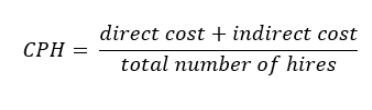
Recruitment costs include direct costs (the recruitment process itself) and indirect costs (the rest, related to the process). The cost of a company’s employee includes not only the total salary of the employment contract and the related employer’s social charges but also the costs related to the recruitment and integration process. Hiring someone who isn’t a good fit for the job must also be included in the calculation.

Calculation of the direct cost of a new hire

To define the direct cost of an employee for the company, you should consider the following elements:

Gross salary: Salary stated in the employment contract. Understanding your employee’s gross pay is critical since gross wages are required to calculate the amount of taxes and deductions that must be made, particularly if deductions are based on a percentage of the employee’s gross salary.

Benefit costs: The 2019 Benefits Benchmarking Report, prepared by The Conference Board of Canada, indicates that benefits represent an average of 10% or about $9,000 of an employer’s total costs in compensating an employee. These benefits include paid time off, supplemental pay, insurance, retirement plans, mental health coverage and savings plans.

Employer charges: These include health insurance, unemployment contributions, supplementary pensions, and professional training. Depending on the country of the incorporation of the company, these charges can range from approximately 18% to 26% of a worker’s base salary (CNN Business).

Calculation of the indirect cost of a new hire

When evaluating the overall cost of hiring employees, you should consider indirect costs such as:

Costs related to the recruitment process: It is necessary to consider the hourly cost of the different recruitment actors multiplied by the time spent for each phase of the recruitment (writing the job offer, choice of the means of diffusion of the job offer and diffusion, analysis and sorting of the received applications, interviews, choice of the selected candidate according to different criteria, etc.).

Costs related to the integration process: Once the candidate has been chosen, other costs related to the integration (or onboarding) will necessarily be incurred, such as the preparation of the employment contract, medical examination, and preparation of the work equipment. The integration process also entails other costs:

  • Training costs: training and preparation of a new hire begins when a new employee enters your company and ends once she or he is fully capable of doing work on their own. According to Training Magazine report, large companies increased overall training expenditures to $22 million in 2020 from $17.7 million in 2019, while small companies increased from $367,490 to $506,819. Although training and development of an employee is an ongoing process and should never be stopped to guarantee personal and skills development of each employee and his or her capability to perform new tasks.
  • Unproductivity costs: new hires don’t always provide their maximum effort straight away. This means that an employee’s productivity may be lower for the first two years after they start working. Companies will be missing out on potential value for months or years after their former employees have left.

Costs related to wrong recruitment: The ” wrong recruitments ” will cause additional costs such as the implementation of the termination of the contractual relationship and other administrative documents related to the termination, the operation of loss related to the added value not received by the company during the entire period of unproductivity of the employee as well as the additional costs related to the launch of a new recruitment and integration process to replace the wrong recruitment.

The Society of Human Resource Management (SHRM) in collaboration with the American National Standards Institute (ANSI) created a generalized cost-per-hire (CPH) formula:

To discover more about the cost of hiring and employee retention in the Human Resources field, EDLIGO team has interviewed HR Leaders about their experiences and opinions.

Here are some great insights:

Michael Thompson

Head of HR Data & Analytics at CrowdStrike

Why is it more beneficial for the company to retain employees than to hire new ones?

The question has a lot to it, but I’d say it’s beneficial to retain because of all the downstream impacts that aren’t immediately obvious when an employee is at risk of leaving. I’d first start and say, normalize stay conversations to understand and gauge when an employee may be susceptible to external offers. And then work with them to understand if what they are seeking is something feasible. Retaining is often cheaper in the long run. The number 1 reason employees leave is compensation or career development based. If that’s what the employee is looking for and they are top talent. Retain them. Otherwise, you will lose productivity when they leave. This is a cost. You will burn out those who need to cover for the loss, which may lead to more turnover, more cost. Recruiting is not cheap for a company. It involves marketing, paying the recruiter for their time, interviews which cost productivity. And then ultimately when a replacement is identified companies are having to pay a higher salary than the prior incumbent. And then there’s ramp-up time and onboarding costs. So, in the end, giving the prior incumbent a 10-15% raise and new title would have been cheaper than the recruitment cycle.

Marcus Baker

Head of People Analytics at PerkinElmer, Inc.

Why is it more beneficial for the company to retain employees than to hire new ones?

Many leaders receive a sticker shock at the hard, quantifiable costs of hiring. The people and infrastructure that power Talent Acquisition are sizable and the more employees you need to backfill the larger these “hard costs” will be. However, this is only a fraction of the true costs associated with an organization’s inability to retain talent – in many cases the “soft costs” of high attrition might outweigh the ones leaders see on paper. The expense of internal knowledge drain, time spent interviewing, lost productivity of empty positions, onboarding costs, and ramping-up the productivity of new hires are immense.  Financially speaking, you’d often be better off recognizing and retaining the employees you have than going to market for replacement talent.

Erjona Shera

People Analytics at Wayfair

Why is it more beneficial for the company to retain employees than to hire new ones?

Attrition in a company comes with extra costs. One of the costs would be time spent to interview and time spent to onboard the new hire. Let’s assume a mid-senior role has a notice period of 2 months and it requires another 3 months to interview candidates and to have the new person join and that onboarding takes 3 additional months. That means that the team will have to hold for around 8 months waiting for the replacement and for the person to be onboarded. Another cost is lack of productivity in work due to missing headcount during all this time. This also comes with a risk of the remaining team feeling burned out due to handling extra work while searching for a replacement. Finally, hiring comes with a risk. You will not know for sure if the person hired will be right for the job and fit in the company culture until they go through their first review. If the company would have spent time and resources to retain the person in the first place, it would have maintained or increased engagement and productivity in the team and saved itself a lot of extra hours, effort and risk to hire a new person. By focusing on employee development, the company can increase retention and upskill existing teams so that they continuously strive for new ambitious business goals.

Richard S. Encarnacion

People Analytics Analyst at Healthfirst

Why is it more beneficial for the company to retain employees than to hire new ones?

When companies are successful at retaining employees, they can maintain a level of organizational knowledge which maintains organizational efficiency. When an organization loses their staff and hire new employees there is a 3–6-month learning curve where efficiency is lost due to the “catching up” the new hire must undergo costing an organization loss of profit.

Within our organization we have been able to calculate a total loss of 3.6million dollar loss in 2021 due to our voluntary turnover. We can calculate this combining recruiting cost, onboarding/training cost and loss of productivity

Gianluca Cepale

 Global HR Analytics Specialist at ROCKWOOL Group

Why is it more beneficial for the company to retain employees than to hire new ones?

It is a matter of time and time is money. Capitalizing from hiring processes as well as counteracting turnover costs is of utmost importance for organizations, whatever the industry and the size are. Moreover, whenever a job contract is signed, further related costs follow such as those related to the newcomer onboarding and training. Indeed, companies invest a lot of resources to make the newcomer more and more effective in contributing to the organizational business. Thus, the newcomer starts to familiarize with his/her tasks, role, job, people, and the work environment, all of that require a significant investment of one’s personal and structural resources. Consequently, it is quite easy to imagine that deploying a sustainable employability strategy may be more beneficial for both the employees – whose needs of growth are satisfied – and the employer – who don’t need to restart (and re-pay for) the hiring and the onboarding process once again. Retention policy as well as sustainable employability interventions have already shown their efficacy on employees’ health and productivity (Hazelzet et al., 2019).

Hiring an employee involves a significant cost for the employer. To drastically reduce recruiting and onboarding costs, it’s best for companies to opt for internal recruitment. Companies sometimes overlook a promising talent base: their own employees. It’s time for recruiters to focus on internal recruitment, employee training, and developing the skills needed for the future. To assist these processes EDLIGO offers AI-Powered People Analytics solution for data-driven and cost-effective talent management.

–       EDLIGO allows managers to evaluate the skills and competencies of their employees. EDLIGO platform provides you with a map of people’s skill gaps, and, on this basis, managers can use recommendations on how to fill the skill gaps in the most efficient way for their organizations. Companies will be able to create a strategy for improving and renewing employees’ skills so that they can save the cost of hiring new people.

–       EDLIGO enables structured and targeted talent mobility. The EDLIGO platform allows you to search for talent internally and create personalized development plans for employees in your company who need to advance.

–       EDLIGO platform helps companies identify top performers and future leaders in the organization, uncover great skills in the company, develop employees for the future, increase retention rate, and maximize employees’ engagement.

In summary, recruitment of an employee entails a significant cost for the employer. Far from being obvious, the calculation of the cost of recruiting an employee includes both direct costs (the recruitment process itself) and indirect costs (the rest related to the process).

To learn more about our solutions to minimize the cost of hiring by retaining the best talent, please schedule a call with our EDLIGO team.

Competency-based Education: Prepare Your Students for the Future of Work

Competency-based Education: Prepare Your Students for the Future of Work

Due to the fast-changing environment and the development of new technologies, the education sector is facing lots of challenges. A recent study by McKinsey discovered that youth unemployment is increasing as young people are being held back because of the lack of skills relevant to the workplace.

According to Gallup Poll, only 11% of business leaders agreed that graduates have the necessary skills and competencies to succeed in the workplace.

Employers need to work with education providers so that students learn the skills they need to succeed at work, and governments also have a crucial role to play.

Why don’t we know what works in moving young people from school to employment? Because there is little hard data on the issue. This information gap makes it difficult to begin to understand what practices are most promising – and what it will take to train young people so that they can take their place as productive participants in the global economy.

The search for better teaching strategies to address the problem will never end. As a school leader, you probably spend too much of your time thinking about how to improve the learning experience and learning outcomes of the students that pass through your school throughout the years and how to prepare them for future work.

One-to-many, subject-based teaching is still the norm in most educational institutions, however, recently a competency-based approach has been advocated as a more effective option, encouraging students to develop important skills and skills of their interest while reducing inefficiencies in teaching by moving away from traditional subject silos and implementing cross-curriculum learning. The basic purpose of competency-based education is to give every student an equal chance to master required skills and grow into successful individuals.

Competency-based education, in its most basic form, means that rather than focusing on grades, subjects, and yearly curriculum schedules, the primary focus is spent on whether a student learned the necessary competencies. It measures skills and learning rather than time spent in a classroom.

During our many years of experience with large Learning Analytics based transformation projects, our EDLIGO team found out that a competency-based approach to education can be of real benefit.

Competency-based education versus traditional education

Let’s analyze the traditional learning approach and compare it to the newly advocated competency-based learning:

  • Instruction and teaching methods

In traditional education, each classroom has a teacher who plans and delivers the curriculum with little differentiation.

In competency-based learning, teachers collaborate with community partners and students to create a personalized learning plan for each student based on their interests, learning requirements, and real-time data.

  • Assessment system

In traditional education, assessments are performed at set times to evaluate and classify students based on the information learned during each course or subject. Quite often the assessment cannot evaluate the practical knowledge of the students or whether the students can apply the knowledge.

A comprehensive evaluation system that tries to measure competencies can assist students in determining whether they are learning the necessary abilities. Daily instruction is guided by formative assessments. Summative assessments are used to demonstrate skill improvement through flexible pathways and diversified approaches.

  • Grading policies

Grades are norm-referenced, reflect course requirements, and are often based on weighted quarters and a final exam in traditional education.

Grades in personalized learning represent the level of competency mastery. If students do not receive course credit, their records show that competencies must be re-learned rather than the full course.

  • Learning continuum

Students are expected to master grade-level college and career readiness benchmarks in traditional education.

Students are required to master competencies connected to college and career preparation requirements with clear, transferrable learning objectives in competency-based learning.

  • Learning pace 

In traditional education, students progress at the pace of the teacher, regardless of proficiency or the need for more time.

Students in competency-based learning receive individualized support both in and out of school to ensure they receive what they need, when they need it, to graduate college and career ready.

The important elements of competency-based education

Competency-based learning provides opportunities for a student-driven, practical learning environment, and it successfully engages young people in their learning. The important elements of competency-based learning include:

  • Student as a prime mover

Competency-based learning progressions empower students by giving them more control over their learning pace and direction. So, it is important to create a learning process equipped with tools that are taking into consideration learning needs and giving recommendations on how to advance. Teachers must give personalized instruction, feedback, and support to each student. Students should be taught in a way that builds on their prior knowledge and engages with the material in different ways such as through practice, dialogue, and project-based learning.

  • Proficiency assessment

Competency-based learning goals are organized into progressions based on explicit standards. Standards create a roadmap while assessments and demonstrations give feedback about progress and pace toward mastery over expectations required for graduation. This design allows empowered students to advance ONLY based on a demonstration of competence. Finally, assessments must demonstrate mastery of the subject, allowing all students to advance when they’re fully competent.

  • Personal pathways

The instructional system in competency-based learning can support both common and unique learning experiences (in school and out of school). Competency-based learning institutions can also allow for multiple ways for a learner to demonstrate competency.

The school systems (whether they be state, district, or other educational networks), have the responsibility to shape and sustain competency-based education systems in the schools they work with.

When school systems get involved in determining the framework of their schools’ competency-based education systems, this provides uniformity and coherence across the network. This helps teachers to have a clear definition of what mastery looks like, which competencies are important, and the assessments they should be using, while still giving them flexibility at a local level.

The benefits of competency-based education

Over the past decade, the movement to adopt competency-based education has gained popularity in many countries including, the United States, Brazil, and many European Countries, as more educators, parents, and educational leaders recognize that strong educational preparation is essential to success in today’s world. Institutions use competency-based learning to raise academic standards, ensure that more students meet those expectations, and more students will be better prepared for adult life.

To help schools establish the foundations of their processes, here we discuss the basic benefits of competency-based education

  • Schools offer an equitable range of learning experiences

Equity does not imply that each student receives the same treatment as the others. Instead, it entails providing each student with the resources they require to achieve the same result.

Because competency-based education aims to analyze and eliminate bias in school leadership, this is a key principle. Students are taught and encouraged based on their unique talents and weaknesses, ensuring that everyone has an equal chance of succeeding. As a result, accomplishment can no longer be predicted based on culture, social class, household income, or language. Competency-based teaching also contributes to the development of a welcoming culture in which all students feel safe and respected.

  • Transparency helps students take ownership

Both students and parents should be aware of the learning objectives specified for the class (and for the school as a whole). When students first enter a competency-based education class, they should be aware of three things:

–       What they need to learn

–       How mastery is defined

–       How they will be assessed

Students will take more responsibility for their education if they know what they want to achieve in the end. For example, a student recognizes that he must put his math knowledge to use by completing a project involving the design of a tiny garden. He’ll need to use his math skills to calculate the size of the area and the number of plants that will fit.

If a student understands exactly what he needs to accomplish to be successful and progress in the class, he will feel more in control of his education. Then, when he encounters a problem in the project or lacks the knowledge to do it properly, he will recognize that he requires assistance on his own.

Students who have clear goals and outcomes are more likely to take charge of their learning. As a result of their ownership, they can learn more effectively now and in the future.

  • Students get the support they need individually

Students should have a framework in a competency-based education setting to understand how long they should work on a task before asking for help and when they can approach the teacher during class time.

As previously stated, competency-based education works through bias to promote equity. As teachers engage with students to address their various deficiencies and assist them to build on their strengths, each student progresses toward mastery in his or her own unique (but equally successful) way. This individualized learning experience ensures that each student has an equal chance of succeeding.

Teachers must be available to assist kids for this process to run effectively. Furthermore, they cannot rely just on students seeking assistance; teachers must be completely informed of each student’s progress.

  • Teachers assess for growth and mastery

There are many different types of assessments. Three types of examinations are particularly beneficial for competency-based learning:

– Formative assessments: These assessments assist teachers in determining where each student is in the learning process and making appropriate adjustments to their instruction.

Formative assessments allow teachers to make real-time adjustments by highlighting critical areas where pupils need to improve.

– Authentic assessments: Another fantastic technique to demonstrate mastery is to have students apply what they’ve learned in class to real-life circumstances. Furthermore, students gain abilities that will be useful in the future.

– Digital content assessment: Assessment becomes much easier in the classroom when technology is used. Many classroom software packages contain assessment and progress reporting features, allowing teachers to monitor where each student is in the learning process.

  • Students move forward when they demonstrate mastery

Teachers can identify where each student is in the learning process by adding regular assessments and data-based progress reporting.

It’s time for students to move forward when they display a clear understanding of the material, demonstrate their ability to apply that understanding, and demonstrate how they’ve developed crucial skills.

How to make a move towards competency-based education

To make a smooth move towards competency-based education, based on the important elements that a skills-based approach should involve, we recommend the following shifts to be performed:

1.           From Content-Driven to Skills-Driven: Since skills and competencies are the core components of competency-based education, developing competencies frameworks and graduate profiles is essential and will help organize learning at your school around durable, transferable skills.

2.           From Time-Based to Performance-Based: Reconsidering how time disproportionately dictates how assessment systems work at school is important, as learning in competency-based education is personalized and driven by each student’s performance. Schools should use reassessment practices to build more flexibility into that system.

3.           From Grading to Feedback: Educational institutions should drive into the robust research on effective grading to establish more transparent, equitable, and meaningful feedback practices.

4.           From Lessons to Experiences: Summative assessments should be redesigned to consist of more relevant tasks for performance evaluation.

5.           From Educator Designed to Co-Designed: Schools should create opportunities for students to set, pursue, and reflect on their own goals, not focusing only on the goals of teachers and schools.

Change often succeeds in a series of small steps, and this is particularly true in competency-based learning, where it is important to spend time helping educators, students, and families understand what a competency-based environment means, and how to benefit from it. Changing how school should work must be combined with unlearning how the process was done before and educating the stakeholders about competencies-based education, and we can’t underestimate the value of time, patience, and support in that effort.

Competency-based learning assists students in gaining and demonstrating mastery of a topic, promotes fairness and inclusion, and prepares students for life beyond the classroom.

While this system poses adoption challenges for school leaders, the benefits of successfully overcoming those challenges greatly outweigh the time spent doing so.

Using the EDLIGO learning analytics students can check their results and see how their work is progressing. The dashboards are simple and intuitive to use for various age groups and display a wide and comprehensive set of data.

Student data is linked to educators’ dashboards, allowing them to track progress and identify problems and students at risk. Educators can see how far their students have progressed in each area, providing them a complete picture of what is going on in their classes. Moreover, educators also get recommendations on how the content can be improved and which tasks were the best to assess the students’ progress.

AI is used to recommend tasks and approaches for students to reinforce what they’ve learned or to improve on areas that require improvement based on personal needs and abilities.

Moreover, EDLIGO provides targeted academic support and drives timely actions for focus groups (e.g., students at risk, gifted students), evaluate whether/how students are learning and offer individualized learning experiences, identifies areas for improvement related to international benchmarks & accreditation plans sharpen identification of professional development needs for faculty/staff, and optimize resource allocation and make better-informed decisions boosting institutional performance.

Contact our EDLIGO team to learn more.

Reskilling & Upskilling as a Strategic Response to New Skill Demands

Reskilling & Upskilling as a Strategic Response to New Skill Demands

About half of the global workforce will require reskilling by 2025, according to the World Economic Forum (WEF). Also, according to Gartner’s research, 58% of the workforce will need new skill sets to do their jobs successfully. Jobs and competencies are continually evolving. Therefore, the demand for upskilling and reskilling will continue to grow over the next few years to adapt to digitalization, robotization, automation, and the ensuing skills gaps. As per Gartner’s 2021-2023 emerging technology roadmap survey, IT executives see talent shortage as the most significant adoption barrier to most emerging technologies.

Also, according to Gartner’s research, 58% of the workforce will need new skill sets to do their jobs successfully.

Upskilling and reskilling vs. external hiring

Decision-makers may wonder why they should consider reskilling their staff instead of focusing on employing a new generation of employees who have already invested in learning the new skills required by the company. While new hires have this one advantage, existing employees have many more, making internal talent development a significant, mission-essential goal.

Employees that have worked for a company for a long time have a solid awareness of the company’s needs, clients, customers, and partners. It takes longer to recruit and train new employees than it does to develop new, paradigm-shifting technologies. Moreover, Workable has estimated that it could take up to 8 months for a new employee to become fully productive. Additionally, a study done by ATD, found that companies that offer thorough training had more than twice the amount of income per employee over firms that offered less training. A culture of upskilling and reskilling is thus a key asset that permits the adoption of new technical solutions and innovative business practices for companies that wish to prepare for the future.

As a great example, Global Food Corporation was confronted with issues such as using skills as the foundational core of their personnel processes and as a unit of measurement that would enable them to effectively acquire, manage, and develop their employees in the future. The company has successfully developed an enterprise-wide capability framework and a functional working competency framework. Through the implementation of a reskilling and upskilling strategy, the company has assessed over 500 employees on Enduring Human Capabilities (EHCs) as well as business-specific skills and has established an HR-wide vision and skills integration lab to define the skills journey for the future.

Addressing the skills gap with career pathing

A career pathing program is used to implement both reskilling and upskilling strategies in your company. Successful career pathing strategies are derived from a competency-based approach. This enables your company to examine and assess the precise competencies required for each role, as well as determine the skills development needed for employees transitioning to new positions.

A career path is unique to every employee, it assists employees to attain their long-term career objectives and advance their careers either laterally or through promotion. It necessitates an understanding of the knowledge, skills, and personal characteristics required, as well as the specialized abilities and additional training required to achieve those goals. Career pathing allows companies to:

–       Meet future demand: Identifying the available capabilities enables you to target the development of key skills in your existing workforce to meet future demand.

–       Identify hidden skills: Career pathing empowers your employees to assess their skills, revealing potential the business may not be aware of.

–       Create a culture of talent mobility: Today’s talent looks for employers with a commitment to their future career development. Not only does a career pathing strategy attract talent to your organization, but it also increases motivation and retention levels among your employees.  According to Deloitte, internal talent mobility can boost employee engagement by as much as 30%. Career pathing also creates internal movement, both laterally and vertically, and visibly demonstrates that your organization values its people.

As the speed of digital transformation continues unabated, an effective career pathing strategy is beneficial for both employees and HR and must be a talent imperative for your organization.

Steps to implement an upskilling program in your organization

Upskilling and reskilling are the top priority for learning and development (L&D) professionals globally, according to LinkedIn Learning’s 5th Annual Workplace Learning Report. The report added that 62% of CEOs surveyed in the US now prioritize learning in their organization. There are various strategies for how it could be implemented, EDLIGO shares great insights on the most effective actions to be taken.

1.    Build a competency map for upskilling

Competency mapping is the initial stage in building a competency meter. Skills should be mapped keeping in mind your current employees and the future growth of your organization. Skill mapping will also help quantify the skill set required for a certain job role. However, employee skill aspiration is equally important when it comes to learning new skills. It’s a pull vs push mechanism. If an employee is interested, they’ll be able to learn more and grasp better, resulting in smooth execution of the process.

2.    Measure the effectiveness of the upskilling program

The Kirkpatrick Model is a globally recognized method of evaluating the results of training and learning programs. It assesses both formal and informal training methods and rates them against four levels of criteria:

–       Reaction: The employee’s emotional response to the training. This is done as soon as the training is finished.

–       Learning: How effectively did the employee obtain the information from the training. Have an assessment at the end of one month, two months, or three months to check if the employee still possesses the learning.

–       Behavior: Take 360-degree feedback from the employee’s team to know if the training made any change in the behavior of the employee on a day-to-day basis. Has the employee become more efficient or not?

–       Results: This is determined by the L&D team. They check if the projects are getting implemented more efficiently and if results have become better or not.

Compare the result with the first report of the competency meter. The growth rate will determine the success of the program. This model along with a good feedback and assessment tool in place will help you figure out the exact ROI.

The Kirkpatrick Model has a number of advantages that make it an attractive choice for trainers and other business leaders:

–       Provides clear evaluative steps to follow

–       Works with traditional and digital learning programs

–       Gives HR and business leaders valuable insight into their overall training programs and their impact on business outcomes

3.    Offer an opportunity marketplace to upskilled employees

Once the first phase of your upskilling program is over and employees have gained new skills or built on existing ones, organizations must give the newly upskilled employees the opportunity to apply for internal positions that require these skills. This doesn’t only demonstrate the organization’s commitment to upskilling but further builds employee engagement and organizational resilience to the changes that are inevitably hitting businesses globally this decade.

To discover more about how to upskill and reskill your talent for the future, EDLIGO team has interviewed HR Leaders from different countries about their experiences and opinions.

Here are some great insights:

Gustavo Bulgach 

People Analytics Specialist at Telecom Argentina

1.    How did upskilling and reskilling evolve over time?

 When organizations understood the need to train their employees in order to provide them with new competencies, upskilling became fundamental. Training employees became a mandatory requirement for any organization that needed to evolve. Nowadays, taking into account the constant change that organizations and people go through, upskilling does not meet the talent needs we require, and that is why reskilling plays a fundamental role. When recruiters cannot find the necessary profiles in the market, the reskilling of active collaborators covers that need and manages to foster a culture of internal development.

2.    Why are upskilling and reskilling so critical now?

Some profiles are currently in high demand in the market, so organizations are constantly competing to incorporate business-critical profiles. An upskilling and reskilling plan that allows us to develop our employees, generates profiles prepared for the challenges that the organization needs, with the benefit of having performance information.

3.    How are companies making the best use of their upskilling and reskilling investments?

We must use the available data for two purposes. The first is to understand what competencies the organization will need in the coming years, and the second is to know which employees have interest and good performance to reconfigure their knowledge to occupy a strategic position in the organization.

Adam McKinnon

People Data and Analytics Lead at Reece Group

1.    Why are upskilling and reskilling so critical now?

Three reasons why upskilling and reskilling are critical:

–        Only through upskilling and reskilling can employees navigate the increasing rate of innovation (i.e., automation, new jobs) and digital transformation occurring in the professional world.

–        A culture of learning helps to engage and retain talent. Upskilling and reskilling can create a tangible sense of growth among employees, leaving them feeling both satisfied and stimulated and removing the need for employees to look for growth opportunities outside of their current organization.

–        Upskilling and reskilling can enhance employee productivity and in turn customer service.

2.    How are companies making the best use of their upskilling and reskilling investments?

The key characteristic of companies doing upskilling and reskilling well is their use of “Skills Data”. Specifically, using AI to infer skills about staff, the skills required for a role, and the skills acquired when performing different learning and development activities. Through this data, companies can use skills data to inform recruitment and retention activities, project staffing, learning and development, career mapping, strategic (i.e., long-term) and operational (short-term) workforce planning, M&A, onboarding, and offboarding initiatives. Skills data has the potential to greatly benefit both the employee and organization when actively used.

Alexandre Piotrowski

Leader in People Analytics & Insight at Brambles

1.    How did upskilling and reskilling evolve over time?

Upskilling has always been around, but it is the rate we’ve had to upskill that has dramatically changed because of the faster evolution of technology. The pandemic has accelerated the pace of change and has heightened the awareness of the need to upskill. The need itself, however, is universal. Companies are now forced to pivot and do quick and noticeable upskilling to cope with the ever-changing environment. Employees are more aware of globalization and the impact it will have on their current job, leading to increased willingness to pick up new skills to stay (or become) attractive.

2.    Why are upskilling and reskilling so critical now?

Global megatrends greatly impact people’s jobs, and this is only going to accelerate. There is a vital need to upskill and reskill to be attractive and differentiate oneself from the mass. Having a strategy in place to upskill and reskill the workforce allows organizations to adapt to change more dynamically.

Similarly, workers who are adaptable will be able to better navigate the job market. The fact that a number of studies show that more than 40% of the core skills required to perform existing jobs are expected to change give a sense of what is ahead of us.

3.    How are companies making the best use of their upskilling and reskilling investments?

One of the reasons that Companies are investing billions of dollars on upskilling and reskilling is because they can’t find and attract workers with the required skills. Workers meanwhile want to move to better jobs and take the opportunity to grow their profile.

Companies invest to retain their top talents and develop the skills they need by looking at their existing workforce. This gives them a competitive advantage, creates development opportunities, and reduces the need to systematically go external.

 Paloma Lledó Sempere 

Human Data & People Analytics Lead | Data Science & Business Analytics at Indra

1.    How did upskilling and reskilling evolve over time?

Until a few years ago, no one was talking about upskilling or reskilling. Basically, this is because the availability of technologies and variety of projects were much lower. However, thanks to this evolution of technologies, there are others, such as Cobol, that have become obsolete. Therefore, we must take advantage of the talent we have within companies and transform it to meet the new needs of the market. On the other hand, the covid crisis has made reskilling an urgent issue in the last two years due to the lack of profiles that promote digitization in all areas.

2.    Why are upskilling and reskilling so critical now?

Upskilling and reskilling are critical today because in two years the needs of people and companies for products and services have changed radically. The beginning of the pandemic and everything that has been happening since then changed our lives. Confinement, teleworking, avoiding personal contact, and saving time and costs in any way are clear examples of change. Hence, for all these changes to take place, specialized people are needed who can adapt companies to this new world as quickly as possible.

3.    How are companies making the best use of their upskilling and reskilling investments?

Unfortunately, most companies continue to look outside for talent. Most strategies are based on stealing talent and making those most in-demand profiles more expensive without realizing that they very possibly have profiles that can be adapted in a short time to other technologies that are different or similar to the ones they are using. Nevertheless, it is much more effective and economical to invest in training internal talent than to spend on recruitment and tedious selection processes. There are large companies focused on investing in improving the skills of their employees and relying on them for these new projects. In addition, with this strategy, it is possible to create a stronger bond between the company and employees. So that employees will be much more loyal and will stay longer in the company.

In a time, that’s shrouded in uncertainty, upskilling and reskilling show your intention to keep your employees with the organization if possible, making them feel more committed to you as an employer. Moreover, in a fast-changing environment with new technologies and skills arising every year, a targeted and timely upskilling and reskilling strategy can help your organization prepare for the future and become able to meet new demands.

EDLIGO is a comprehensive Talent Analytics solution for data-driven talent management, that addresses these challenges.

  • EDLIGO enables you to identify training needs or areas for improvement for every employee in your company. You can establish a clear, objective, and data-driven map of your people and skills, digitize your competency assessment, create a platform for employees to understand better their competencies, and stimulate a growth mindset
  •  Leveraging EDLIGO Talent Analytics, companies can build essential skills for an organization’s future success through a targeted and timely spend on learning and development.
  • EDLIGO can help you maximize ROI from Learning and Development strategy, reskill and upskill your employees for a competitive edge using recommendations on how skills gaps can be closed in the most efficient way and reinforce continuous learning and a growth mindset.
  • EDLIGO enables organizations to offer a superior employee experience through structured and targeted career devolvement and mobility opportunities (Opportunity Marketplace). Empower your employees through the opportunity marketplace. You can align employees’ career aspirations with business goals, stimulate personal growth, promote talent diversity for improving business outcomes, and boost employee growth and satisfaction with AI-powered talent analytics.

Contact the EDLIGO team or request a demo if you’d like to learn more about how Talent Analytics, reskilling, and upskilling might help your organization achieve higher outcomes using data and AI. 

WordPress Cookie Plugin by Real Cookie Banner