
by safa chaieb |
As governments and organizations across the UAE and Saudi Arabia prioritize workforce localization, AI-powered solutions are helping HR leaders, recruiters, and business owners align hiring with national priorities while boosting operational efficiency.
Key Insights from the Feature:
Shift to Skills-Based Hiring:
Transparent and Explainable Recruitment:
-
AI platforms provide clear reasoning for candidate rankings and selections, improving fairness, auditability, and candidate experience.
Smarter Talent Discovery:
Continuous Skills Mapping:
Responsible AI Deployment:
Why This Matters for Companies in the Gulf ?
AI-powered talent intelligence allows organizations to hire faster, make data-driven decisions, reduce mis-hires, and future-proof recruitment processes. Companies that embrace AI strategically can transform localization programs from compliance exercises into competitive advantages.
These insights position Edligo as a trusted expert in AI-driven talent intelligence solutions, helping businesses in the Gulf region attract, evaluate, and retain top local talent.
Learn More and See AI in Action !
Discover how Edligo’s AIRA platform can accelerate your recruitment process, improve candidate experience, and streamline talent acquisition: Try AIRA today →
Read the full article on Entrepreneur Middle East here: Beyond Quotas: How AI Is Turning Gulf Talent Localization Into Strategic Capability Building
by safa chaieb |
The Experiment Nobody’s Done (Until Now)
Everyone claims to know what ATS systems see. Career coaches sell “ATS optimization.” Resume writers promise “ATS-proof templates.” But nobody has actually shown data-driven insights from real applicant tracking systems.
We collected 1,000 anonymized resumes from qualified candidates across industries and ran them through the top three ATS platforms:
We tracked every rejection, categorized the reasons, and uncovered patterns that contradict conventional ATS wisdom.
Finding #1: 43% of Rejections Had Nothing to Do with Qualifications
Conventional wisdom: ATS rejects candidates lacking required skills.
Reality: Only 57% of rejections were due to qualification gaps. 43% were formatting, parsing, or arbitrary filter failures.
Breakdown:
|
Rejection Reason
|
Percentage
|
Example
|
|
Qualification mismatch
|
57%
|
Lacks certification
|
|
Parsing errors
|
23%
|
ATS could not read PDF
|
|
Formatting issues
|
12%
|
Tables, columns, graphics broke extraction
|
|
Arbitrary knockout filters
|
8%
|
Auto-reject: “Must have MBA”
|
Nearly half of rejections occur before your skills or qualifications are evaluated.
Harvard Business School’s “Hidden Workers” study confirms that 88% of employers report qualified candidates being excluded due to ATS configuration—not lack of skills.
Finding #2: The “10-Second Parsing Window” Determines Your Fate
73% of ATS rejection decisions occur in the first 10 seconds, before human review.
Seconds 1-3 – File format validation:
- PDFs with embedded fonts → 18% rejection
- .docx with tables → 31% rejection
- Plain text .docx → 4% rejection
Seconds 4-7 – Keyword extraction:
- ATS looks for exact matches to job description keywords
- Only 34% support synonym/semantic recognition (Jobscan ATS Report)
Seconds 8-10 – Knockout questions:
- Auto-reject before content evaluation
- 22% of rejections triggered by hidden filters
After 10 seconds, only surviving resumes enter the candidate pool for human review.
Finding #3: The Skills Section Can Be a Trap
Conventional advice: list all skills separately.
Data shows: Resumes with 20+ skills listed separately have 67% rejection rate, vs 34% when integrated in experience.
Why:
- Keyword stuffing detection (LinkedIn Future of Recruiting 2025) flags resumes with isolated or unproven skills.
- Context matters: ATS favors skills demonstrated in real work experience, not a separate list.
Example:
- ❌ Low-scoring: Python, SQL, Tableau…
- ✅ High-scoring: “Built Python-based predictive model analyzing 50K+ customer records”
More tips in our blogs:
Finding #4: Years of Experience Triggers Are Rigid
ATS auto-rejects 89% of candidates one year below the required experience. Only 11% allow fuzzy matching.
Supports Indeed’s ATS guidance.
Finding #5: Certifications Beat Degrees
Resumes with relevant certifications see 41% higher acceptance (TestGorilla Skills-Based Hiring 2024) than degree-only resumes—but must be formatted correctly.
Best practices: List full certification name, year, and issuer.
Finding #6: The “Black Hole” Isn’t Always Rejection
47% of ghosted applications are stuck in ATS limbo, not rejected:
- Rejected → 41%
- Under Review (60+ days) → 32%
- On Hold → 15%
- No Status → 12%
Greenhouse Candidate Experience 2024 confirms 61% of candidates report ghosting.
Actionable Recommendations
✅ Fix formatting first (23% rejection from parsing errors)
✅ Integrate skills into experience
✅ Match years of experience exactly
✅ List certifications fully
✅ Follow up after 2 weeks (47% of ghosts are active)
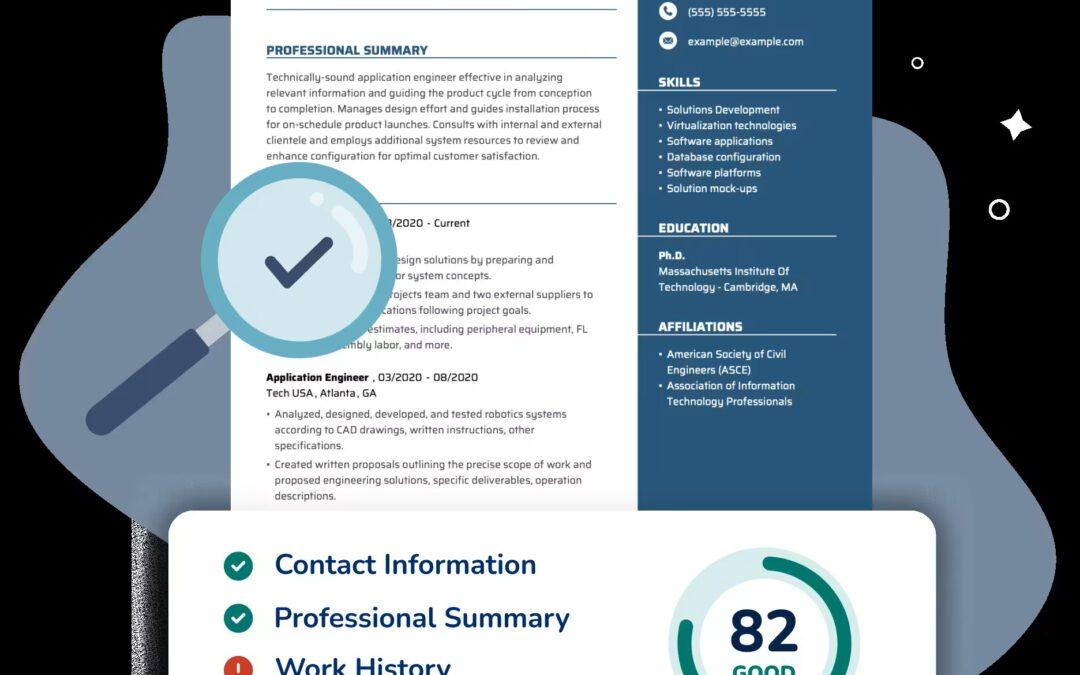
Use AI resume analysis tools like AIRA for transparent ATS resume screening:
- AI-Résumé Analyzer
- AI-Job Matching Agent
- AI-Interview Guide
- AI-Job Description Analyzer
- AI-Job Description Generator
Stop Guessing. Start Testing.
AI tools enable transparent resume evaluation, helping job seekers bypass rejection triggers. Test your CV before applying and ensure your experience and skills are ATS-friendly.
→ Try AIRA AI Resume Checker today.
by safa chaieb |
Introduction — Why 2025 Is a Turning Point for ATS
Data from Jobscan shows that over 98% of Fortune 500 companies now leverage applicant tracking systems with AI to process applications. As AI in recruitment evolves, these AI recruitment tools are becoming indispensable for handling the volume of modern hiring while maintaining quality through automated candidate screening.
A recent report from TestGorilla highlights that 81 % of employers are using skills‑based hiring in 2024, up from 73 % in 2023 and 56 % in 2022. These AI recruitment tools are transforming how organizations approach automated candidate screening while maintaining hiring quality.
Job seekers must optimise their CVs for ATS and AI‑powered screening or risk never being seen by a human recruiter (TestGorilla)
Traditional hiring methods are being replaced: more emphasis is now on what skills a candidate has rather than what degree they hold (testgorilla)
In this article we’ll explore five major trends — GenAI & Machine Learning, Skills‑Based Hiring, Competency Frameworks, Micro‑Credentials & Assessments, and Fraud & Identity Checks — and provide actionable takeaways for both candidates and recruiters.
Trend #1 — GenAI & Machine Learning: Smarter Screening, Smarter Risks
Modern AI HR software represents a paradigm shift in talent acquisition. According to BCG, AI recruitment tools now enable recruiters to process 5x more candidates through intelligent automated candidate screening, though this efficiency comes with responsibility around bias mitigation and transparency.
Automated parsing, semantic matching, and predictive scoring within modern ATS drastically reduce screening time while increasing the volume of applicants that can be processed (upskill).
Rudder A. explains that while AI-powered applicant tracking systems bring speed and improved matching, they also carry risks such as algorithmic bias, over-reliance on automation, and opaque decision-making.
Furthermore, the article “How AI is Revolutionising Recruitment in the UK” describes the shift as follows: candidates now need to tailor their CVs to highlight relevant skills and keywords more than ever, while recruiters must prioritize human-in-the-loop checks and maintain transparency.
Trend #2 — Skills-Based Hiring Goes Mainstream
Research shows that skills-based hiring is rapidly moving from niche to mainstream, with TestGorilla’s 2025 report showing 85% of employers now using these practices. Forward-thinking organizations are discovering that skills-based hiring delivers significantly better retention rates.
Complementing that, the National Association of Colleges and Employers (NACE) reports that about 64.8 % of employers deploy skills-based hiring practices when recruiting entry-level candidates.
Meanwhile, qualitative analysis from Burning Glass Institute and Harvard Business School suggests that although many firms declare commitment to skills-based hiring, only around 37 % are truly “Skills-Based Hiring Leaders” in applying these practices consistently.
Implementation in practice: For candidates, this means placing greater emphasis on listing relevant skills and customizing resumes to highlight competencies. For recruiters, it enables building skills pipelines and crafting job descriptions grounded in competency frameworks (Pebl).
For recruiters and organisations, skills-based hiring enables building skills pipelines (mapping key competencies for roles), crafting job descriptions grounded in competency frameworks, and integrating micro-credentials or other validation tools to verify skills rather than relying solely on degrees or traditional experience profiles.
However, the shift isn’t without challenges. While the business case is strong (for instance faster time-to-fill, increased retention), implementation lags in many organisations: dropping degree requirements doesn’t always translate into hiring non-degree candidates, and internal culture or process barriers remain (Harvard Business School).
Trend #3 — Competency Frameworks: The New Common Language
The SHRM Competency Model defines a set of behavioral and technical competencies that clarify what HR professionals must demonstrate to perform effectively.
A competency framework provides a structured toolkit for aligning learning, performance evaluation, and career development across the organization (aihr).
From a candidate’s perspective, knowing which competencies are evaluated helps tailor CVs and prepare for interviews more strategically. (psicosmartblog).
For recruiters, competency frameworks enable consistent and equitable assessments by structuring evaluations around defined competencies, reducing subjectivity (SHRM).
Implementing these frameworks fosters fairness, transparency, and alignment between individual performance and organizational goals (SHRM).
These frameworks transform AI HR software from simple filters to intelligent matching engines, ensuring automated candidate screening evaluates the right competencies consistently.
Trend #4 — Assessments & Micro-Credentials: From CV to Proven Skills
According to a recent article in Harvard Business Review, automated assessment tools are increasingly used in hiring, enabling organizations to assess candidate skills beyond the resume alone.
A comprehensive report on digital credentials shows that micro‑credentials and digital badges are being adopted as verifiable, bite‑sized proofs of skill and competency rather than relying solely on traditional degrees.
For candidates, this trend means adding micro‑credentials to their CVs and digital profiles to clearly showcase specific, job‑relevant skills in a format that ATS and recruiters can instantly verify.
According to the article “The evolution of Hiring”, for recruiters, integrating assessments and micro‑credentials into their ATS workflows allows for refined sourcing and evaluation, aligning candidates’ certified skills with role requirements more efficiently.
When integrated with applicant tracking systems with AI, these assessments create a seamless flow from skills verification to candidate ranking.
Trend #5 — Fraud, Deepfakes & Identity Checks: New Hiring Headaches
Growing evidence shows that AI‑assisted hiring is facing a new wave of risks: falsified CVs, deepfake interviews and identity fraud are rapidly rising (Forbes).
According to recent industry reports, recruiters are responding by implementing live identity checks, human‑in‑loop verification and anti‑fraud tools embedded in their ATS workflow.
For candidates, this means transparency is more important than ever: you should be prepared for identity verification, ensure your credentials are accurate and avoid relying on misleading or exaggerated information (Daon).
For recruiters, the implication is clear: hiring safeguards must be strengthened, combining AI‑detection tools with manual review stages and updating processes to protect against synthetic identities.
These security measures are becoming standard features in modern applicant tracking systems with AI.
What Recruiters & Candidates Should Do Now (Quick Checklist)
As AI reshapes hiring, both candidates and recruiters must adjust their practices to stay visible, credible, and efficient in this new landscape.
For Candidates:
– Optimize CVs for ATS with clear formatting, relevant keywords, and measurable achievements aligned with job descriptions
– Use AI-powered resume checkers to identify missing skills or formatting errors, that might prevent CVs from being read as highlighted by Jobscan’s data and TestGorilla’s State of Skills-Based Hiring Report.
– Showcase verified skills through micro-credentials and digital badges as trustworthy competence indicators
– Ensure transparency and accuracy in profiles as identity verification becomes standard due to rising fraud and deepfake risks (Harvard Business Review).
For Recruiters:
- Evaluate AI recruitment tools not just for speed, but for bias reduction and quality-of-hire improvement through transparent automated candidate screening
- Ensure fairness, compliance, and reliability in AI assessment tools (Harvard Business Review).
- Implement competency frameworks to standardize evaluations and reduce bias
- Integrate fraud detection mechanisms like live identity checks to protect against manipulation
- Link automated assessments with micro-credentials within ATS to improve skills-job matching accuracy
Integrated Solution Example: Platforms like AIRA demonstrate how next-generation applicant tracking systems with AI integrate these trends seamlessly. As a comprehensive AI recruitment tool, it combines intelligent automated candidate screening with bias-aware matching and skills verification – embodying the future of AI in recruitment.
Conclusion: Get Ready for 2026 — Use AI, But Verify
The convergence of these five trends—GenAI, Skills-Based Hiring, Competency Frameworks, Micro-Credentials, and Fraud Prevention—signals a fundamental shift in talent acquisition. AI recruitment tools are no longer optional; they’re essential for competitive hiring.
The organizations that thrive will be those that leverage applicant tracking systems with AI not just for efficiency, but for strategic advantage through intelligent automated candidate screening.
Ready to future-proof your hiring?