by safa chaieb |
AI in Recruiting: The Uncomfortable Truth About Your “AI-Powered” ATS
Your recruitment software vendor swears their AI in recruiting is revolutionary. They showed you a demo. You saw the dashboard. You signed the contract.
Then reality hit.
Implementation took 6 months instead of 6 weeks. The AI recommendations make zero sense. Candidates complain about the experience. And your recruiters are spending more time fixing the system than actually recruiting with AI.
Welcome to the AI recruitment software scam costing companies billions.
Here’s what nobody tells you: There’s more smoke and mirrors in AI recruiting tools than at a Vegas magic show. And if you don’t know how to separate real AI from glorified keyword matching, you’re burning money and destroying your employer brand.
The $1.13 Billion AI in Hiring Question: Why Is Everyone Buying Tools That Don’t Work?
The AI recruitment market exploded from USD 617.56 million in 2024 to a projected USD 1.125 billion by 2033, a 7.2% CAGR — growth fueled by hype and high expectations. (Straits Research)
Despite this boom and widespread adoption intentions, many companies remain skeptical about the actual performance of these tools. According to a recent Gartner survey, only 26% of job applicants trust that AI will evaluate them fairly — raising serious questions about reliability and bias in AI-driven hiring. (Gartner)
- For Business Owners: Buying “plug-and-play” AI often means prolonged integration, unexpected IT overhead, and tools that still struggle to distinguish qualified candidates from those who keyword-stuffed their resumes.
- For Talent Acquisition Teams: The AI system meant to save time ends up requiring manual oversight — you’re reviewing AI decisions, questioning them, and essentially doing the job of an algorithm babysitter.
- For CFOs: The “predictable ROI” promised by vendors often doesn’t materialize. While some organizations see cost reductions after AI adoption, many others report little to no benefit — or even increased costs. Recent studies show that only a small proportion of companies generate significant value from AI adoption. (BCG)
In short: the hype around AI recruiting has driven massive investment and adoption. But the reality — slow onboarding, opaque decision processes, unclear ROI, and low trust from candidates — means many organizations experience disillusionment. Until AI tools deliver reliably and transparently, hiring with AI remains a gamble rather than a guaranteed upgrade.
This rush toward AI in hiring hides an uncomfortable truth: most artificial intelligence in recruitment tools fail on their core promises.
The Five Lies Recruiting AI Software Vendors Tell (And How to Call Them Out)
Lie #1: “Our AI Eliminates Bias” – The Artificial Intelligence Sourcing Reality Check
Vendors often present their AI recruiting software as a magic bullet against bias. Yet research shows that these tools can amplify existing biases in training data.
The Reality: A 2024 study by the University of Washington found that AI-powered resume-screening tools ranked names associated with White candidates 85% of the time, while female-associated names were selected only 11% of the time — even when resumes were equivalent. (University of Washington, 2024)
Call Them Out: Ask vendors for bias audit reports with demographic breakdowns and methodology. If audits are not provided or reveal bias, consider it a red flag.
Lie #2: “Implementation Is Quick and Easy” – AI Tools for Recruitment Implementation Truths
The Reality: Deploying AI recruiting tools is rarely plug-and-play. It usually requires API integrations, data migration, user training, and workflow redesign — a process that can be lengthy and complex. (ArXiv, 2024)
Call Them Out: Request a detailed implementation plan with milestones and client references. Include contractual penalties for delays or failures in compliance or delivery.
Lie #3: “Candidates Love Our AI Experience” – Recruiting with AI Candidate Trust Gaps
The Reality: There is limited large-scale public data showing that most candidates enjoy applying through AI-powered systems. A global 2025 survey of 48,000 people indicated that only 46% of regular AI users were willing to trust AI systems in professional contexts. (KPMG, 2025)
The UW study also demonstrates that AI can treat applicants in biased ways, damaging candidate trust. (University of Washington, 2024)
Call Them Out: Test the candidate experience yourself by submitting CVs with diverse profiles. Ask vendors about satisfaction rates, candidate feedback, and whether a sandbox or test environment is available.
Lie #4: “Our AI Makes Better Hiring Decisions Than Humans” – AI in Hiring Decision-Making Myths
Many vendors claim AI produces better, more objective hiring decisions than humans. However:
- AI systems may amplify bias, as shown in the UW study. (University of Washington, 2024)
- Research also shows that humans tend to follow AI recommendations, even if biased, reproducing errors in decision-making. (University of Washington, 2025)
- AI is good at pattern recognition but poor at evaluating potential, motivation, culture fit, soft skills, or cognitive diversity — all critical for successful hiring.
Call Them Out: Ask how the AI evaluates soft skills, unconventional experience, or cultural fit. If it claims to handle everything autonomously, approach with caution.
Lie #5: “We’re Fully Compliant with All Regulations” – Recruiting AI Software Compliance Risks
The Reality: Regulations such as NYC Local Law 144 require independent bias audits and candidate notifications for automated decision-making tools. (TechCrunch, 2023)
Research shows that, in practice, many employers fail to publish audits or provide transparency. (ArXiv, 2024)
Call Them Out: Demand documentation — bias audits, methodology, results, mitigation plans, and candidate notifications. Engage your legal team before signing any agreement.
Artificial Intelligence Sourcing and Recruiting AI Software: The Truth Criteria
The Real AI Tools for Recruitment That Actually Work
Not all AI recruiting software is garbage. But the good ones share specific characteristics:
What Actually Matters:
- Explainability (AI-Reasoning) – The system must show WHY it made decisions. Your AI in hiring tool must show its reasoning.
- Modularity – You shouldn’t need to buy an entire ATS to get AI screening.
- Human-in-the-Loop Architecture – AI screens and recommends. Humans decide. Always. Successful recruiting with AI augments, never replaces.
- Transparent Training Data – Know what data trained the model. Audit for bias.
- True Plug-and-Play – If it requires 6 months of IT work, it’s not plug-and-play. Period.
The AIRA Difference: AI That Shows Its Work – Transparent Artificial Intelligence in Recruitment
Unlike most AI tools for recruitment, AIRA approaches artificial intelligence in recruitment as a transparent partner, not a black box. Most AI recruiting tools are black boxes that make decisions nobody can explain or defend. That’s not AI—that’s algorithmic roulette.
AIRA’s 5-Agent Architecture:
- AI-Resume Analyzer – Automatically extracts skills, certifications, languages from CVs.
- AI-Job Matching Agent – Scores candidates with full AI-Reasoning visibility.
- AI-Interview Guide Generator – Creates personalized interview questions.
- AI-Job Description Generator – Optimizes JDs based on industry benchmarks.
- AI-Job Description Analyzer – Breaks down existing JDs to extract key requirements.
The Difference: No setup required. Try or buy. Pay only for what you use. Every decision is explainable.
👉 Discover AIRA’s transparent AI recruiting platform
AI in Recruiting: The Real Return on Investment
To seriously evaluate recruiting AI software, look at these metrics, not vendor slogans
The ROI Reality Check: When AI Actually Pays Off
For CFOs and financial leaders evaluating real data rather than vendor marketing: recruiting tools powered by AI can indeed reduce cost-per-hire and hiring cycle times when implemented thoughtfully and integrated into HR workflows. Across recent industry summaries, companies report up to ~30% reduction in cost-per-hire and significant acceleration of hiring processes when AI automates screening, matching, and scheduling tasks. These savings come from lower manual workload, less dependence on external agencies, and faster candidate throughput.
However, here’s what vendors often don’t make clear: these ROI figures assume that:
- The AI being used goes beyond simple keyword matching to deliver real automation and candidate prioritization,
- Humans remain in the decision loop to oversee quality and fairness,
- Candidate experience is sustained or improved rather than degraded,
- The system integrates seamlessly with existing HR tech and workflows — a non-trivial project in many organizations.
Independent analyses suggest that not all implementations deliver their promised return because of poor integration planning, lack of training, or weak candidate experience design. As a result, many organizations see only a fraction of the theoretical ROI unless they carefully manage change, monitor results, and optimize processes post-deployment.
Call Them Out: Ask vendors for actual ROI case studies in organizations with a similar size and hiring profile as yours, including before/after metrics for cost per hire, time to fill, recruiter hours saved, and impacts on quality of hire. Verify whether their data reflects real deployments rather than idealized scenarios, and insist on clear implementation milestones with accountability for delivery.
The AI in Hiring Compliance Minefield: Why Your Vendor Might Get You Sued
Choosing non-compliant AI tools for recruitment exposes your organization to serious legal risk, which can outweigh the operational benefits of automation. AI systems that make hiring decisions must adhere to multiple anti-discrimination, privacy, and transparency laws — and failure to do so can lead to litigation, regulatory investigations, fines, and reputational harm. (AI Recruitment Compliance Guide, 2025)
Legal Risks Include:
• Discrimination lawsuits and claims of disparate impact under civil rights frameworks if AI tools systematically disadvantage protected groups (e.g., based on race, age, or disability). Employers can be held legally accountable for the outcomes of their AI systems, even if they did not intend discrimination.
• Government agency investigations, such as from equal employment enforcement bodies, when algorithmic decisions cannot be explained or justified.
- Privacy and data protection violations if candidate data (especially sensitive or biometric information) is processed without proper legal basis or consent.
• Violations of regulations like the EU AI Act and data protection laws (e.g., GDPR), which can entail fines based on revenue and administrative penalties if systems are used without appropriate risk assessments and documentation. Non-compliance can result in fines of up to millions or a percentage of global revenue for serious breaches.
Compliance Challenges:
A lack of transparency (“black-box” systems) makes it difficult to explain AI decisions — a major vulnerability in legal defense if an applicant challenges a hiring decision. Employers are typically responsible for demonstrating compliance and cannot shift legal risk simply because a third party provided the technology.
Many organizations also struggle with bias mitigation and documentation: while fairness and bias audits are widely recommended as best practices, there’s no single accepted standard yet, and failing to conduct thorough audits or maintain records weakens legal defenses.
Questions to Ask Before Buying:
- Who is legally liable if the AI you adopt produces discriminatory outcomes?
- Do you provide bias audit reports and documentation on fairness testing?
- Can I review your training data sources or documentation showing representativeness and risk mitigation?
- How do you handle GDPR, the EU AI Act, and other applicable privacy/AI regulations?
- What is your track record on compliance issues or legal complaints related to recruitment outcomes?
If the vendor dodges or refuses to answer these questions — proceed with caution. Ensuring compliance before deployment is critical in avoiding legal exposure, costly investigations, and costly remediation later.
The AI Recruiting Candidate Experience Crisis Nobody’s Solving
While vendors obsess over efficiency metrics, many organizations are creating candidate experiences so poor that they damage employer brands and reduce offer acceptance. Data from recent surveys shows a growing trust gap between job seekers and AI-augmented recruitment processes.
The Data:
• Only 26% of job candidates trust that AI will fairly evaluate them, according to a 2025 survey — even though many know AI is used in screening and evaluation.
• In the same Gartner research, 39% of candidates reported using AI tools (e.g., for resumes, cover letters, or writing samples) during the application process.
- Other industry surveys show that candidate frustration with slow responses, poor communication, and lack of transparency is widespread — for example, a candidate experience benchmark found that 83% of job seekers reported at least one major negative experience in the hiring process.
This dynamic has created a sort of arms race: candidates use AI to generate polished materials, and automated systems screen that content with opaque criteria. The result is often a cycle of inauthentic interactions, confusion, and dissatisfaction on both sides.
The Solution: To maintain a positive employer brand, organizations need transparent AI processes with human touchpoints:
- Provide clear communication about how AI is used in hiring.
- Offer feedback to candidates — even those who are rejected — so they feel respected and informed.
- Ensure that human recruiters remain involved at key stages to preserve personal connection and judgment.
Research suggests that better candidate experience practices correlate with stronger outcomes for organizations that implement them. For instance, companies with excellent candidate experience metrics see higher offer acceptance, stronger employer brand perception, and better candidate referrals. While specific figures vary by study, quality data indicates that respectful, transparent processes improve real recruitment outcomes.
Artificial Intelligence Sourcing Smart: Your 2024 Buying Guide
To avoid recruiting with AI pitfalls, follow this role-by-role action plan
The Bottom Line on Recruiting with AI: Buy Smart or Buy Twice
The AI recruiting tools market is exploding. Most vendors are selling overhyped, underperforming software with brutal contracts and hidden costs.
Your Defense Strategy:
- For Talent Acquisition Leads: Demand transparency in AI in recruiting. Get trial periods.
- For CHROs: Require compliance documentation. Get legal review.
- For Business Owners: Insist on true plug-and-play.
- For CFOs: Calculate the total cost of AI tools for recruitment, not just subscriptions.
- For CEOs: Aim for Artificial Intelligence Sourcing that values human judgment.
Stop Buying Broken AI. Start Using Intelligent Tools for Recruitment.
The future of recruiting isn’t about replacing humans with algorithms—it’s about giving humans superpowers through intelligent AI.
AIRA delivers:
- Zero setup time
- Modular agents you actually need
- Transparent AI-Reasoning
- Compliance-ready architecture
- Predictable credit-based pricing
- Pay only for what you use
No vendor BS. No 6-month implementations. No hidden costs. Just intelligent AI that actually works.
Recruiting AI software shouldn’t mean complexity. Discover AIRA—an AI in hiring platform built for transparency and results.
👉 Start your free trial of AIRA today – no setup required
Because in 2026, you don’t need another overhyped ATS promising the moon. You need tools that solve real problems, respect candidate dignity, and deliver measurable results from day one.
Continue Learning:
https://www.edligo.net/allblogscontent/
Artificial intelligence in recruitment is here to stay. The question isn’t if to adopt AI in recruiting, but how to choose AI tools for recruitment that keep promises and respect candidates.

by safa chaieb |
We’d love to hear how your company is leveraging AI recruiting tools — let’s share tips in the comments!
AI in Recruiting: The Uncomfortable Truth About Your “AI-Powered” ATS
Your recruitment software vendor swears their AI in recruiting is revolutionary. They showed you a demo. You saw the dashboard. You signed the contract.
Then reality hit.
Implementation took 6 months instead of 6 weeks. The AI recommendations make zero sense. Candidates complain about the experience. And your recruiters are spending more time fixing the system than actually recruiting with AI.
Welcome to the AI recruitment software scam costing companies billions.
Here’s what nobody tells you: There’s more smoke and mirrors in AI recruiting tools than at a Vegas magic show. And if you don’t know how to separate real AI from glorified keyword matching, you’re burning money and destroying your employer brand.
The $1.13 Billion AI in Hiring Question: Why Is Everyone Buying Tools That Don’t Work?
The AI recruitment market exploded from USD 617.56 million in 2024 to a projected USD 1.125 billion by 2033, a 7.2% CAGR — growth fueled by hype and high expectations. ()
Despite this boom and widespread adoption intentions, many companies remain skeptical about the actual performance of these tools. According to a recent Gartner survey, only 26% of job applicants trust that AI will evaluate them fairly — raising serious questions about reliability and bias in AI-driven hiring. ()
- For Business Owners: Buying “plug-and-play” AI often means prolonged integration, unexpected IT overhead, and tools that still struggle to distinguish qualified candidates from those who keyword-stuffed their resumes.
- For Talent Acquisition Teams: The AI system meant to save time ends up requiring manual oversight — you’re reviewing AI decisions, questioning them, and essentially doing the job of an algorithm babysitter.
- For CFOs: The “predictable ROI” promised by vendors often doesn’t materialize. While some organizations see cost reductions after AI adoption, many others report little to no benefit — or even increased costs. Recent studies show that only a small proportion of companies generate significant value from AI adoption. ()
In short: the hype around AI recruiting has driven massive investment and adoption. But the reality — slow onboarding, opaque decision processes, unclear ROI, and low trust from candidates — means many organizations experience disillusionment. Until AI tools deliver reliably and transparently, hiring with AI remains a gamble rather than a guaranteed upgrade.
This rush toward AI in hiring hides an uncomfortable truth: most artificial intelligence in recruitment tools fail on their core promises.
The Five Lies Recruiting AI Software Vendors Tell (And How to Call Them Out)
Lie #1: “Our AI Eliminates Bias” – The Artificial Intelligence Sourcing Reality Check
Vendors often present their AI recruiting software as a magic bullet against bias. Yet research shows that these tools can amplify existing biases in training data.
The Reality: A 2024 study by the University of Washington found that AI-powered resume-screening tools ranked names associated with White candidates 85% of the time, while female-associated names were selected only 11% of the time — even when resumes were equivalent. ()
Call Them Out: Ask vendors for bias audit reports with demographic breakdowns and methodology. If audits are not provided or reveal bias, consider it a red flag.
Lie #2: “Implementation Is Quick and Easy” – AI Tools for Recruitment Implementation Truths
The Reality: Deploying AI recruiting tools is rarely plug-and-play. It usually requires API integrations, data migration, user training, and workflow redesign — a process that can be lengthy and complex. ()
Call Them Out: Request a detailed implementation plan with milestones and client references. Include contractual penalties for delays or failures in compliance or delivery.
Lie #3: “Candidates Love Our AI Experience” – Recruiting with AI Candidate Trust Gaps
The Reality: There is limited large-scale public data showing that most candidates enjoy applying through AI-powered systems. A global 2025 survey of 48,000 people indicated that only 46% of regular AI users were willing to trust AI systems in professional contexts. ()
The UW study also demonstrates that AI can treat applicants in biased ways, damaging candidate trust. ()
Call Them Out: Test the candidate experience yourself by submitting CVs with diverse profiles. Ask vendors about satisfaction rates, candidate feedback, and whether a sandbox or test environment is available.
Lie #4: “Our AI Makes Better Hiring Decisions Than Humans” – AI in Hiring Decision-Making Myths
Many vendors claim AI produces better, more objective hiring decisions than humans. However:
- AI systems may amplify bias, as shown in the UW study. ()
- Research also shows that humans tend to follow AI recommendations, even if biased, reproducing errors in decision-making. ()
- AI is good at pattern recognition but poor at evaluating potential, motivation, culture fit, soft skills, or cognitive diversity — all critical for successful hiring.
Call Them Out: Ask how the AI evaluates soft skills, unconventional experience, or cultural fit. If it claims to handle everything autonomously, approach with caution.
Lie #5: “We’re Fully Compliant with All Regulations” – Recruiting AI Software Compliance Risks
The Reality: Regulations such as NYC Local Law 144 require independent bias audits and candidate notifications for automated decision-making tools. ()
Research shows that, in practice, many employers fail to publish audits or provide transparency. ()
Call Them Out: Demand documentation — bias audits, methodology, results, mitigation plans, and candidate notifications. Engage your legal team before signing any agreement.
Artificial Intelligence Sourcing and Recruiting AI Software: The Truth Criteria
The Real AI Tools for Recruitment That Actually Work
Not all AI recruiting software is garbage. But the good ones share specific characteristics:
What Actually Matters:
- Explainability (AI-Reasoning) – The system must show WHY it made decisions. Your AI in hiring tool must show its reasoning.
- Modularity – You shouldn’t need to buy an entire ATS to get AI screening.
- Human-in-the-Loop Architecture – AI screens and recommends. Humans decide. Always. Successful recruiting with AI augments, never replaces.
- Transparent Training Data – Know what data trained the model. Audit for bias.
- True Plug-and-Play – If it requires 6 months of IT work, it’s not plug-and-play. Period.
The AIRA Difference: AI That Shows Its Work – Transparent Artificial Intelligence in Recruitment
Unlike most AI tools for recruitment, AIRA approaches artificial intelligence in recruitment as a transparent partner, not a black box. Most AI recruiting tools are black boxes that make decisions nobody can explain or defend. That’s not AI—that’s algorithmic roulette.
AIRA’s 5-Agent Architecture:
- AI-Resume Analyzer – Automatically extracts skills, certifications, languages from CVs.
- AI-Job Matching Agent – Scores candidates with full AI-Reasoning visibility.
- AI-Interview Guide Generator – Creates personalized interview questions.
- AI-Job Description Generator – Optimizes JDs based on industry benchmarks.
- AI-Job Description Analyzer – Breaks down existing JDs to extract key requirements.
The Difference: No setup required. Try or buy. Pay only for what you use. Every decision is explainable.
👉
AI in Recruiting: The Real Return on Investment
To seriously evaluate recruiting AI software, look at these metrics, not vendor slogans
The ROI Reality Check: When AI Actually Pays Off
For CFOs and financial leaders evaluating real data rather than vendor marketing: recruiting tools powered by AI can indeed reduce cost-per-hire and hiring cycle times when implemented thoughtfully and integrated into HR workflows. Across , companies report up to ~30% reduction in cost-per-hire and significant acceleration of hiring processes when AI automates screening, matching, and scheduling tasks. These savings come from lower manual workload, less dependence on external agencies, and faster candidate throughput.
However, here’s what vendors often don’t make clear: these ROI figures assume that:
- The AI being used goes beyond simple keyword matching to deliver real automation and candidate prioritization,
- Humans remain in the decision loop to oversee quality and fairness,
- Candidate experience is sustained or improved rather than degraded,
- The system integrates seamlessly with existing HR tech and workflows — a non-trivial project in many organizations.
suggest that not all implementations deliver their promised return because of poor integration planning, lack of training, or weak candidate experience design. As a result, many organizations see only a fraction of the theoretical ROI unless they carefully manage change, monitor results, and optimize processes post-deployment.
Call Them Out: Ask vendors for actual ROI case studies in organizations with a similar size and hiring profile as yours, including before/after metrics for cost per hire, time to fill, recruiter hours saved, and impacts on quality of hire. Verify whether their data reflects real deployments rather than idealized scenarios, and insist on clear implementation milestones with accountability for delivery.
The AI in Hiring Compliance Minefield: Why Your Vendor Might Get You Sued
Choosing non-compliant AI tools for recruitment exposes your organization to serious legal risk, which can outweigh the operational benefits of automation. AI systems that make hiring decisions must adhere to multiple anti-discrimination, privacy, and transparency laws — and failure to do so can lead to litigation, regulatory investigations, fines, and reputational harm. ()
Legal Risks Include:
• under civil rights frameworks if AI tools systematically disadvantage protected groups (e.g., based on race, age, or disability). Employers can be held legally accountable for the outcomes of their AI systems, even if they did not intend discrimination.
• , such as from equal employment enforcement bodies, when algorithmic decisions cannot be explained or justified.
- if candidate data (especially sensitive or biometric information) is processed without proper legal basis or consent.
• and data protection laws (e.g., GDPR), which can entail fines based on revenue and administrative penalties if systems are used without appropriate risk assessments and documentation. Non-compliance can result in fines of up to millions or a percentage of global revenue for serious breaches.
Compliance Challenges:
A (“black-box” systems) makes it difficult to explain AI decisions — a major vulnerability in legal defense if an applicant challenges a hiring decision. Employers are typically responsible for demonstrating compliance and cannot shift legal risk simply because a third party provided the technology.
Many organizations also struggle with : while fairness and bias audits are widely recommended as best practices, there’s no single accepted standard yet, and failing to conduct thorough audits or maintain records weakens legal defenses.
Questions to Ask Before Buying:
- Who is legally liable if the AI you adopt produces discriminatory outcomes?
- Do you provide bias audit reports and documentation on fairness testing?
- Can I review your training data sources or documentation showing representativeness and risk mitigation?
- How do you handle GDPR, the EU AI Act, and other applicable privacy/AI regulations?
- What is your track record on compliance issues or legal complaints related to recruitment outcomes?
If the vendor dodges or refuses to answer these questions — proceed with caution. Ensuring compliance before deployment is critical in avoiding legal exposure, costly investigations, and costly remediation later.
The AI Recruiting Candidate Experience Crisis Nobody’s Solving
While vendors obsess over efficiency metrics, many organizations are creating candidate experiences so poor that they damage employer brands and reduce offer acceptance. Data from recent surveys shows a growing trust gap between job seekers and AI-augmented recruitment processes.
The Data:
• Only 26% of job candidates trust that AI will fairly evaluate them, according to — even though many know AI is used in screening and evaluation.
• In the same , 39% of candidates reported using AI tools (e.g., for resumes, cover letters, or writing samples) during the application process.
- Other show that candidate frustration with slow responses, poor communication, and lack of transparency is widespread — for example, a candidate experience benchmark found that 83% of job seekers reported at least one major negative experience in the hiring process.
This dynamic has created a sort of arms race: candidates use AI to generate polished materials, and automated systems screen that content with opaque criteria. The result is often a cycle of inauthentic interactions, confusion, and dissatisfaction on both sides.
The Solution: To maintain a positive employer brand, organizations need transparent AI processes with human touchpoints:
- Provide clear communication about how AI is used in hiring.
- Offer feedback to candidates — even those who are rejected — so they feel respected and informed.
- Ensure that human recruiters remain involved at key stages to preserve personal connection and judgment.
Research suggests that better candidate experience practices correlate with stronger outcomes for organizations that implement them. For instance, companies with excellent candidate experience metrics see higher offer acceptance, stronger employer brand perception, and better candidate referrals. While specific figures vary by study, quality data indicates that respectful, transparent processes improve real recruitment outcomes.
Artificial Intelligence Sourcing Smart: Your 2024 Buying Guide
To avoid recruiting with AI pitfalls, follow this role-by-role action plan
The Bottom Line on Recruiting with AI: Buy Smart or Buy Twice
The AI recruiting tools market is exploding. Most vendors are selling overhyped, underperforming software with brutal contracts and hidden costs.
Your Defense Strategy:
- For Talent Acquisition Leads: Demand transparency in AI in recruiting. Get trial periods.
- For CHROs: Require compliance documentation. Get legal review.
- For Business Owners: Insist on true plug-and-play.
- For CFOs: Calculate the total cost of AI tools for recruitment, not just subscriptions.
- For CEOs: Aim for Artificial Intelligence Sourcing that values human judgment.
Stop Buying Broken AI. Start Using Intelligent Tools for Recruitment.
The future of recruiting isn’t about replacing humans with algorithms—it’s about giving humans superpowers through intelligent AI.
AIRA delivers:
- Zero setup time
- Modular agents you actually need
- Transparent AI-Reasoning
- Compliance-ready architecture
- Predictable credit-based pricing
- Pay only for what you use
No vendor BS. No 6-month implementations. No hidden costs. Just intelligent AI that actually works.
Recruiting AI software shouldn’t mean complexity. Discover AIRA—an AI in hiring platform built for transparency and results.
👉
Because in 2026, you don’t need another overhyped ATS promising the moon. You need tools that solve real problems, respect candidate dignity, and deliver measurable results from day one.
- – See AIRA’s 5 AI agents in action (30-minute session)
- – “No setup. Try or buy!” – Analyze your first 100 CVs free
Continue Learning:
Artificial intelligence in recruitment is here to stay. The question isn’t if to adopt AI in recruiting, but how to choose AI tools for recruitment that keep promises and respect candidates.

by safa chaieb |
We’d love to hear how your company is leveraging AI recruiting tools — let’s share tips in the comments!
Introduction: The New Battlefield for Talent
Finding the right talent has become harder than ever. In 2026, mastering AI in recruiting is no longer optional—it’s the key to securing top talent. This article explores how recruiting with AI and advanced artificial intelligence sourcing can transform your hiring process and deliver measurable ROI.
In 2026, organizations face a perfect storm: talent shortages across key industries, candidates with unprecedented leverage, and competitors moving faster than ever before. The companies winning this war share one advantage: they’ve mastered AI in recruiting.
According to Gartner’s 2026 Talent Acquisition Trends, “AI has the potential to impact nearly every part of the recruiter role, if it isn’t already.” Jamie Kohn, Senior Director of Research at Gartner, notes that recruiting leaders who embrace AI-first strategies for high-volume, low-complexity roles achieve “the highest potential for cost savings while maintaining stable, predictable outcomes.”
With intelligent automation, predictive hiring analytics, and skills-based candidate matching powered by platforms like AIRA, companies can outpace competitors and secure top talent faster than traditional methods allow.
Section 1: Why AI in Recruiting Solves Critical Hiring Pain Points
Traditional recruitment processes create friction at every stage. Manual screening introduces delays, inconsistent evaluation standards open doors to bias, and talented candidates slip through the cracks when recruiters are overwhelmed by application volume. These aren’t minor inefficiencies—they’re competitive disadvantages.
Problem 1: Speed Kills (Opportunities)
Gartner research reveals that over 80% of candidates who have a negative communication experience during recruitment take at least one negative action—withdrawing applications, declining offers, or avoiding future opportunities with that employer. In competitive markets, slow feedback means losing top talent to faster-moving competitors.
Problem 2: Unconscious Bias Undermines Diversity Goals
Despite best intentions, human reviewers introduce bias. Studies show that AI hiring tools face trust challenges—only 26% of job applicants believe AI will fairly evaluate them. This skepticism often stems from “black box” AI systems that can’t explain their decisions, perpetuating rather than solving bias problems.
Problem 3: Volume Overwhelms Manual Processes
For high-volume hiring (retail, customer service, seasonal roles), manual screening becomes mathematically impossible. Recruiters facing 500+ applications per role resort to superficial keyword matching, missing qualified candidates whose experience doesn’t match exact terminology.
Problem 4: Missed Talent Due to Keyword Obsession
Traditional ATS systems rely on keyword matching, automatically rejecting candidates who have the required skills but describe them differently. A software engineer with “React.js” experience might be filtered out if the job description says “ReactJS” (no period).
AI solutions like AIRA tackle these issues head-on by standardizing evaluation criteria, accelerating resume analysis, and providing transparent, evidence-based candidate scoring. Unlike black-box systems, AIRA’s AI-Reasoning shows exactly why each candidate scored as they did—building trust while ensuring fairness.
For organizations just beginning their AI journey, understanding why recruiting AI software is revolutionizing talent acquisition provides essential context.
These challenges highlight why investing in robust recruiting AI software delivers competitive advantage in today’s market.
Section 2: How Recruiting with AI Transforms Each Stage of Hiring
Recruiting with AI isn’t just about automation—it’s about enhancing every step of the hiring funnel with intelligent artificial intelligence sourcing and transparent decision-making. Here’s how modern recruiting AI software works in practice:
Recruiting with AI isn’t theoretical—it’s actively reshaping how companies identify, engage, and hire talent. Here’s how modern AI recruiting software transforms each stage of the hiring funnel:
Stage 1: Artificial Intelligence Sourcing and Resume Analysis
AI-powered sourcing goes beyond LinkedIn searches. AIRA’s AI-Resume Analyzer extracts skills, certifications, and experience from unstructured CVs, creating structured candidate profiles that enable intelligent matching. This automated extraction eliminates manual data entry while ensuring consistency across evaluations.
The analyzer recognizes:
- Technical skills (programming languages, tools, platforms)
- Soft skills (leadership, communication, problem-solving)
- Certifications (AWS, PMP, Six Sigma, etc.)
- Language proficiency (levels, business vs conversational)
- Industry experience (sectors, company types, role progression)
Stage 2: Transparent AI Matching and Candidate Scoring
AIRA’s AI-Job Matching Agent scores applicants (0-100%) based on skill alignment, certifications, and experience—with complete transparency. Unlike black-box systems, every score comes with AI-Reasoning that explains:
- Which required skills the candidate possesses (with match percentages)
- Which skills are missing (with recommendations to close gaps)
- How experience level compares to role requirements
- Transferable skills from adjacent domains
This transparency directly addresses Gartner’s finding that candidates expect clarity about AI usage: “Candidates expect transparency and, if possible, choice. Recruiting leaders should clarify how they use AI in the hiring process and allow candidates to opt out of AI interviews.”
Stage 3: AI-Powered Structured Interview Preparation
The AI-Interview Guide Agent produces role-specific questions tailored to each candidate’s background. By analyzing both the job description and the candidate’s CV, it generates:
- Technical questions aligned with claimed skills
- Behavioral scenarios based on past experience
- Culture fit assessments customized to company values
- Model answers to guide interviewers on evaluation criteria
This standardization ensures every candidate faces fair, consistent evaluation while eliminating interviewer bias.
Stage 4: AI-Generated Bias-Free Job Descriptions
Before posting roles, AIRA’s AI-Job Description Generator creates optimized, ATS-friendly descriptions that remove:
- Gendered language (“rockstar,” “aggressive”)
- Age proxies (“digital native,” “recent graduate”)
- Unnecessary requirements that reduce diversity
- Vague qualifications that invite subjective interpretation
The result? Job postings that attract diverse talent pools while remaining legally compliant and highly effective.
For a comprehensive comparison of recruiting AI software features and pricing, explore our ultimate guide to AI in hiring and artificial intelligence in recruitment.
Section 3: Free AI Tools for Recruitment vs. Enterprise AI Recruiting Software
Understanding the difference between free AI tools for recruitment and enterprise-grade AI in hiring solutions is crucial for making the right investment. This comparison helps organizations choose the best recruiting AI software for their needs.
Many organizations begin their AI journey by experimenting with free AI tools for recruitment. While these tools provide value for small-scale testing, they rarely meet enterprise requirements for transparency, scalability, and legal defensibility.
Limitations of Free AI Recruiting Tools:
- Lack of Transparency Most free tools operate as “black boxes”—they provide scores but no reasoning. When candidates ask “Why was I rejected?” or regulators demand “Explain your AI’s decision,” these tools offer no answers. This creates legal exposure, especially under regulations like NYC Local Law 144 and the EU AI Act.
- Limited Scalability Free tools often cap usage (e.g., 10 CVs/month) or restrict features, making them unsuitable for organizations hiring at scale. Enterprise needs—hundreds of applicants per role, multiple concurrent hiring processes—require robust infrastructure.
- No Integration Capabilities Free solutions rarely integrate with existing ATS platforms, HRIS systems, or workflow tools. This creates data silos and manual work transferring information between systems.
- Absence of Bias Monitoring Without built-in bias detection, free tools can perpetuate or amplify existing discrimination patterns. Companies using them lack audit trails to demonstrate fair hiring practices.
- Generic, Not Domain-Specific Many free AI tools use generic language models (like ChatGPT) rather than recruiting-specific models trained on hiring data. This reduces accuracy for talent-specific tasks like skills extraction and candidate matching.
Why Enterprise Solutions Like AIRA Deliver Superior Results:
Transparent AI-Reasoning: Every decision explained with evidence, building candidate trust and legal defensibility
End-to-End Automation: Five specialized agents cover the complete hiring workflow—from job description creation through interview guide generation
Bias Monitoring: Built-in fairness analysis ensures consistent, equitable evaluation across all candidates
Actionable Insights: Not just “this candidate scores 72%”—but “here’s exactly why, and here’s how they can improve”
Plug-and-Play Deployment: “No setup. Try or buy!” AIRA requires no technical integration, allowing immediate value realization
Modular Pricing: Organizations pay only for the agents they need, making enterprise AI accessible to companies of all sizes
According to Gartner’s analysis, by 2027, 75% of hiring processes will include certifications and testing for workplace AI proficiency during recruiting. Choosing the right AI platform now positions organizations ahead of this inevitable shift.
Section 4: The Future of AI in Hiring: 2026 Trends in Artificial Intelligence Sourcing
Looking forward, AI in recruiting will evolve from assistive tools to autonomous agents capable of handling complete recruiting workflows with minimal human oversight. Gartner’s predictions for 2026 reveal transformative shifts already underway:
Trend 1: AI Recruiting Agents Transforming Recruitment
Gartner states that “AI has the potential to impact nearly every part of the recruiter role.” AIRA’s specialized agents represent this evolution:
- Sourcing agents identify candidates proactively across platforms
- Screening agents evaluate applications instantly upon submission
- Matching agents rank candidates by fit, with reasoning
- Interview agents generate customized evaluation frameworks
- Communication agents provide instant feedback to candidates
This doesn’t eliminate recruiters—it elevates them. By automating administrative work, AI frees recruiters to focus on relationship-building, candidate experience, and strategic talent planning.
Trend 2: Skills-Based AI Hiring Becomes Standard
Job titles become less important than transferable skills. A “Marketing Manager” might have skills applicable to “Product Marketing Lead” or “Growth Strategist.” AIRA’s skills extraction and matching capabilities identify these transferable skills automatically, expanding talent pools significantly.
Gartner predicts that “through 2026, atrophy of critical-thinking skills, due to GenAI use, will push 50% of global organizations to require ‘AI-free’ skills assessments.” This reinforces the importance of skills-based evaluation—assessing what candidates can actually do, not just what AI helped them write in applications.
Trend 3: Predictive Analytics in AI Recruiting
Beyond matching current candidates to current roles, AI will predict:
- Retention likelihood based on candidate profiles and company fit
- Performance potential using historical hiring data and outcomes
- Flight risk for high-value hires, enabling proactive retention
- Skill trajectory showing how candidates’ abilities will evolve
AIRA’s analytics engine provides these insights, helping organizations make not just faster decisions, but smarter ones with measurable ROI.
Trend 4: Transparent AI in Recruiting is Mandatory
With regulations like NYC Local Law 144, EU AI Act, and emerging state laws, explainable AI transitions from competitive advantage to compliance requirement. Organizations using black-box systems face:
- Regulatory fines ($10,000/week for NYC Law 144 violations)
- Discrimination lawsuits (like Mobley v. Workday, now a class action)
- Candidate distrust (only 26% trust AI hiring, per Gartner)
AIRA’s transparent AI-Reasoning positions organizations ahead of regulatory requirements while building candidate trust.
Trend 5: Fair Recruitment Delivers AI ROI
Companies investing in fair, AI-powered recruiting see concrete returns:
- Reduced legal exposure from bias-related lawsuits
- Improved quality of hire through skills-based matching
- Enhanced employer brand attracting diverse talent
- Faster time-to-productivity from better candidate-role fit
Organizations leveraging platforms like AIRA set the benchmark for both efficiency and fairness in recruitment, creating sustainable competitive advantages.
To understand how these trends translate into actionable strategies, read our ultimate guide to recruiting AI software.
Section 5: AI in Recruiting Success Stories: Companies Winning with Recruiting AI Software
Case Study 1: Tech Startup Scales Hiring 300%
Challenge: Series B startup needed to hire 150 engineers in 6 months to meet product roadmap commitments
Solution: Implemented AIRA for resume screening and candidate matching
Results:
- Screened 3,000 applications in 2 weeks (vs 3 months manually)
- Time-to-hire reduced from 45 to 18 days
- Quality of hire improved: 85% of new hires met/exceeded performance expectations after 6 months
- Diversity increased: 40% more underrepresented candidates reached interview stage
ROI: €45,000 saved in recruiter time, plus faster product delivery from quicker team scaling
Case Study 2: Retail Chain Transforms Seasonal Hiring
Challenge: National retailer needed to hire 2,000 seasonal workers across 300 stores in 4 weeks
Solution: Deployed AIRA’s AI-Job Matching Agent for high-volume screening
Results:
- Processed 15,000 applications in 72 hours
- Reduced screening cost from €30,000 to €5,000 (83% savings)
- Zero discrimination complaints vs 3 EEOC complaints previous year
- Improved retention: Seasonal workers selected by AIRA had 25% higher completion rates
ROI: €25,000 direct savings plus avoided legal costs from improved fairness
Case Study 3: Outplacement Firm Differentiates Services
Challenge: Mid-size outplacement firm losing clients to tech-enabled competitors
Solution: White-labeled AIRA to provide AI-powered career transition support
Results:
- Client retention increased 40% (cited AI capabilities as reason)
- Placement rates improved from 23% to 65% within 8 weeks
- Time-to-placement reduced from 6 months to 6 weeks
- New revenue stream: €2.4M from enterprise clients valuing AI transparency
ROI: Transformed threatened business model into competitive advantage
FAQs: AI in Recruiting Questions Answered
Q: What exactly is AI in recruiting?
A: AI in recruiting refers to using artificial intelligence sourcing and screening tools to automate and enhance hiring processes, from candidate matching to interview preparation.
Q: How does recruiting with AI improve hiring outcomes?
A: Recruiting with AI speeds up screening, reduces bias, provides transparent candidate matching, and delivers measurable ROI through significant time and cost savings.
Q: Are free AI tools for recruitment effective for businesses?
A: Free tools are good for initial testing but lack transparency, scalability, and compliance features needed for enterprise hiring. For serious recruiting AI software needs, consider solutions like AIRA.
Q: What is artificial intelligence sourcing in recruitment?
A: Artificial intelligence sourcing uses AI to identify and attract candidates, often by analyzing skills and predicting fit beyond traditional keyword matching.
Q: How does AI in hiring ensure fairness and compliance?
A: Leading AI in hiring platforms like AIRA use transparent AI-Reasoning, continuous bias monitoring, and standardized evaluation to ensure fair and legally compliant hiring.
Q: What should I look for when choosing recruiting AI software?
A: Look for transparency, built-in bias detection, integration capabilities, proven ROI metrics, and compliance with regulations like NYC Local Law 144 and the EU AI Act.
Q: How quickly can we implement AI in our recruiting process?
A: With plug-and-play platforms like AIRA, you can start seeing results within 24 hours, with full implementation typically completed in 2-4 weeks.
Conclusion: AI in Recruiting Isn’t the Future—It’s the Present
In 2026, AI in recruiting has evolved from a competitive advantage to a business necessity. Companies leading in talent acquisition use recruiting AI software not as an experiment, but as a core capability for artificial intelligence sourcing and fair hiring.
They’re recruiting with AI at scale, using artificial intelligence sourcing to build diverse pipelines, and leveraging transparent systems like AIRA to build candidate trust.
As Gartner emphasizes, pursuing an “AI-first approach” delivers “the highest potential for cost savings while maintaining stable, predictable outcomes”—exactly what CFOs and CHROs need to hear.
The question for your organization: will you lead the AI revolution in recruiting, or follow competitors already capturing the benefits?
Next Steps: Start Winning the Talent War Today
Ready to leverage AI in recruiting and start winning the talent war? Discover how recruiting with AI can transform your hiring with EDLIGO AIRA’s recruiting AI software.
Complete Your AI Recruiting Education : Continue Learning:
https://www.edligo.net/allblogscontent/
About AIRA: Plug-and-Play AI for Modern Recruiting
As a leader in AI recruiting software, EDLIGO AIRA provides comprehensive solutions for AI in hiring, artificial intelligence sourcing, and recruiting with AI, helping organizations of all sizes hire smarter, faster, and more fairly.
AIRA empowers organizations of all sizes to compete for top talent through transparent, AI-powered recruiting. Created by Edligo—a Top 3 Most Innovative SME in Germany (2023)—AIRA combines 11 years of AI and talent management expertise into a solution that’s powerful yet simple: “No setup. Try or buy!”
Learn more: https://www.edligo.net/aira/
Comment below to receive our exclusive guide on optimizing AI in recruiting!
by safa chaieb |
The Hidden Cost of a Poor ATS
The 75% Problem
According to “HIDDEN WORKERS: UNTAPPED TALENT” (Harvard Business Review), 88% of employers believe their applicant tracking systems filter out qualified candidates. Yet most companies continue using outdated ATS technology without AI capabilities. The “resume black hole” phenomenon costs companies billions in missed talent.
It is a real challenge for companies to find people with the skills they need, which hinders their competitiveness and growth prospects.
Management practices that limit the number of candidates considered lead to the creation of a population of overlooked or “hidden” talent. Companies that hire “hidden” workers achieve an attractive ROI and report being 36% less likely to face talent and skills shortages than companies that do not hire hidden workers.
What keeps them hidden? Research by jobscan reveals that traditional ATS technology—lacking modern AI recruitment tools—is a primary culprit. Over 90% of employers surveyed use their ATS to initially filter or rank potential candidates — even those with average or high skills. In fact, 99% of Fortune 500 companies rely on ATS software to process resumes.
Imagine losing 3 out of 4 perfect candidates before you even see their resume. That’s not a hiring strategy—it’s a talent hemorrhage. And it’s happening right now in your applicant tracking system with AI upgrade potential sitting unused.
The Recruiter’s Dilemma
According to SHRM’s “2024 Talent Trends” survey of 2,500 HR professionals:
- 68% of recruiters report frustration with current ATS—primarily due to lack of AI-powered screening capabilities –
- Average time-to-fill increased by 23% between 2019-2024 –
- More than 75% of organizations struggle with recruitment challenges
- A peak of 91% of organizations experiencing recruitment difficulties was reached in 2022
- The three main challenges faced by these organizations are: low number of candidates (60%), competition from other employers (55%), and an increase in “ghosting” (46%) (recruiters being ghosted by candidates during the hiring process, sometimes even after a job offer was extended).
Even today, it remains very difficult to measure recruitment quality. In the report “The Future of Recruiting 2025, How AI redefines recruiting excellence”, only 25% of professionals surveyed say they are confident in their organization’s ability to recruit effectively.
AI is capable of analyzing employee performance data, identifying trends, and predicting long-term success. In fact, six out of ten human resources professionals (61%) believe that AI can improve the way they measure recruitment quality.
Key findings from LinkedIn’s “Future of Recruiting” report:
- #1 recruiter complaint: “Too much time on administrative tasks”
- 52% of recruiters say their current tech slows them down rather than speeds them up
- Solution gap: Most lack access to automated candidate screening tools powered by AI
The average Time to Fill rate is 36 days, according to “The 2017 Talent Acquisition Benchmark Report”, spending too long in the recruiting phase will cost you time, money, and good candidates!
Companies invest heavily in applicant tracking systems to streamline recruitment, yet HR teams still waste 40% of their time manually reviewing resumes. Why? Because traditional ATS lack the AI for talent acquisition capabilities needed to automatically prioritize top candidates.
Employer Branding at Risk
A clunky applicant tracking system doesn’t just slow you down—it actively damages your employer brand and drives top candidates away. Here’s the data:
- 60% of candidates abandon job applications if the process is too complex (onrec).
- According to Sowmiya Soundar, 72% share negative hiring experiences on social media.
- As a result, 57% refuse to apply to companies with poor reviews (Raymondgeorge agency).
- Poor candidate experience increases cost-per-hire by 2.5x (Glassdoor study).
Every rejected candidate is a potential brand ambassador. When your ATS creates a frustrating experience, you’re not just losing candidates—you’re actively damaging your employer brand.
Transition to AI Solution
What if an AI recruitment tool could transform your existing ATS—identifying and prioritizing top candidates automatically, without disrupting your workflow?
AI-powered applicant tracking systems substantially reduce manual work:
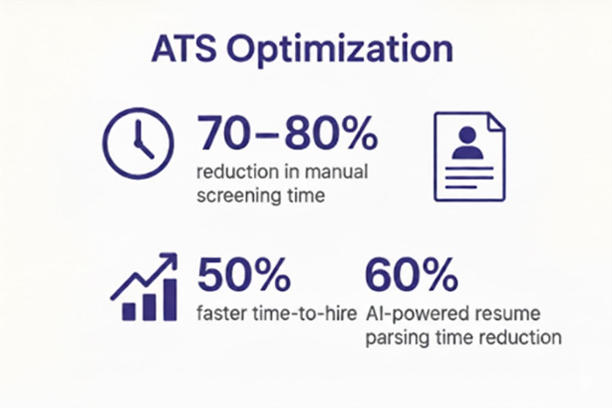
- Automated candidate screening reduces manual time by 70-80%
- Recruitment time drops by 40%
- Administrative costs decrease by thousands annually(Seemehired).
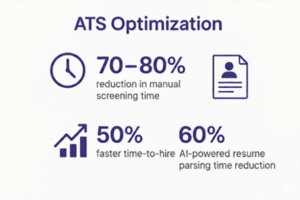
“The ultimate AI recruitment guide » explains that implementing AI-based ATS software reduces recruitment time by 40% and saves thousands of dollars in administrative costs each year.
87% of companies are now using AI-driven tools (AI Recruitment Statistics 2025)
Imagine an AI HR software that thinks like your best recruiter—reading between the lines, understanding context, and surfacing candidates based on potential, not just keywords. That’s the power of modern AI in recruitment.
What Goes Wrong with Traditional Applicant Tracking Systems (And Why AI Changes Everything)
The Keyword Trap: When Good Candidates Look “Wrong”
Traditional applicant tracking systems rely on rigid keyword matching—rejecting qualified candidates who describe their experience differently. Modern AI recruitment tools solve this with semantic understanding.
if your ATS expects the phrase “project manager,” it may miss a candidate who labelled themselves “program manager” or “product manager.” Research shows these terminological mismatches matter.
In a study using algorithmic CV-matching, a 62.0 % similarity threshold was used to distinguish ‘similar’ versus ‘not similar’ resumes — indicating that many qualified candidates may be excluded under strict keyword-matching régimes.
The U.S. Chamber of Commerce U.S. Chamber of Commerce reports that candidates lacking exact keyword matches risk being rejected too early and failing to make a good impression. They are often auto-rejected—regardless of actual qualifications. This is where automated candidate screening powered by AI makes the difference: it understands synonyms and context.
According to a SHRM article titled “Is Your Applicant Tracking System Hurting Your Recruiting Efforts?”, many AI-powered ATS systems may actually worsen the talent shortage they were designed to solve.
The latest researches show that the configuration of applicant tracking systems (ATS) and other automated selection tools often leads to the rejection of candidates who may be qualified for certain positions but do not exactly match the profile sought by recruiters.
David Francis, VP of a talent acquisition consulting firm, warns: “Employers configure ATS criteria that exclude qualified candidates.” The solution? AI for talent acquisition that evaluates holistically—not just keyword presence.
The Application Black Hole: Where Candidates Disappear
The second failure: traditional applicant tracking systems create an “application black hole” where candidates disappear mid-process. The data is alarming:
The dropout crisis:
Result? Your applicant tracking system with AI potential is actually repelling talent.
Your ATS isn’t just screening—it’s hemorrhaging talent. This 92% dropout rate explodes cost-per-hire. Modern AI recruitment tools fix this by simplifying applications while maintaining data quality.
The Feedback Vacuum: The Silent Killer of Candidate Experience
Traditional applicant tracking systems often create a “feedback vacuum” that frustrates candidates and harms employer reputation. While many companies avoid providing explicit rejection feedback due to potential legal risks (SHRM), the real issue lies in the lack of timely updates.
According to a Greenhouse study, 61% of candidates report being ignored after interviews, and 60% never receive any update at all. Candidates who receive feedback are 4x more likely to reapply and maintain a positive perception of the company (Survey by LinkedIn).
A good ATS should therefore prioritize communication speed and transparency, not necessarily detailed feedback. Candidates should hear back while they still remember applying — ideally within a few days, not weeks.
Another frustration comes from poor data extraction: 69% of candidates abandon applications when the ATS fails to parse their CV correctly and forces them to re-enter the same information manually (CareerBuilder).
That’s where AI-powered recruitment tools like AIRA make a difference. They automatically extract and structure candidate data from resumes, ensure instant acknowledgment messages, and keep applicants informed of their progress — creating a smoother, faster, and more respectful hiring experience.
Bottom line: Your applicant tracking system with AI capabilities can automate timely updates and maintain transparent communication — turning rejected candidates into future brand advocates.
Silence isn’t neutral — it’s negative. When candidates apply and hear nothing, they don’t think “maybe later.” They think “never again.” And they often share that experience with others.
The Soft Skills Blind Spot
The fourth failure: traditional applicant tracking systems can’t assess soft skills—the actual predictors of job success. The soft skills gap:
- 93% of executives say soft skills are critical (Deloitte)
- Only 17% of ATS have soft skill assessment (Deloitte Global Trends)
- 89% of “bad hires” fail due to soft skills, not technical skills (LinkedIn)
- Yet traditional ATS can only match hard skills and keywords
Your ATS can tell you if someone knows Python. AI HR software can tell you if they’re coachable, resilient, and collaborative—the qualities that separate good hires from great ones.
How AI Recruitment Tools and Automated Candidate Screening Solve These Challenges
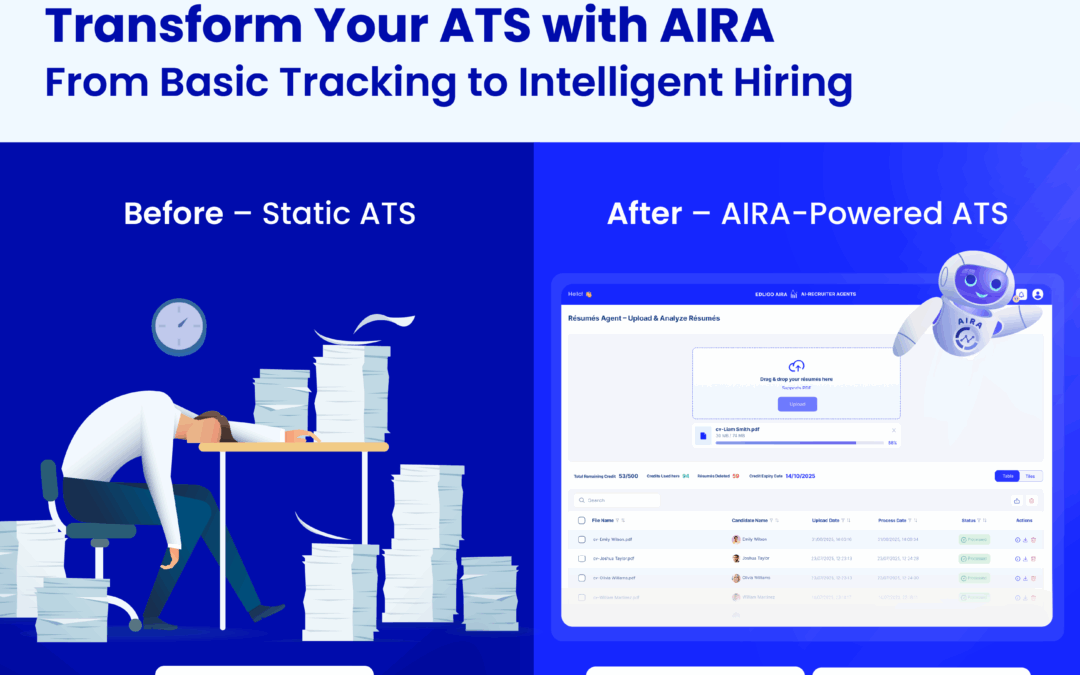
Modern AI recruitment tools transform applicant tracking systems from keyword matchers into intelligent hiring assistants. Solutions like AIRA bring automated candidate screening, semantic matching, and transparent AI reasoning to your existing workflow.
With AI-powered applicant tracking systems like AIRA, you screen faster, hire smarter, and make data-driven decisions with full transparency.
You can Try AIRA for free today and see the difference.
From Keywords to Context: Semantic Understanding
- Problem Solved: Traditional ATS reject qualified candidates due to strict keyword matching.
- How AIRA Solves It: AIRA’s AI-Job Matching Agent uses Natural Language Processing (NLP) to understand context, not just keywords. It recognizes skill equivalencies and achievements phrased differently from the job description.
- Example: “Mentored 5 junior analysts” = leadership; “increased revenue 40%” = strong sales performance.
- Transparency: The AI-Reasoning feature explains exactly why candidates score as they do, avoiding black-box decisions.
Faster and Smarter Candidate Screening
- Problem Solved: Manual CV screening is time-consuming and inconsistent.
- How AIRA Solves It: The AI-Resumes Analyzer Agent automates extraction of skills, certifications, and key achievements, enabling automated candidate screening with precision.
- Impact: Saves hours per vacancy and ensures consistent evaluation across all candidates.
Discover how AIRA can accelerate your screening process and identify top talent effortlessly.
Personalized Interview Preparation
- Problem Solved: Preparing interviews for each candidate takes time and may lack structure.
- How AIRA Solves It: The AI-Interview Guide Agent generates tailored interview guides with questions and suggested answers based on the candidate’s profile and the job description.
Protecting Against Risky Hires
- Problem Solved: Inflated titles, impossible timelines, or fake credentials can slip through traditional ATS.
- How AIRA Solves It: AIRA flags suspicious patterns automatically, ensuring recruiters focus only on genuine, qualified candidates.
With AIRA’s suite of intelligent agents, you can analyze resumes, rank candidates accurately, and generate interview guides—all in one platform. Say goodbye to manual bottlenecks and hello to smarter, faster, and fairer hiring.
Try AIRA for free today and see how this AI HR software will transform your talent acquisition process.