by
The Job Posting That Never Was
Applying to jobs that were never meant to be filled? Discover ghost jobs, phantom postings, and why your perfect application disappeared into the void—and how to spot them before wasting time.
You spent hours perfecting your resume with an AI resume builder, tailored every keyword for ATS systems, and wrote a compelling cover letter. You hit “submit” with confidence.
Then… silence. No rejection. No response. Nothing.
Months later, that same job posting is still live, still “actively hiring,” still accepting applications.
Welcome to ghost jobs—phantom postings that were never intended to be filled, yet continue collecting applications like digital black holes.
It’s far more common than you think, and it’s wreaking havoc on both job seekers and recruiters alike.
The Ghost Jobs Epidemic: By the Numbers
According to a Clarify Capital survey of 1,000+ hiring managers, 68% of companies admit to keeping job postings active even when they have no intention of filling the role. Reasons include:
Why Companies Post Ghost Jobs:
- 50% want to “give the impression the company is growing” (Clarify Capital, 2024)
- 43% are “keeping a pipeline of candidates for future needs” (Resume Builder survey)
- 34% use postings to “keep current employees motivated” (fear of replacement)
- 26% have “no budget approved” but want to test market interest (MyPerfectResume research)
Even worse: Greenhouse Software research reports 15% of candidates are ghosted even after interviews, sometimes post-verbal offer.
And here’s where ATS technology makes the problem exponentially worse.
How ATS Systems Enable Ghost Jobs
Traditional Applicant Tracking Systems (ATS) were designed for HR efficiency, not candidate success. That’s why ghost jobs thrive.
-
Automated Reposting
Many ATS platforms automatically re-publish expired listings to maintain “visibility” on job boards. According to Jobscan’s ATS analysis:
- Major ATS platforms like Workday and Taleo auto-renew postings every 30–90 days
- They republish jobs across multiple boards
- Postings remain active even after hiring workflows pause
Result: A job applied for in January may appear “fresh” in March—but the role was closed months ago.
-
The Evergreen Req Loophole
Some companies maintain “evergreen requisitions”, permanent postings for potential future roles. SHRM’s 2024 HR Technology report notes 41% of large enterprises use this tactic to:
- Build talent pipelines
- Collect resumes for passive candidate pools
- Satisfy internal metrics
Thousands of applicants waste hours on jobs that may never exist.
-
Internal Candidate Shell Game
LinkedIn’s “The Future of Recruiting 2025” report shows 43% of postings have an internal hire already chosen, but external posting is required for compliance.
ATS systems support this by:
- Accepting external applications while internal transfers are negotiated
- Keeping postings active during the compliance period
- Auto-rejecting external candidates once internal hire is confirmed
Your application? Never in the running.
The Cost: Time, Confidence, and Opportunity
Ghost jobs are economically destructive for job seekers.
Time Sink:
ZipRecruiter’s Job Seeker Confidence Survey reports the average job seeker spends:
- 11 hours per week applying
- 3.7 hours per application
- 27 applications per interview
If 68% of postings are ghost jobs:
- 18 of 27 applications are fake
- 67 wasted hours per job search
- Zero ROI on two-thirds of effort
Confidence Collapse:
Monster.com survey finds:
- 75% experience significant stress from no responses
- 48% feel dehumanized by ATS auto-rejections
- 62% question their qualifications
Opportunity Cost:
Hours wasted could be spent:
- Networking with real hiring managers
- Building marketable skills
- Applying to genuine openings
Harvard Business School’s “Hidden Workers”, estimates ghost jobs contribute to $600B annual productivity loss in the U.S.
How to Spot a Ghost Job Before Applying
You can reduce wasted effort with these red flags:
🚩 Red Flag 1: “Urgent” Postings That Are Old
Check Google cache or LinkedIn timestamps. Urgent roles fill in 2–4 weeks (Glassdoor Hiring Statistics).
🚩 Red Flag 2: Vague or Generic Job Descriptions
- No specific responsibilities
- Salary ranges like “$50K–$150K”
- Requirements like “3–15 years experience”
- No hiring manager name (Indeed Career Guide research)
For guidance, see Future-Proof Your CV: Top 5 ATS Optimization Mistakes to Avoid in 2026
🚩 Red Flag 3: Company “Always Hiring”
Multiple openings for the same role, live for months → likely a talent pipeline.
🚩 Red Flag 4: No Interview Scheduling Within 2 Weeks
Median time from application to interview: 8–12 days (SHRM’s 2024 Talent Acquisition Benchmarks).
🚩 Red Flag 5: ATS Auto-Rejection Under 60 Seconds
This is a knockout filter, not genuine evaluation (Jobscan’s ATS research).
The AI Solution: Transparency Over Theatre
Traditional ATS platforms enable ghost jobs by design. But next-gen AI recruitment tools like EDLIGO AIRA introduce transparency.
How AIRA Differs from Ghost-Job-Enabling ATS
For Job Seekers:
- AI-Résumé Analyzer: Shows CV interpretation by ATS
- AI-Job Matching Agent: Real-time fit score (0–100%)
- Transparent AI reasoning: why you match (or don’t)
See if your job is worth applying before investing 3+ hours.
For Recruiters:
- Intelligent screening surfaces qualified candidates from existing databases
- Automated candidate updates reduce ghost job frustration
- Focus on quality over quantity
Five-Agent Advantage:
- AI-Résumé Analyzer
- AI-Job Matching Agent
- AI-Interview Guide Generator
- AI-Job Description Optimizer
- AI-Job Description Analyzer
Result: Honest, data-driven matching. No more ghost jobs.
For more insights on poor ATS systems, read: Why Poor ATS Systems Lose 75% of Qualified Candidates & How AI Recruitment Tools Fix It
Take Back Control of Your Job Search
✅ Spot red flags before applying
✅ Verify posting age (Google cache, LinkedIn timestamps)
✅ Use AI tools like AIRA to assess fit
✅ Network directly with hiring managers
✅ Set time limits: move on if no response in 2 weeks
The system thrives on ignorance. Now you know the truth.
Ready to stop wasting time on ghost jobs?
→ Analyze your CV with EDLIGO AIRA
→ Get instant fit scores and transparent reasoning before applying
The job market is tough—don’t apply to jobs that don’t exist.
by
Still Getting No Replies? Your CV Might Be Failing the ATS Test
Don't let your CV be silently rejected. Discover the 5 ATS mistakes to fix for 2026 and test your resume with AIRA's multi-agent AI for free. Get your match score & personalized feedback.
You’ve sent dozens of applications… and still, silence. The culprit? Most likely, your CV never even reached human eyes, filtered out by an Applicant Tracking System (ATS).

What is an ATS ?
According to Forbes, up to 75% of resumes are automatically rejected by ATS. These ATS filter applications before they even reach a human recruiter.
The numbers are staggering: according to Jobscan, almost 100% (exactly 99%) of Fortune 500 companies use ATS software to filter job applications. This means that even highly qualified candidates can be overlooked if their resumes do not align with the ATS algorithms. As Diane Hamilton highlights in her article, entitled How to Get Your Resume Past AI Screening the key is to optimize resumes for ATS systems. She emphasizes the importance of using terms specific to your industry and presenting your experience as clearly as possible to avoid being eliminated by the ATS filter.
But the landscape is evolving faster than ever. With Gartner reporting that 62% of CEOs believe that AI will define the next business era. By 2026, semantic analysis and predictive AI will be the standard.
But here’s what makes ATS optimization so frustrating: not all ATS are the same.
Workday, Taleo, Greenhouse—each platform has its own parsing algorithms. What works for one company’s system might fail in another’s.
Instead of trying to reverse-engineer every possible ATS, AIRA gives you something even better: total transparency.
- The AI-Résumés Analyzer instantly extracts and structures your key skills the way AI powered systems understand them.
- The AI-Job Matching Agent shows you exactly how you’d be scored for any specific role, with clear AI-Reasoning that explains the “why” behind your match or fail for match.
Stop guessing. Start knowing. You get immediate clarity on how your CV performs against you desired job using AI screening standards.
Let’s dive into the top 5 ATS mistakes that could be keeping you from interviews in this complex landscape, and how you can fix them with confidence.
[ QUICK CHECK] Curious to see how EDLIGO AIRA reads and interprets YOUR CV right now?
→ Try the free AIRA Résumé Analyzer
The Top 5 ATS Mistakes to Avoid in 2026
⚠️ Mistake #1 — Writing for Robots Instead of Partnering with AI
Problem: Candidates continue to stuff their resumes with irrelevant keywords.
What will change in 2026: Next-generation ATS will analyze semantic context and AI-based reasoning, not just keyword density.
Forbes dit au job seekers qu’ils vont devoir convaincre un robot IA. L’emploi de vos rêves risque de dépendre de la conformité des mots-clés et de la mise en forme de votre CV aux attentes du robot.

⚠️ Mistake #2 — Ignoring the Rise of Skill-Based Hiring
Problem: Resumes still list overly vague skills (“Teamwork,” “Microsoft Office”).
What will change in 2026: Recruiters and ATS will use standardized skill taxonomies (e.g., ESCO, O*NET).
The World Economic Forum’s “The Future of Jobs Report 2025”, published by weforum confirms this trend: behavioral and technological skills are increasingly valued (resilience, agility, analytical thinking, AI skills, and cybersecurity). The report also notes that 48% of employers now favor skills assessments and psychometric tests over traditional degrees.
This is where EDLIGO AIRA comes in: our platform uses AI to map your employees’ skills according to standardized benchmarks (ESCO, O*NET), identifies gaps with future needs, and recommends customized training paths. Gone are the days of vague resumes; make way for strategic, data-driven talent management.

⚠️ Mistake #3 — Forgetting That Recruiters Scroll on Their Phones
Problem: Resumes are not readable on mobile devices (columns, tiny fonts, tables).
What will change in 2026 : Le mobile-first screening devient la norme. En 2025 déjà, nearly 60% of recruiters review applications on mobile devices (Hiring Lab).
If your CV layout isn’t mobile-friendly — with long paragraphs, tiny fonts, or complex formatting — recruiters may simply skip it.

⚠️ Mistake #4 — Using Buzzwords Without Evidence
Problem: Empty phrases such as “leadership” or “project management.”
What will change in 2026: ATS and AI will value measurable results and quantifiable evidence.
According to the Future of Jobs Report 2023 (World Economic Forum, cited by Harvard Business Review), the most in-demand skills today are measurable and technical — from AI and data analytics to cybersecurity and UX design.
That’s why using vague buzzwords like “leadership” or “communication skills” without proof no longer works.
ATS and AI tools now prioritize candidates who show evidence of skills through achievements, certifications, or quantifiable results.

⚠️ Mistake #5 — Relying on Static PDFs in a Data-Driven World
Problem: PDFs remain “silent” for modern ATS.
What will change in 2026: Systems will require structured, actionable data (.docx, JSON Summary, AI-parsable formats).
According to Gartner’s 2026 CHRO Priorities Report, HR departments are entering a full AI transformation era — with 29% of productivity gains predicted to come from evolving HR operating models powered by AI.
This shift means that data-driven systems require structured, machine-readable formats rather than static PDFs.
In other words, if your resume remains a silent, non-parsable file, it may never make it into modern AI-driven recruitment pipelines.

Your 2026 ATS Survival Kit
After identifying the five common mistakes — from poor formatting to vague skills — the key isn’t to work harder, but to work smarter.
The good news? Your personal AI agents are already here.
|
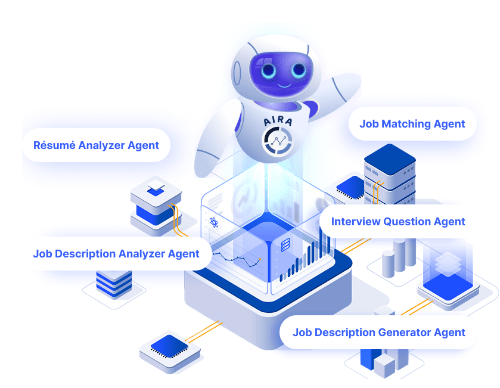
Meet the five AIRA Agents, one platform, revolutionizing feedback, interview prep, and career growth:
🤖 AI Résumé Analyzer
Instantly analyzes and restructures your résumé, extracts key skills, Provides résumé information in a standardized non biased format.
🎯 AI Job Matching Agent
Provides a precise job-fit score and explains why (thanks to AI Reasoning), so you know exactly what to improve.
📝 AI Interview Guide Agent
Generates a personalized interview guide with tailored questions and model answers based on your résumé and target position.
✍️ AI Job Description Generator (for recruiters)
Creates optimized, market-aligned job descriptions in seconds.
🔍 AI Job Description Analyzer
Breaks down any job posting to highlight the key requirements and help you target your application with precision.
|
|
🤖 AIRA’s Premise
✅ No setup — results in under 2 minutes
✅ Full transparency — AI Reasoning explains every analytical step, making insights clear and understandable.
✅ Fairness & Trust — standardized analysis designed to eliminate bias
→ Analyze your résumé with AIRA for free today.
Prove your job-fit, get instant feedback, and stop playing the job application lottery. Get ready for interview invites NOW !
📚 Source: AIRA presentation by Edligo, ranked Top 3 Most Innovative SMEs in Germany (2023).
by
Introduction – The Challenge of Passing ATS in 2025
Why is your resume getting ghosted by employers? You are not alone. According to Indeed, more than 75% of qualified applications are rejected before a human even sees them. This is often due to Applicant Tracking Systems (ATS) – the resume-screening software used by recruiters to manage hundreds or thousands of applications. These systems scan your CV for keywords and specific formats to filter candidates.
While Forbes reports that AI improves recruitment for everyone, many job seekers struggle with outdated methods.
The result? 91% of employers face hiring difficulties (SHRM).
What is an ATS and Why It Rejects Your Resume
What Is an ATS and Why It Might Reject You Before a Recruiter Even Sees Your CV ?
Benefits and Limitations of ATS
According to C. Wolf, author of “The Great ATS Gaslighting”, Applicant tracking systems (ATS are both a gateway and a barrier for job seekers. Designed to manage the flood of applications — often over 250 per job posting — ATS software ensures efficiency but limits how many resumes reach recruiters.
To streamline recruitment, ATS software scans each resume for keywords, job titles, and formatting. While this helps recruiters find top profiles faster, many qualified candidates are rejected before a human review — often due to missing or misplaced ATS keywords.
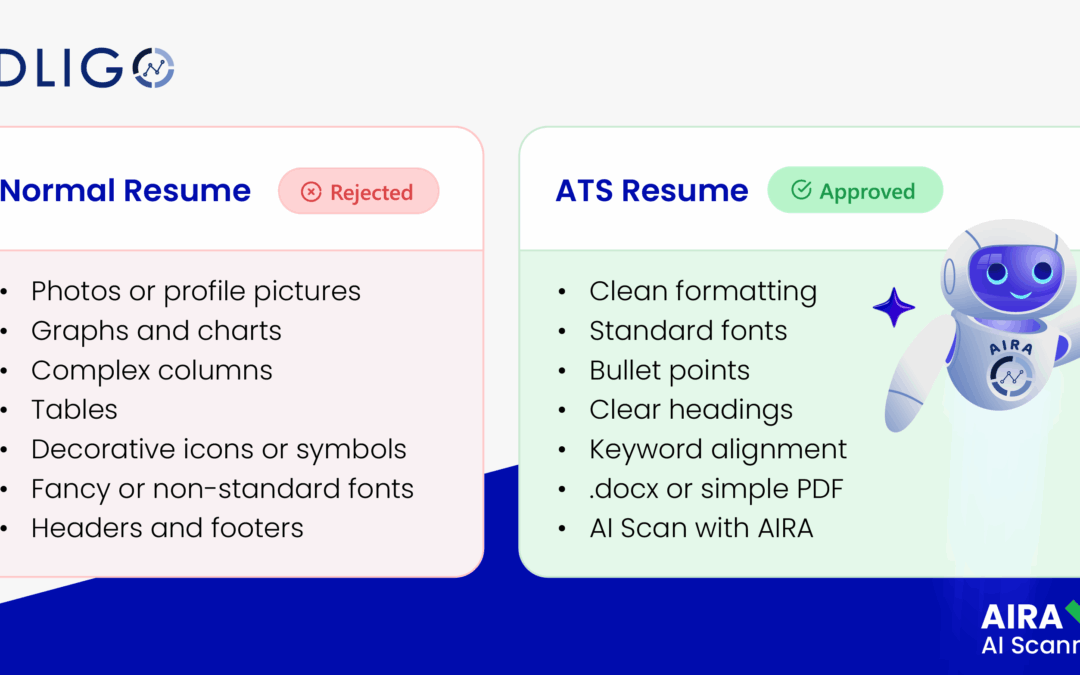
Creating an ATS-friendly resume is crucial to pass this digital screening. Here’s how most Applicant Tracking Systems filter and rank candidates:
- Keyword Matching – alignment with job description terms.
- Formatting and Structure Issues – complex layouts or graphics can block parsing.
- Data Extraction Errors – inconsistent titles or symbols lower accuracy.
- Ranking Algorithms – scores based on keyword relevance and experience.
- Knockout Questions – automatic rejection if key requirements are missing.
A Zippia report highlights the ease and efficiency of ATS recruitment tools. Candidates appreciate auto-filled data and a seamless application experience.
Key benefits of ATS include
- Automation of repetitive HR tasks.
- A smoother candidate experience.
- A streamlined hiring process from application to onboarding.
- Optimized job descriptions and improved compliance.
- Broader job visibility and standardized onboarding.
In short, an ATS doesn’t just screen applicants — it transforms hiring into a faster and more data-driven process.
Despite these benefits, ATS algorithms can still over-filter candidates. A Harvard Business Review study found that some ATS systems reject resumes based solely on mismatched job titles — for example, “Sales Representative” vs. “Business Development Manager.”
Recruiters use ATS platforms as AI copilots to find ideal candidates. But if your ATS resume doesn’t clearly show relevant skills, keywords, and experience, it may never reach human eyes — even if you’re fully qualified.
Top 8 Proven Tips to Optimize Your CV for ATS in 2025
Master these 8 essential strategies to ensure your CV passes the ATS test in 2025. Learn how to use the right keywords, formats, and AI tools to make your application stand out.
Forbes describes 8 tips to optimize a resume for ATS:
8 Proven Strategies to Make Your Resume ATS-Ready in 2025
Optimizing your resume for ATS (Applicant Tracking Systems) is no longer optional — it’s essential if you want to get noticed by recruiters. In fact, Forbes recommends following key strategies to make your CV ATS-ready. Here are eight actionable tips to ensure your CV passes automated screening and reaches human eyes.
1️⃣ Speak the ATS Language: Integrate Relevant Keywords
Include keywords directly from the job description — skills, qualifications, and experiences that recruiters are searching for. Make sure they appear naturally in your summary, skills section, and work experience. Avoid “keyword stuffing” — ATS algorithms favor context, not repetition.
2️⃣ Keep It Clean: Simple Formatting for Maximum Readability
ATS struggles with complex layouts. Use standard headings like Experience, Education, Skills, and Certifications. Stick to readable fonts such as Arial, Calibri, or Times New Roman. Bullets, numbers, and quantifiable achievements (e.g., “Increased sales by 20%”) boost readability. Avoid tables, graphics, or unusual fonts that confuse the system.
3️⃣ Let Your Achievements Shine, Not Your Photo
Avoid including a picture — ATS cannot interpret images, and some countries’ anti-discrimination laws may penalize them. Focus on showcasing measurable results, not appearance.
4️⃣ Choose a Compatible File Type
Save your CV in Word (.docx) or PDF format. Avoid headers, footers, or unusual text boxes — some ATS cannot parse them.
5️⃣ Tailor Your Resume for Each Application
Every job is unique — adjust your title, summary, and key accomplishments to match the position. Personalized resumes outperform generic ones in ATS ranking.
6️⃣ Highlight Core Competencies Clearly
Create a dedicated section for core skills and competencies. List the most relevant keywords to the role, ensuring alignment with the job description. This helps ATS identify your strengths quickly.
7️⃣ Test Your Resume with ATS Tools
Test with EDLIGO AIRA’s AI Résumé Analyzer – Get immediate clarity on your CV’s performance. Test it with EDLIGO AIRA’s AI Résumé Analyzer for an instant job match score and AI-Reasoning that explains your fit for the role. Stop guessing, start knowing.
8️⃣ Focus on Relevance: Cut the Clutter
Remove irrelevant experiences and unnecessary details. ATS scores favor concise, relevant content that clearly demonstrates fit for the role.
From ATS-Optimized to Job-Ready: How AIRA Takes You Further
Creating a compelling CV is just the first step. The real challenge is ensuring its content aligns with your target roles. This is where EDLIGO AIRA’s comprehensive AI recruitment platform transforms your job search with five specialized AI agents, each designed to give you a critical edge:
🤖 AI Resume Analyzer Agent
Automatically analyzes and summarizes CVs to extract key skills, certifications, and languages.
🎯 AI Job Matching Agent
Ranks and scores candidates based on their fit for the role, providing full transparency through AI reasoning.
📝 AI Interview Guide Agent
Automatically generates customized interview guides with suggested questions and model answers based on the job description and candidate’s CV.
✍️ AI Job Description Generator
Creates and optimizes job descriptions aligned with industry benchmarks and best practices.
🔍 AI Job Description Analyzer Agent
Analyzes and structures existing job descriptions to extract key insights and core information.
|

|
Why thousands of job seekers trust AIRA ?
- Instant Analysis: Upload your CV and get ATS feedback in 2 minutes
- Gap Identification: Discover missing skills from job descriptions
- Skill Gap identification
- Transparent Scoring: Understand exactly why you match or not (with explanations)
- Preparing for interviews (get confident for your interview) questions & model answers
- Free to Start: No credit card required – 15 free credits to test all features
Try AIRA Free – Analyze My CV Now !!
Conclusion
Content optimization of your CV for ATS is no longer optional — it’s essential if you want your application to reach the human recruiters. A well-crafted resume ensures that your skills, experience, and achievements are recognized by automated systems. See how an ATS can potentially get data from your CV.
While a solid foundation is essential, EDLIGO AIRA’s AI-powered platform does more than just help your CV pass the ATS—it empowers you to stand out to recruiters. Get instant, actionable feedback to identify critical skills gaps and understand your exact fit for any role.
Analyze your CV with AI — Free Now !!