by safa chaieb |
Introduction — Why 2025 Is a Turning Point for ATS
Data from Jobscan shows that over 98% of Fortune 500 companies now leverage applicant tracking systems with AI to process applications. As AI in recruitment evolves, these AI recruitment tools are becoming indispensable for handling the volume of modern hiring while maintaining quality through automated candidate screening.
A recent report from TestGorilla highlights that 81 % of employers are using skills‑based hiring in 2024, up from 73 % in 2023 and 56 % in 2022. These AI recruitment tools are transforming how organizations approach automated candidate screening while maintaining hiring quality.
Job seekers must optimise their CVs for ATS and AI‑powered screening or risk never being seen by a human recruiter (TestGorilla)
Traditional hiring methods are being replaced: more emphasis is now on what skills a candidate has rather than what degree they hold (testgorilla)
In this article we’ll explore five major trends — GenAI & Machine Learning, Skills‑Based Hiring, Competency Frameworks, Micro‑Credentials & Assessments, and Fraud & Identity Checks — and provide actionable takeaways for both candidates and recruiters.
Trend #1 — GenAI & Machine Learning: Smarter Screening, Smarter Risks
Modern AI HR software represents a paradigm shift in talent acquisition. According to BCG, AI recruitment tools now enable recruiters to process 5x more candidates through intelligent automated candidate screening, though this efficiency comes with responsibility around bias mitigation and transparency.
Automated parsing, semantic matching, and predictive scoring within modern ATS drastically reduce screening time while increasing the volume of applicants that can be processed (upskill).
Rudder A. explains that while AI-powered applicant tracking systems bring speed and improved matching, they also carry risks such as algorithmic bias, over-reliance on automation, and opaque decision-making.
Furthermore, the article “How AI is Revolutionising Recruitment in the UK” describes the shift as follows: candidates now need to tailor their CVs to highlight relevant skills and keywords more than ever, while recruiters must prioritize human-in-the-loop checks and maintain transparency.
Trend #2 — Skills-Based Hiring Goes Mainstream
Research shows that skills-based hiring is rapidly moving from niche to mainstream, with TestGorilla’s 2025 report showing 85% of employers now using these practices. Forward-thinking organizations are discovering that skills-based hiring delivers significantly better retention rates.
Complementing that, the National Association of Colleges and Employers (NACE) reports that about 64.8 % of employers deploy skills-based hiring practices when recruiting entry-level candidates.
Meanwhile, qualitative analysis from Burning Glass Institute and Harvard Business School suggests that although many firms declare commitment to skills-based hiring, only around 37 % are truly “Skills-Based Hiring Leaders” in applying these practices consistently.
Implementation in practice: For candidates, this means placing greater emphasis on listing relevant skills and customizing resumes to highlight competencies. For recruiters, it enables building skills pipelines and crafting job descriptions grounded in competency frameworks (Pebl).
For recruiters and organisations, skills-based hiring enables building skills pipelines (mapping key competencies for roles), crafting job descriptions grounded in competency frameworks, and integrating micro-credentials or other validation tools to verify skills rather than relying solely on degrees or traditional experience profiles.
However, the shift isn’t without challenges. While the business case is strong (for instance faster time-to-fill, increased retention), implementation lags in many organisations: dropping degree requirements doesn’t always translate into hiring non-degree candidates, and internal culture or process barriers remain (Harvard Business School).
Trend #3 — Competency Frameworks: The New Common Language
The SHRM Competency Model defines a set of behavioral and technical competencies that clarify what HR professionals must demonstrate to perform effectively.
A competency framework provides a structured toolkit for aligning learning, performance evaluation, and career development across the organization (aihr).
From a candidate’s perspective, knowing which competencies are evaluated helps tailor CVs and prepare for interviews more strategically. (psicosmartblog).
For recruiters, competency frameworks enable consistent and equitable assessments by structuring evaluations around defined competencies, reducing subjectivity (SHRM).
Implementing these frameworks fosters fairness, transparency, and alignment between individual performance and organizational goals (SHRM).
These frameworks transform AI HR software from simple filters to intelligent matching engines, ensuring automated candidate screening evaluates the right competencies consistently.
Trend #4 — Assessments & Micro-Credentials: From CV to Proven Skills
According to a recent article in Harvard Business Review, automated assessment tools are increasingly used in hiring, enabling organizations to assess candidate skills beyond the resume alone.
A comprehensive report on digital credentials shows that micro‑credentials and digital badges are being adopted as verifiable, bite‑sized proofs of skill and competency rather than relying solely on traditional degrees.
For candidates, this trend means adding micro‑credentials to their CVs and digital profiles to clearly showcase specific, job‑relevant skills in a format that ATS and recruiters can instantly verify.
According to the article “The evolution of Hiring”, for recruiters, integrating assessments and micro‑credentials into their ATS workflows allows for refined sourcing and evaluation, aligning candidates’ certified skills with role requirements more efficiently.
When integrated with applicant tracking systems with AI, these assessments create a seamless flow from skills verification to candidate ranking.
Trend #5 — Fraud, Deepfakes & Identity Checks: New Hiring Headaches
Growing evidence shows that AI‑assisted hiring is facing a new wave of risks: falsified CVs, deepfake interviews and identity fraud are rapidly rising (Forbes).
According to recent industry reports, recruiters are responding by implementing live identity checks, human‑in‑loop verification and anti‑fraud tools embedded in their ATS workflow.
For candidates, this means transparency is more important than ever: you should be prepared for identity verification, ensure your credentials are accurate and avoid relying on misleading or exaggerated information (Daon).
For recruiters, the implication is clear: hiring safeguards must be strengthened, combining AI‑detection tools with manual review stages and updating processes to protect against synthetic identities.
These security measures are becoming standard features in modern applicant tracking systems with AI.
What Recruiters & Candidates Should Do Now (Quick Checklist)
As AI reshapes hiring, both candidates and recruiters must adjust their practices to stay visible, credible, and efficient in this new landscape.
For Candidates:
– Optimize CVs for ATS with clear formatting, relevant keywords, and measurable achievements aligned with job descriptions
– Use AI-powered resume checkers to identify missing skills or formatting errors, that might prevent CVs from being read as highlighted by Jobscan’s data and TestGorilla’s State of Skills-Based Hiring Report.
– Showcase verified skills through micro-credentials and digital badges as trustworthy competence indicators
– Ensure transparency and accuracy in profiles as identity verification becomes standard due to rising fraud and deepfake risks (Harvard Business Review).
For Recruiters:
- Evaluate AI recruitment tools not just for speed, but for bias reduction and quality-of-hire improvement through transparent automated candidate screening
- Ensure fairness, compliance, and reliability in AI assessment tools (Harvard Business Review).
- Implement competency frameworks to standardize evaluations and reduce bias
- Integrate fraud detection mechanisms like live identity checks to protect against manipulation
- Link automated assessments with micro-credentials within ATS to improve skills-job matching accuracy
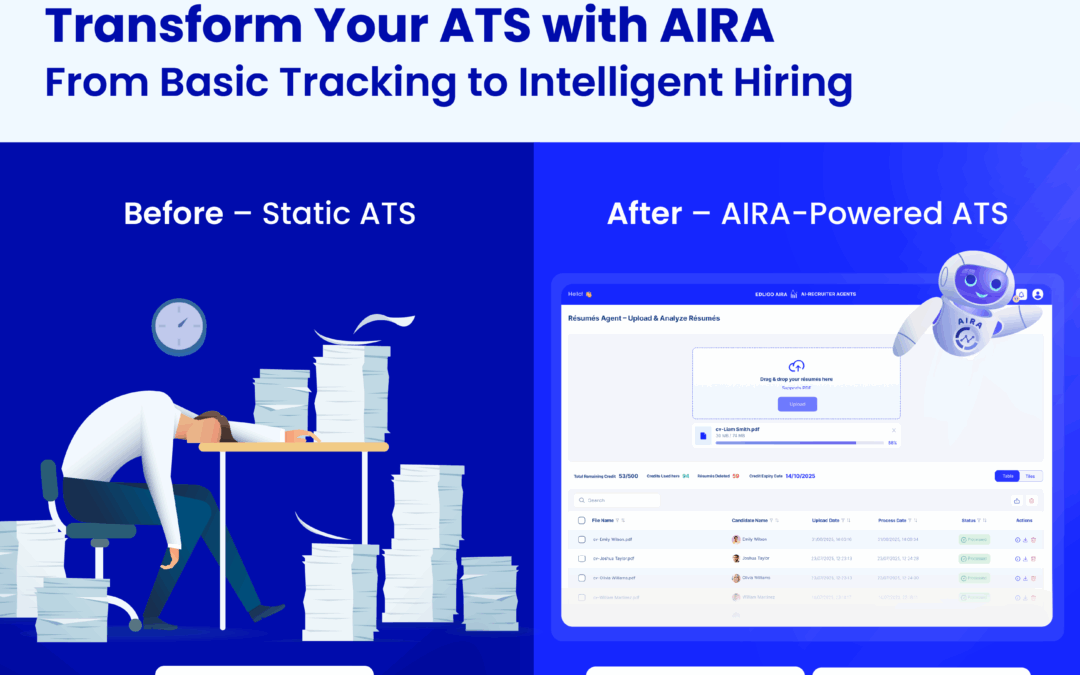
Integrated Solution Example: Platforms like AIRA demonstrate how next-generation applicant tracking systems with AI integrate these trends seamlessly. As a comprehensive AI recruitment tool, it combines intelligent automated candidate screening with bias-aware matching and skills verification – embodying the future of AI in recruitment.
Conclusion: Get Ready for 2026 — Use AI, But Verify
The convergence of these five trends—GenAI, Skills-Based Hiring, Competency Frameworks, Micro-Credentials, and Fraud Prevention—signals a fundamental shift in talent acquisition. AI recruitment tools are no longer optional; they’re essential for competitive hiring.
The organizations that thrive will be those that leverage applicant tracking systems with AI not just for efficiency, but for strategic advantage through intelligent automated candidate screening.
Ready to future-proof your hiring?
by safa chaieb |
The Hidden Cost of a Poor ATS
The 75% Problem
According to “HIDDEN WORKERS: UNTAPPED TALENT” (Harvard Business Review), 88% of employers believe their applicant tracking systems filter out qualified candidates. Yet most companies continue using outdated ATS technology without AI capabilities. The “resume black hole” phenomenon costs companies billions in missed talent.
It is a real challenge for companies to find people with the skills they need, which hinders their competitiveness and growth prospects.
Management practices that limit the number of candidates considered lead to the creation of a population of overlooked or “hidden” talent. Companies that hire “hidden” workers achieve an attractive ROI and report being 36% less likely to face talent and skills shortages than companies that do not hire hidden workers.
What keeps them hidden? Research by jobscan reveals that traditional ATS technology—lacking modern AI recruitment tools—is a primary culprit. Over 90% of employers surveyed use their ATS to initially filter or rank potential candidates — even those with average or high skills. In fact, 99% of Fortune 500 companies rely on ATS software to process resumes.
Imagine losing 3 out of 4 perfect candidates before you even see their resume. That’s not a hiring strategy—it’s a talent hemorrhage. And it’s happening right now in your applicant tracking system with AI upgrade potential sitting unused.
The Recruiter’s Dilemma
According to SHRM’s “2024 Talent Trends” survey of 2,500 HR professionals:
- 68% of recruiters report frustration with current ATS—primarily due to lack of AI-powered screening capabilities –
- Average time-to-fill increased by 23% between 2019-2024 –
- More than 75% of organizations struggle with recruitment challenges
- A peak of 91% of organizations experiencing recruitment difficulties was reached in 2022
- The three main challenges faced by these organizations are: low number of candidates (60%), competition from other employers (55%), and an increase in “ghosting” (46%) (recruiters being ghosted by candidates during the hiring process, sometimes even after a job offer was extended).
Even today, it remains very difficult to measure recruitment quality. In the report “The Future of Recruiting 2025, How AI redefines recruiting excellence”, only 25% of professionals surveyed say they are confident in their organization’s ability to recruit effectively.
AI is capable of analyzing employee performance data, identifying trends, and predicting long-term success. In fact, six out of ten human resources professionals (61%) believe that AI can improve the way they measure recruitment quality.
Key findings from LinkedIn’s “Future of Recruiting” report:
- #1 recruiter complaint: “Too much time on administrative tasks”
- 52% of recruiters say their current tech slows them down rather than speeds them up
- Solution gap: Most lack access to automated candidate screening tools powered by AI
The average Time to Fill rate is 36 days, according to “The 2017 Talent Acquisition Benchmark Report”, spending too long in the recruiting phase will cost you time, money, and good candidates!
Companies invest heavily in applicant tracking systems to streamline recruitment, yet HR teams still waste 40% of their time manually reviewing resumes. Why? Because traditional ATS lack the AI for talent acquisition capabilities needed to automatically prioritize top candidates.
Employer Branding at Risk
A clunky applicant tracking system doesn’t just slow you down—it actively damages your employer brand and drives top candidates away. Here’s the data:
- 60% of candidates abandon job applications if the process is too complex (onrec).
- According to Sowmiya Soundar, 72% share negative hiring experiences on social media.
- As a result, 57% refuse to apply to companies with poor reviews (Raymondgeorge agency).
- Poor candidate experience increases cost-per-hire by 2.5x (Glassdoor study).
Every rejected candidate is a potential brand ambassador. When your ATS creates a frustrating experience, you’re not just losing candidates—you’re actively damaging your employer brand.
Transition to AI Solution
What if an AI recruitment tool could transform your existing ATS—identifying and prioritizing top candidates automatically, without disrupting your workflow?
AI-powered applicant tracking systems substantially reduce manual work:
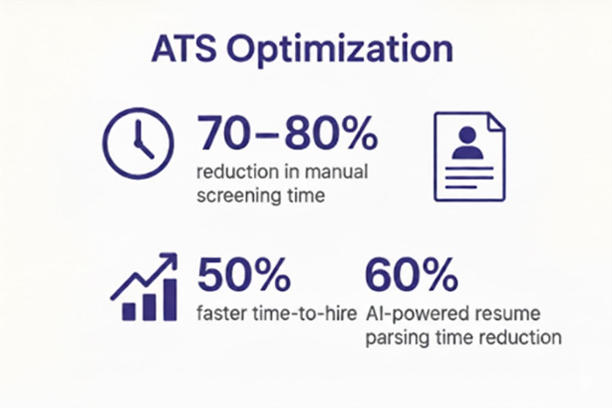
- Automated candidate screening reduces manual time by 70-80%
- Recruitment time drops by 40%
- Administrative costs decrease by thousands annually(Seemehired).
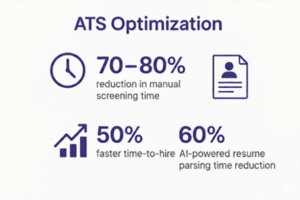
“The ultimate AI recruitment guide » explains that implementing AI-based ATS software reduces recruitment time by 40% and saves thousands of dollars in administrative costs each year.
87% of companies are now using AI-driven tools (AI Recruitment Statistics 2025)
Imagine an AI HR software that thinks like your best recruiter—reading between the lines, understanding context, and surfacing candidates based on potential, not just keywords. That’s the power of modern AI in recruitment.
What Goes Wrong with Traditional Applicant Tracking Systems (And Why AI Changes Everything)
The Keyword Trap: When Good Candidates Look “Wrong”
Traditional applicant tracking systems rely on rigid keyword matching—rejecting qualified candidates who describe their experience differently. Modern AI recruitment tools solve this with semantic understanding.
if your ATS expects the phrase “project manager,” it may miss a candidate who labelled themselves “program manager” or “product manager.” Research shows these terminological mismatches matter.
In a study using algorithmic CV-matching, a 62.0 % similarity threshold was used to distinguish ‘similar’ versus ‘not similar’ resumes — indicating that many qualified candidates may be excluded under strict keyword-matching régimes.
The U.S. Chamber of Commerce U.S. Chamber of Commerce reports that candidates lacking exact keyword matches risk being rejected too early and failing to make a good impression. They are often auto-rejected—regardless of actual qualifications. This is where automated candidate screening powered by AI makes the difference: it understands synonyms and context.
According to a SHRM article titled “Is Your Applicant Tracking System Hurting Your Recruiting Efforts?”, many AI-powered ATS systems may actually worsen the talent shortage they were designed to solve.
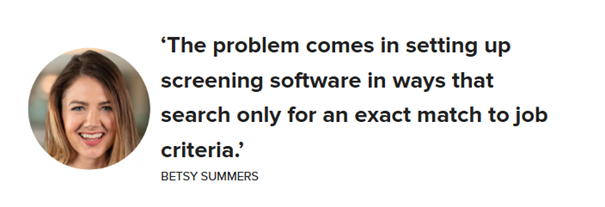
The latest researches show that the configuration of applicant tracking systems (ATS) and other automated selection tools often leads to the rejection of candidates who may be qualified for certain positions but do not exactly match the profile sought by recruiters.
David Francis, VP of a talent acquisition consulting firm, warns: “Employers configure ATS criteria that exclude qualified candidates.” The solution? AI for talent acquisition that evaluates holistically—not just keyword presence.
The Application Black Hole: Where Candidates Disappear
The second failure: traditional applicant tracking systems create an “application black hole” where candidates disappear mid-process. The data is alarming:
The dropout crisis:
Result? Your applicant tracking system with AI potential is actually repelling talent.
Your ATS isn’t just screening—it’s hemorrhaging talent. This 92% dropout rate explodes cost-per-hire. Modern AI recruitment tools fix this by simplifying applications while maintaining data quality.
The Feedback Vacuum: The Silent Killer of Candidate Experience
Traditional applicant tracking systems often create a “feedback vacuum” that frustrates candidates and harms employer reputation. While many companies avoid providing explicit rejection feedback due to potential legal risks (SHRM), the real issue lies in the lack of timely updates.
According to a Greenhouse study, 61% of candidates report being ignored after interviews, and 60% never receive any update at all. Candidates who receive feedback are 4x more likely to reapply and maintain a positive perception of the company (Survey by LinkedIn).
A good ATS should therefore prioritize communication speed and transparency, not necessarily detailed feedback. Candidates should hear back while they still remember applying — ideally within a few days, not weeks.
Another frustration comes from poor data extraction: 69% of candidates abandon applications when the ATS fails to parse their CV correctly and forces them to re-enter the same information manually (CareerBuilder).
That’s where AI-powered recruitment tools like AIRA make a difference. They automatically extract and structure candidate data from resumes, ensure instant acknowledgment messages, and keep applicants informed of their progress — creating a smoother, faster, and more respectful hiring experience.
Bottom line: Your applicant tracking system with AI capabilities can automate timely updates and maintain transparent communication — turning rejected candidates into future brand advocates.
Silence isn’t neutral — it’s negative. When candidates apply and hear nothing, they don’t think “maybe later.” They think “never again.” And they often share that experience with others.
The Soft Skills Blind Spot
The fourth failure: traditional applicant tracking systems can’t assess soft skills—the actual predictors of job success. The soft skills gap:
- 93% of executives say soft skills are critical (Deloitte)
- Only 17% of ATS have soft skill assessment (Deloitte Global Trends)
- 89% of “bad hires” fail due to soft skills, not technical skills (LinkedIn)
- Yet traditional ATS can only match hard skills and keywords
Your ATS can tell you if someone knows Python. AI HR software can tell you if they’re coachable, resilient, and collaborative—the qualities that separate good hires from great ones.
How AI Recruitment Tools and Automated Candidate Screening Solve These Challenges
Modern AI recruitment tools transform applicant tracking systems from keyword matchers into intelligent hiring assistants. Solutions like AIRA bring automated candidate screening, semantic matching, and transparent AI reasoning to your existing workflow.
With AI-powered applicant tracking systems like AIRA, you screen faster, hire smarter, and make data-driven decisions with full transparency.
You can Try AIRA for free today and see the difference.
From Keywords to Context: Semantic Understanding
- Problem Solved: Traditional ATS reject qualified candidates due to strict keyword matching.
- How AIRA Solves It: AIRA’s AI-Job Matching Agent uses Natural Language Processing (NLP) to understand context, not just keywords. It recognizes skill equivalencies and achievements phrased differently from the job description.
- Example: “Mentored 5 junior analysts” = leadership; “increased revenue 40%” = strong sales performance.
- Transparency: The AI-Reasoning feature explains exactly why candidates score as they do, avoiding black-box decisions.
Faster and Smarter Candidate Screening
- Problem Solved: Manual CV screening is time-consuming and inconsistent.
- How AIRA Solves It: The AI-Resumes Analyzer Agent automates extraction of skills, certifications, and key achievements, enabling automated candidate screening with precision.
- Impact: Saves hours per vacancy and ensures consistent evaluation across all candidates.
Discover how AIRA can accelerate your screening process and identify top talent effortlessly.
Personalized Interview Preparation
- Problem Solved: Preparing interviews for each candidate takes time and may lack structure.
- How AIRA Solves It: The AI-Interview Guide Agent generates tailored interview guides with questions and suggested answers based on the candidate’s profile and the job description.
Protecting Against Risky Hires
- Problem Solved: Inflated titles, impossible timelines, or fake credentials can slip through traditional ATS.
- How AIRA Solves It: AIRA flags suspicious patterns automatically, ensuring recruiters focus only on genuine, qualified candidates.
With AIRA’s suite of intelligent agents, you can analyze resumes, rank candidates accurately, and generate interview guides—all in one platform. Say goodbye to manual bottlenecks and hello to smarter, faster, and fairer hiring.
Try AIRA for free today and see how this AI HR software will transform your talent acquisition process.