by
AI in Recruiting: The Uncomfortable Truth About Your “AI-Powered” ATS
Your recruitment software vendor swears their AI in recruiting is revolutionary. They showed you a demo. You saw the dashboard. You signed the contract.
Then reality hit.
Implementation took 6 months instead of 6 weeks. The AI recommendations make zero sense. Candidates complain about the experience. And your recruiters are spending more time fixing the system than actually recruiting with AI.
Welcome to the AI recruitment software scam costing companies billions.
Here’s what nobody tells you: There’s more smoke and mirrors in AI recruiting tools than at a Vegas magic show. And if you don’t know how to separate real AI from glorified keyword matching, you’re burning money and destroying your employer brand.
The $1.13 Billion AI in Hiring Question: Why Is Everyone Buying Tools That Don’t Work?
The AI recruitment market exploded from USD 617.56 million in 2024 to a projected USD 1.125 billion by 2033, a 7.2% CAGR — growth fueled by hype and high expectations. (Straits Research)
Despite this boom and widespread adoption intentions, many companies remain skeptical about the actual performance of these tools. According to a recent Gartner survey, only 26% of job applicants trust that AI will evaluate them fairly — raising serious questions about reliability and bias in AI-driven hiring. (Gartner)
- For Business Owners: Buying “plug-and-play” AI often means prolonged integration, unexpected IT overhead, and tools that still struggle to distinguish qualified candidates from those who keyword-stuffed their resumes.
- For Talent Acquisition Teams: The AI system meant to save time ends up requiring manual oversight — you’re reviewing AI decisions, questioning them, and essentially doing the job of an algorithm babysitter.
- For CFOs: The “predictable ROI” promised by vendors often doesn’t materialize. While some organizations see cost reductions after AI adoption, many others report little to no benefit — or even increased costs. Recent studies show that only a small proportion of companies generate significant value from AI adoption. (BCG)
In short: the hype around AI recruiting has driven massive investment and adoption. But the reality — slow onboarding, opaque decision processes, unclear ROI, and low trust from candidates — means many organizations experience disillusionment. Until AI tools deliver reliably and transparently, hiring with AI remains a gamble rather than a guaranteed upgrade.
This rush toward AI in hiring hides an uncomfortable truth: most artificial intelligence in recruitment tools fail on their core promises.
The Five Lies Recruiting AI Software Vendors Tell (And How to Call Them Out)
Lie #1: “Our AI Eliminates Bias” – The Artificial Intelligence Sourcing Reality Check
Vendors often present their AI recruiting software as a magic bullet against bias. Yet research shows that these tools can amplify existing biases in training data.
The Reality: A 2024 study by the University of Washington found that AI-powered resume-screening tools ranked names associated with White candidates 85% of the time, while female-associated names were selected only 11% of the time — even when resumes were equivalent. (University of Washington, 2024)
Call Them Out: Ask vendors for bias audit reports with demographic breakdowns and methodology. If audits are not provided or reveal bias, consider it a red flag.
Lie #2: “Implementation Is Quick and Easy” – AI Tools for Recruitment Implementation Truths
The Reality: Deploying AI recruiting tools is rarely plug-and-play. It usually requires API integrations, data migration, user training, and workflow redesign — a process that can be lengthy and complex. (ArXiv, 2024)
Call Them Out: Request a detailed implementation plan with milestones and client references. Include contractual penalties for delays or failures in compliance or delivery.
Lie #3: “Candidates Love Our AI Experience” – Recruiting with AI Candidate Trust Gaps
The Reality: There is limited large-scale public data showing that most candidates enjoy applying through AI-powered systems. A global 2025 survey of 48,000 people indicated that only 46% of regular AI users were willing to trust AI systems in professional contexts. (KPMG, 2025)
The UW study also demonstrates that AI can treat applicants in biased ways, damaging candidate trust. (University of Washington, 2024)
Call Them Out: Test the candidate experience yourself by submitting CVs with diverse profiles. Ask vendors about satisfaction rates, candidate feedback, and whether a sandbox or test environment is available.
Lie #4: “Our AI Makes Better Hiring Decisions Than Humans” – AI in Hiring Decision-Making Myths
Many vendors claim AI produces better, more objective hiring decisions than humans. However:
- AI systems may amplify bias, as shown in the UW study. (University of Washington, 2024)
- Research also shows that humans tend to follow AI recommendations, even if biased, reproducing errors in decision-making. (University of Washington, 2025)
- AI is good at pattern recognition but poor at evaluating potential, motivation, culture fit, soft skills, or cognitive diversity — all critical for successful hiring.
Call Them Out: Ask how the AI evaluates soft skills, unconventional experience, or cultural fit. If it claims to handle everything autonomously, approach with caution.
Lie #5: “We’re Fully Compliant with All Regulations” – Recruiting AI Software Compliance Risks
The Reality: Regulations such as NYC Local Law 144 require independent bias audits and candidate notifications for automated decision-making tools. (TechCrunch, 2023)
Research shows that, in practice, many employers fail to publish audits or provide transparency. (ArXiv, 2024)
Call Them Out: Demand documentation — bias audits, methodology, results, mitigation plans, and candidate notifications. Engage your legal team before signing any agreement.
Artificial Intelligence Sourcing and Recruiting AI Software: The Truth Criteria
The Real AI Tools for Recruitment That Actually Work
Not all AI recruiting software is garbage. But the good ones share specific characteristics:
What Actually Matters:
- Explainability (AI-Reasoning) – The system must show WHY it made decisions. Your AI in hiring tool must show its reasoning.
- Modularity – You shouldn’t need to buy an entire ATS to get AI screening.
- Human-in-the-Loop Architecture – AI screens and recommends. Humans decide. Always. Successful recruiting with AI augments, never replaces.
- Transparent Training Data – Know what data trained the model. Audit for bias.
- True Plug-and-Play – If it requires 6 months of IT work, it’s not plug-and-play. Period.
The AIRA Difference: AI That Shows Its Work – Transparent Artificial Intelligence in Recruitment
Unlike most AI tools for recruitment, AIRA approaches artificial intelligence in recruitment as a transparent partner, not a black box. Most AI recruiting tools are black boxes that make decisions nobody can explain or defend. That’s not AI—that’s algorithmic roulette.
AIRA’s 5-Agent Architecture:
- AI-Resume Analyzer – Automatically extracts skills, certifications, languages from CVs.
- AI-Job Matching Agent – Scores candidates with full AI-Reasoning visibility.
- AI-Interview Guide Generator – Creates personalized interview questions.
- AI-Job Description Generator – Optimizes JDs based on industry benchmarks.
- AI-Job Description Analyzer – Breaks down existing JDs to extract key requirements.
The Difference: No setup required. Try or buy. Pay only for what you use. Every decision is explainable.
? Discover AIRA’s transparent AI recruiting platform
AI in Recruiting: The Real Return on Investment
To seriously evaluate recruiting AI software, look at these metrics, not vendor slogans
The ROI Reality Check: When AI Actually Pays Off
For CFOs and financial leaders evaluating real data rather than vendor marketing: recruiting tools powered by AI can indeed reduce cost-per-hire and hiring cycle times when implemented thoughtfully and integrated into HR workflows. Across recent industry summaries, companies report up to ~30% reduction in cost-per-hire and significant acceleration of hiring processes when AI automates screening, matching, and scheduling tasks. These savings come from lower manual workload, less dependence on external agencies, and faster candidate throughput.
However, here’s what vendors often don’t make clear: these ROI figures assume that:
- The AI being used goes beyond simple keyword matching to deliver real automation and candidate prioritization,
- Humans remain in the decision loop to oversee quality and fairness,
- Candidate experience is sustained or improved rather than degraded,
- The system integrates seamlessly with existing HR tech and workflows — a non-trivial project in many organizations.
Independent analyses suggest that not all implementations deliver their promised return because of poor integration planning, lack of training, or weak candidate experience design. As a result, many organizations see only a fraction of the theoretical ROI unless they carefully manage change, monitor results, and optimize processes post-deployment.
Call Them Out: Ask vendors for actual ROI case studies in organizations with a similar size and hiring profile as yours, including before/after metrics for cost per hire, time to fill, recruiter hours saved, and impacts on quality of hire. Verify whether their data reflects real deployments rather than idealized scenarios, and insist on clear implementation milestones with accountability for delivery.
The AI in Hiring Compliance Minefield: Why Your Vendor Might Get You Sued
Choosing non-compliant AI tools for recruitment exposes your organization to serious legal risk, which can outweigh the operational benefits of automation. AI systems that make hiring decisions must adhere to multiple anti-discrimination, privacy, and transparency laws — and failure to do so can lead to litigation, regulatory investigations, fines, and reputational harm. (AI Recruitment Compliance Guide, 2025)
Legal Risks Include:
• Discrimination lawsuits and claims of disparate impact under civil rights frameworks if AI tools systematically disadvantage protected groups (e.g., based on race, age, or disability). Employers can be held legally accountable for the outcomes of their AI systems, even if they did not intend discrimination.
• Government agency investigations, such as from equal employment enforcement bodies, when algorithmic decisions cannot be explained or justified.
- Privacy and data protection violations if candidate data (especially sensitive or biometric information) is processed without proper legal basis or consent.
• Violations of regulations like the EU AI Act and data protection laws (e.g., GDPR), which can entail fines based on revenue and administrative penalties if systems are used without appropriate risk assessments and documentation. Non-compliance can result in fines of up to millions or a percentage of global revenue for serious breaches.
Compliance Challenges:
A lack of transparency (“black-box” systems) makes it difficult to explain AI decisions — a major vulnerability in legal defense if an applicant challenges a hiring decision. Employers are typically responsible for demonstrating compliance and cannot shift legal risk simply because a third party provided the technology.
Many organizations also struggle with bias mitigation and documentation: while fairness and bias audits are widely recommended as best practices, there’s no single accepted standard yet, and failing to conduct thorough audits or maintain records weakens legal defenses.
Questions to Ask Before Buying:
- Who is legally liable if the AI you adopt produces discriminatory outcomes?
- Do you provide bias audit reports and documentation on fairness testing?
- Can I review your training data sources or documentation showing representativeness and risk mitigation?
- How do you handle GDPR, the EU AI Act, and other applicable privacy/AI regulations?
- What is your track record on compliance issues or legal complaints related to recruitment outcomes?
If the vendor dodges or refuses to answer these questions — proceed with caution. Ensuring compliance before deployment is critical in avoiding legal exposure, costly investigations, and costly remediation later.
The AI Recruiting Candidate Experience Crisis Nobody’s Solving
While vendors obsess over efficiency metrics, many organizations are creating candidate experiences so poor that they damage employer brands and reduce offer acceptance. Data from recent surveys shows a growing trust gap between job seekers and AI-augmented recruitment processes.
The Data:
• Only 26% of job candidates trust that AI will fairly evaluate them, according to a 2025 survey — even though many know AI is used in screening and evaluation.
• In the same Gartner research, 39% of candidates reported using AI tools (e.g., for resumes, cover letters, or writing samples) during the application process.
- Other industry surveys show that candidate frustration with slow responses, poor communication, and lack of transparency is widespread — for example, a candidate experience benchmark found that 83% of job seekers reported at least one major negative experience in the hiring process.
This dynamic has created a sort of arms race: candidates use AI to generate polished materials, and automated systems screen that content with opaque criteria. The result is often a cycle of inauthentic interactions, confusion, and dissatisfaction on both sides.
The Solution: To maintain a positive employer brand, organizations need transparent AI processes with human touchpoints:
- Provide clear communication about how AI is used in hiring.
- Offer feedback to candidates — even those who are rejected — so they feel respected and informed.
- Ensure that human recruiters remain involved at key stages to preserve personal connection and judgment.
Research suggests that better candidate experience practices correlate with stronger outcomes for organizations that implement them. For instance, companies with excellent candidate experience metrics see higher offer acceptance, stronger employer brand perception, and better candidate referrals. While specific figures vary by study, quality data indicates that respectful, transparent processes improve real recruitment outcomes.
Artificial Intelligence Sourcing Smart: Your 2024 Buying Guide
To avoid recruiting with AI pitfalls, follow this role-by-role action plan
The Bottom Line on Recruiting with AI: Buy Smart or Buy Twice
The AI recruiting tools market is exploding. Most vendors are selling overhyped, underperforming software with brutal contracts and hidden costs.
Your Defense Strategy:
- For Talent Acquisition Leads: Demand transparency in AI in recruiting. Get trial periods.
- For CHROs: Require compliance documentation. Get legal review.
- For Business Owners: Insist on true plug-and-play.
- For CFOs: Calculate the total cost of AI tools for recruitment, not just subscriptions.
- For CEOs: Aim for Artificial Intelligence Sourcing that values human judgment.
Stop Buying Broken AI. Start Using Intelligent Tools for Recruitment.
The future of recruiting isn’t about replacing humans with algorithms—it’s about giving humans superpowers through intelligent AI.
AIRA delivers:
- Zero setup time
- Modular agents you actually need
- Transparent AI-Reasoning
- Compliance-ready architecture
- Predictable credit-based pricing
- Pay only for what you use
No vendor BS. No 6-month implementations. No hidden costs. Just intelligent AI that actually works.
Recruiting AI software shouldn’t mean complexity. Discover AIRA—an AI in hiring platform built for transparency and results.
? Start your free trial of AIRA today – no setup required
Because in 2026, you don’t need another overhyped ATS promising the moon. You need tools that solve real problems, respect candidate dignity, and deliver measurable results from day one.
Continue Learning:
https://www.edligo.net/allblogscontent/
Artificial intelligence in recruitment is here to stay. The question isn’t if to adopt AI in recruiting, but how to choose AI tools for recruitment that keep promises and respect candidates.

by
We’d love to hear how your company is leveraging AI recruiting tools — let’s share tips in the comments!
AI in Recruiting: The Uncomfortable Truth About Your “AI-Powered” ATS
Your recruitment software vendor swears their AI in recruiting is revolutionary. They showed you a demo. You saw the dashboard. You signed the contract.
Then reality hit.
Implementation took 6 months instead of 6 weeks. The AI recommendations make zero sense. Candidates complain about the experience. And your recruiters are spending more time fixing the system than actually recruiting with AI.
Welcome to the AI recruitment software scam costing companies billions.
Here’s what nobody tells you: There’s more smoke and mirrors in AI recruiting tools than at a Vegas magic show. And if you don’t know how to separate real AI from glorified keyword matching, you’re burning money and destroying your employer brand.
The $1.13 Billion AI in Hiring Question: Why Is Everyone Buying Tools That Don’t Work?
The AI recruitment market exploded from USD 617.56 million in 2024 to a projected USD 1.125 billion by 2033, a 7.2% CAGR — growth fueled by hype and high expectations. ()
Despite this boom and widespread adoption intentions, many companies remain skeptical about the actual performance of these tools. According to a recent Gartner survey, only 26% of job applicants trust that AI will evaluate them fairly — raising serious questions about reliability and bias in AI-driven hiring. ()
- For Business Owners: Buying “plug-and-play” AI often means prolonged integration, unexpected IT overhead, and tools that still struggle to distinguish qualified candidates from those who keyword-stuffed their resumes.
- For Talent Acquisition Teams: The AI system meant to save time ends up requiring manual oversight — you’re reviewing AI decisions, questioning them, and essentially doing the job of an algorithm babysitter.
- For CFOs: The “predictable ROI” promised by vendors often doesn’t materialize. While some organizations see cost reductions after AI adoption, many others report little to no benefit — or even increased costs. Recent studies show that only a small proportion of companies generate significant value from AI adoption. ()
In short: the hype around AI recruiting has driven massive investment and adoption. But the reality — slow onboarding, opaque decision processes, unclear ROI, and low trust from candidates — means many organizations experience disillusionment. Until AI tools deliver reliably and transparently, hiring with AI remains a gamble rather than a guaranteed upgrade.
This rush toward AI in hiring hides an uncomfortable truth: most artificial intelligence in recruitment tools fail on their core promises.
The Five Lies Recruiting AI Software Vendors Tell (And How to Call Them Out)
Lie #1: “Our AI Eliminates Bias” – The Artificial Intelligence Sourcing Reality Check
Vendors often present their AI recruiting software as a magic bullet against bias. Yet research shows that these tools can amplify existing biases in training data.
The Reality: A 2024 study by the University of Washington found that AI-powered resume-screening tools ranked names associated with White candidates 85% of the time, while female-associated names were selected only 11% of the time — even when resumes were equivalent. ()
Call Them Out: Ask vendors for bias audit reports with demographic breakdowns and methodology. If audits are not provided or reveal bias, consider it a red flag.
Lie #2: “Implementation Is Quick and Easy” – AI Tools for Recruitment Implementation Truths
The Reality: Deploying AI recruiting tools is rarely plug-and-play. It usually requires API integrations, data migration, user training, and workflow redesign — a process that can be lengthy and complex. ()
Call Them Out: Request a detailed implementation plan with milestones and client references. Include contractual penalties for delays or failures in compliance or delivery.
Lie #3: “Candidates Love Our AI Experience” – Recruiting with AI Candidate Trust Gaps
The Reality: There is limited large-scale public data showing that most candidates enjoy applying through AI-powered systems. A global 2025 survey of 48,000 people indicated that only 46% of regular AI users were willing to trust AI systems in professional contexts. ()
The UW study also demonstrates that AI can treat applicants in biased ways, damaging candidate trust. ()
Call Them Out: Test the candidate experience yourself by submitting CVs with diverse profiles. Ask vendors about satisfaction rates, candidate feedback, and whether a sandbox or test environment is available.
Lie #4: “Our AI Makes Better Hiring Decisions Than Humans” – AI in Hiring Decision-Making Myths
Many vendors claim AI produces better, more objective hiring decisions than humans. However:
- AI systems may amplify bias, as shown in the UW study. ()
- Research also shows that humans tend to follow AI recommendations, even if biased, reproducing errors in decision-making. ()
- AI is good at pattern recognition but poor at evaluating potential, motivation, culture fit, soft skills, or cognitive diversity — all critical for successful hiring.
Call Them Out: Ask how the AI evaluates soft skills, unconventional experience, or cultural fit. If it claims to handle everything autonomously, approach with caution.
Lie #5: “We’re Fully Compliant with All Regulations” – Recruiting AI Software Compliance Risks
The Reality: Regulations such as NYC Local Law 144 require independent bias audits and candidate notifications for automated decision-making tools. ()
Research shows that, in practice, many employers fail to publish audits or provide transparency. ()
Call Them Out: Demand documentation — bias audits, methodology, results, mitigation plans, and candidate notifications. Engage your legal team before signing any agreement.
Artificial Intelligence Sourcing and Recruiting AI Software: The Truth Criteria
The Real AI Tools for Recruitment That Actually Work
Not all AI recruiting software is garbage. But the good ones share specific characteristics:
What Actually Matters:
- Explainability (AI-Reasoning) – The system must show WHY it made decisions. Your AI in hiring tool must show its reasoning.
- Modularity – You shouldn’t need to buy an entire ATS to get AI screening.
- Human-in-the-Loop Architecture – AI screens and recommends. Humans decide. Always. Successful recruiting with AI augments, never replaces.
- Transparent Training Data – Know what data trained the model. Audit for bias.
- True Plug-and-Play – If it requires 6 months of IT work, it’s not plug-and-play. Period.
The AIRA Difference: AI That Shows Its Work – Transparent Artificial Intelligence in Recruitment
Unlike most AI tools for recruitment, AIRA approaches artificial intelligence in recruitment as a transparent partner, not a black box. Most AI recruiting tools are black boxes that make decisions nobody can explain or defend. That’s not AI—that’s algorithmic roulette.
AIRA’s 5-Agent Architecture:
- AI-Resume Analyzer – Automatically extracts skills, certifications, languages from CVs.
- AI-Job Matching Agent – Scores candidates with full AI-Reasoning visibility.
- AI-Interview Guide Generator – Creates personalized interview questions.
- AI-Job Description Generator – Optimizes JDs based on industry benchmarks.
- AI-Job Description Analyzer – Breaks down existing JDs to extract key requirements.
The Difference: No setup required. Try or buy. Pay only for what you use. Every decision is explainable.
?
AI in Recruiting: The Real Return on Investment
To seriously evaluate recruiting AI software, look at these metrics, not vendor slogans
The ROI Reality Check: When AI Actually Pays Off
For CFOs and financial leaders evaluating real data rather than vendor marketing: recruiting tools powered by AI can indeed reduce cost-per-hire and hiring cycle times when implemented thoughtfully and integrated into HR workflows. Across , companies report up to ~30% reduction in cost-per-hire and significant acceleration of hiring processes when AI automates screening, matching, and scheduling tasks. These savings come from lower manual workload, less dependence on external agencies, and faster candidate throughput.
However, here’s what vendors often don’t make clear: these ROI figures assume that:
- The AI being used goes beyond simple keyword matching to deliver real automation and candidate prioritization,
- Humans remain in the decision loop to oversee quality and fairness,
- Candidate experience is sustained or improved rather than degraded,
- The system integrates seamlessly with existing HR tech and workflows — a non-trivial project in many organizations.
suggest that not all implementations deliver their promised return because of poor integration planning, lack of training, or weak candidate experience design. As a result, many organizations see only a fraction of the theoretical ROI unless they carefully manage change, monitor results, and optimize processes post-deployment.
Call Them Out: Ask vendors for actual ROI case studies in organizations with a similar size and hiring profile as yours, including before/after metrics for cost per hire, time to fill, recruiter hours saved, and impacts on quality of hire. Verify whether their data reflects real deployments rather than idealized scenarios, and insist on clear implementation milestones with accountability for delivery.
The AI in Hiring Compliance Minefield: Why Your Vendor Might Get You Sued
Choosing non-compliant AI tools for recruitment exposes your organization to serious legal risk, which can outweigh the operational benefits of automation. AI systems that make hiring decisions must adhere to multiple anti-discrimination, privacy, and transparency laws — and failure to do so can lead to litigation, regulatory investigations, fines, and reputational harm. ()
Legal Risks Include:
• under civil rights frameworks if AI tools systematically disadvantage protected groups (e.g., based on race, age, or disability). Employers can be held legally accountable for the outcomes of their AI systems, even if they did not intend discrimination.
• , such as from equal employment enforcement bodies, when algorithmic decisions cannot be explained or justified.
- if candidate data (especially sensitive or biometric information) is processed without proper legal basis or consent.
• and data protection laws (e.g., GDPR), which can entail fines based on revenue and administrative penalties if systems are used without appropriate risk assessments and documentation. Non-compliance can result in fines of up to millions or a percentage of global revenue for serious breaches.
Compliance Challenges:
A (“black-box” systems) makes it difficult to explain AI decisions — a major vulnerability in legal defense if an applicant challenges a hiring decision. Employers are typically responsible for demonstrating compliance and cannot shift legal risk simply because a third party provided the technology.
Many organizations also struggle with : while fairness and bias audits are widely recommended as best practices, there’s no single accepted standard yet, and failing to conduct thorough audits or maintain records weakens legal defenses.
Questions to Ask Before Buying:
- Who is legally liable if the AI you adopt produces discriminatory outcomes?
- Do you provide bias audit reports and documentation on fairness testing?
- Can I review your training data sources or documentation showing representativeness and risk mitigation?
- How do you handle GDPR, the EU AI Act, and other applicable privacy/AI regulations?
- What is your track record on compliance issues or legal complaints related to recruitment outcomes?
If the vendor dodges or refuses to answer these questions — proceed with caution. Ensuring compliance before deployment is critical in avoiding legal exposure, costly investigations, and costly remediation later.
The AI Recruiting Candidate Experience Crisis Nobody’s Solving
While vendors obsess over efficiency metrics, many organizations are creating candidate experiences so poor that they damage employer brands and reduce offer acceptance. Data from recent surveys shows a growing trust gap between job seekers and AI-augmented recruitment processes.
The Data:
• Only 26% of job candidates trust that AI will fairly evaluate them, according to — even though many know AI is used in screening and evaluation.
• In the same , 39% of candidates reported using AI tools (e.g., for resumes, cover letters, or writing samples) during the application process.
- Other show that candidate frustration with slow responses, poor communication, and lack of transparency is widespread — for example, a candidate experience benchmark found that 83% of job seekers reported at least one major negative experience in the hiring process.
This dynamic has created a sort of arms race: candidates use AI to generate polished materials, and automated systems screen that content with opaque criteria. The result is often a cycle of inauthentic interactions, confusion, and dissatisfaction on both sides.
The Solution: To maintain a positive employer brand, organizations need transparent AI processes with human touchpoints:
- Provide clear communication about how AI is used in hiring.
- Offer feedback to candidates — even those who are rejected — so they feel respected and informed.
- Ensure that human recruiters remain involved at key stages to preserve personal connection and judgment.
Research suggests that better candidate experience practices correlate with stronger outcomes for organizations that implement them. For instance, companies with excellent candidate experience metrics see higher offer acceptance, stronger employer brand perception, and better candidate referrals. While specific figures vary by study, quality data indicates that respectful, transparent processes improve real recruitment outcomes.
Artificial Intelligence Sourcing Smart: Your 2024 Buying Guide
To avoid recruiting with AI pitfalls, follow this role-by-role action plan
The Bottom Line on Recruiting with AI: Buy Smart or Buy Twice
The AI recruiting tools market is exploding. Most vendors are selling overhyped, underperforming software with brutal contracts and hidden costs.
Your Defense Strategy:
- For Talent Acquisition Leads: Demand transparency in AI in recruiting. Get trial periods.
- For CHROs: Require compliance documentation. Get legal review.
- For Business Owners: Insist on true plug-and-play.
- For CFOs: Calculate the total cost of AI tools for recruitment, not just subscriptions.
- For CEOs: Aim for Artificial Intelligence Sourcing that values human judgment.
Stop Buying Broken AI. Start Using Intelligent Tools for Recruitment.
The future of recruiting isn’t about replacing humans with algorithms—it’s about giving humans superpowers through intelligent AI.
AIRA delivers:
- Zero setup time
- Modular agents you actually need
- Transparent AI-Reasoning
- Compliance-ready architecture
- Predictable credit-based pricing
- Pay only for what you use
No vendor BS. No 6-month implementations. No hidden costs. Just intelligent AI that actually works.
Recruiting AI software shouldn’t mean complexity. Discover AIRA—an AI in hiring platform built for transparency and results.
?
Because in 2026, you don’t need another overhyped ATS promising the moon. You need tools that solve real problems, respect candidate dignity, and deliver measurable results from day one.
- – See AIRA’s 5 AI agents in action (30-minute session)
- – “No setup. Try or buy!” – Analyze your first 100 CVs free
Continue Learning:
Artificial intelligence in recruitment is here to stay. The question isn’t if to adopt AI in recruiting, but how to choose AI tools for recruitment that keep promises and respect candidates.
by
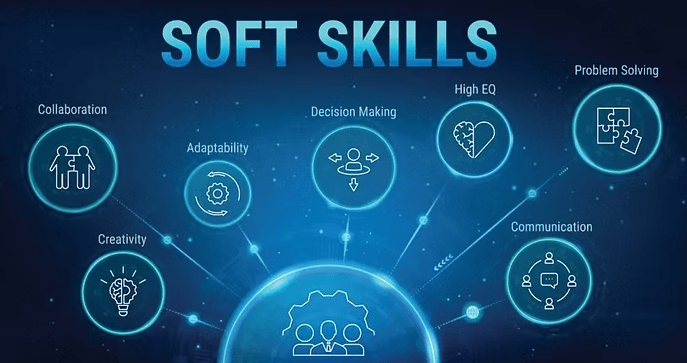
Introduction: The Soft Skills Paradox
While automated recruitment systems focus on technical abilities, a Deloitte study reveals that 93% of executives consider soft skills essential for performance. Discover how to make these “invisible” skills visible to both robots and recruiters.
You master Python, analyze complex data, and create detailed reports. Yet your job applications go unanswered. The reason? Behavioral competencies – those human qualities like resilience, adaptability, or emotional intelligence – have become the new hunting ground in modern AI recruitment.
According to the World Economic Forum’s “The Future of Jobs Report 2025”, behavioral skills now represent 50% of the most in-demand workplace aptitudes. Yet, less than 17% of traditional Applicant Tracking Systems (ATS) can detect them effectively, according to Deloitte Global Human Capital Trends.
The paradox is stark: what makes you uniquely valuable is often what gets missed by automated screening systems. But the game is changing with the emergence of next-generation AI recruitment tools.
Why Soft Skills Have Become the New Currency
A revealing LinkedIn study found that 89% of “bad hires” fail not due to insufficient technical skills, but because of deficient soft skills.
The numbers speak for themselves:
- 72% of HR managers believe soft skills are more important than hard skills for long-term success (SHRM)
- Companies that specifically train for soft skills see productivity increase by 12% (Harvard Business Review)
- 94% of recruitment professionals believe an employee with excellent soft skills is more likely to be promoted than a technical expert without these qualities (Forbes)
Michael Hansen, CEO of Cengage Group, summarizes this shift: “We’re witnessing a historic shift: employers are now seeking skills before degrees. And among these skills, human qualities have become the ultimate differentiator.”
The Problem: How to Measure the Immeasurable?
The challenge is significant. How do you quantify your ability to manage team conflict or your agility in facing the unexpected? Traditional applicant tracking systems struggle with this question.
Research conducted by the U.S. Chamber of Commerce confirms this limitation: “Standard ATS function through technical keyword recognition. They excel at identifying a ‘Java Developer’ but fail to spot a ‘natural leader’.”
Worse: A Harvard Business School study on “hidden workers” showed that 88% of employers acknowledge that their automated candidate screening systems unintentionally eliminate qualified candidates, particularly those whose soft skills aren’t explicitly formulated according to expected norms.
The Revolution Underway: AI That Understands Humanity
The good news? AI recruitment tools are rapidly evolving to bridge this gap. Platforms like AIRA now use Natural Language Processing (NLP) to detect behavioral competencies behind your CV’s wording.
How does it work in practice?
- AIRA’s AI Résumé Analyzer Agent scans your experience for evidence of soft skills
- “Trained 3 new team members” becomes proof of mentoring and leadership
- “Adapted our sales strategy following regulatory changes” translates to adaptability and problem-solving
- “Reduced tensions within my team during high-pressure periods” demonstrates emotional intelligence
Transparency is key: Unlike traditional ATS systems, platforms like AIRA provide explicit AI Reasoning that explains how each behavioral competency was identified and evaluated.
5 Strategies to Make Your Soft Skills Visible to AI
- The CAR Method (Context-Action-Result)
Instead of “good communication,” describe: “Context: Misalignment between technical and marketing teams. Action: I established weekly synchronization meetings with shared minutes. Result: 30% reduction in delivery delays within 3 months.”
- The Power of Contextual Keywords
Incorporate action verbs that imply soft skills: “negotiated,” “mediated,” “facilitated,” “mentored,” “influenced,” “calmed.” SHRM’s analysis of job descriptions shows these terms are 3 times more present in senior position listings.
- Proof Through Numbers
“Team management” becomes: “Supervision of a 5-person team with 95% retention over 2 years and 25% increase in internal satisfaction scores.”
- The Art of Technical Reformulation
“Empathy” can become: “Implementation of new customer feedback processes that improved satisfaction scores by 40%.”
- The Truth Test
Use AI resume analysis tools like AIRA to identify which soft skills are actually detected in your CV and get precise improvement suggestions.
The Future is Already Here: When AI Becomes Your Ally
LinkedIn’s latest study on the future of recruitment predicts that by 2026, 65% of soft skills assessments will be AI-assisted. But far from replacing humans, this technology becomes a potential amplifier.
Platforms like AIRA embody this transition by offering:
- Transparent analysis of your profile with detailed score explanations
- Personalized guidance to improve the visibility of your unique competencies
- Interview preparation that highlights your behavioral strengths
The result? You’re not cheating the system – you’re learning to speak its language to reveal your full value.
Conclusion: From Invisible to Strategic
In tomorrow’s talent economy, your most human skills become your most strategic asset. Employers actively seek them, and AI tools are becoming sophisticated enough to recognize them.
The question is no longer “do you have soft skills?” but “do you know how to make them visible?”
As noted in the World Economic Forum’s 2025 Report: “The competitive advantage of organizations and individuals will lie in their ability to articulate and demonstrate the behavioral competencies that complement automation.”
Don’t leave your human qualities in the shadows anymore. Test your CV with advanced AI analysis tools, learn the language that makes the invisible visible, and transform what makes you human into your most powerful career asset.